Asian Arab Chamber of Commerce appoints K. Mohammed Haris as the Trade Commissioner
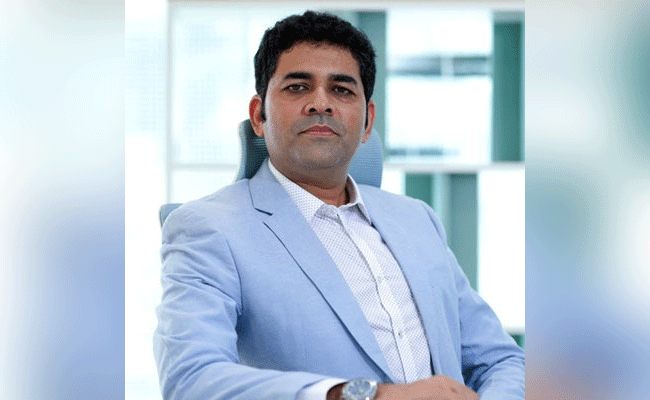
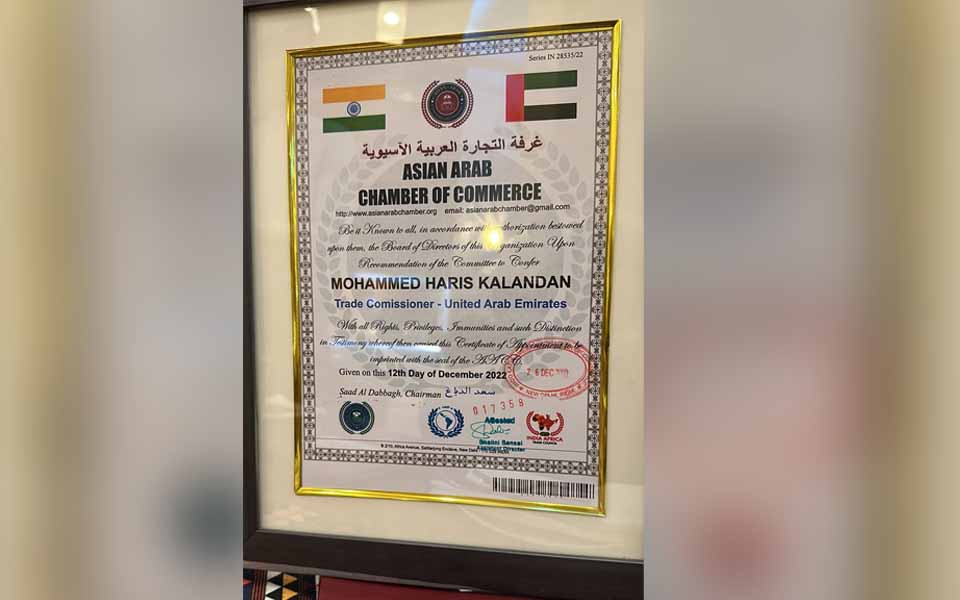
New Delhi, January 2: Asian Arab Chamber of Commerce (AACC) has appointed K. Mohammed Haris, Managing Director of Mukka Sea Food Industries Pvt. Ltd, Mangaluru as Trade Commissioner for United Arab Emirates by consensus of the Member countries on Wednesday. He was appointed by Saad Al Dabbagh, Chairman at the head office based in Doha, Qatar.
“While I warmly welcome Haris into the board as the Trade commissioner, his experience and commitment to excellence will be a major asset for the Global Trade bodies and especially between India and the Arab nations. Congratulations and best wishes in his new role as Trade Commissioner.” said Saad Al Dabagh in Qatar.
“India-UAE relations are witnessing an unprecedented momentum with a large number of opportunities for cooperation and increasing investments, in key sectors like infrastructure and technology” said Haris who is actively looking at his new role in promoting trade relations between India and the Arab world specifically the United Arab Emirates.
“In the trade world, there is no one quite Haris from Mukka Exports. He is brilliant, hard-working and devoted to getting trade right. He’s been a devoted entrepreneur for nearly two decades on the Fishing and Sea food business, advancing the prosperity of India’s trade narrative. Through his work on various trade agreements, he has opened the doors for Indian businessmen to deliver goods and services in the UAE, strengthening our economy, and securing our leadership abroad,” said Dr Krishnakumar IAS, the former minister of Defense and Agriculture, Govt of India.
Arab world considers it very significant that the Trade Commissioner from India who is inaugurated as the head of the trade commission in the international organization which embodies diversity with many memberships from developing countries in light of maintaining and reinforcing the multilateral trading system. AACC hopes that the Trade Commissioner will address a myriad of challenges facing the India UAE Free trade agreement thorough cooperation with the Members, by demonstrating his deep expertise and experiences, his calibre of coordination with major countries, as well as his managerial ability to run multilateral institutions, which he has previously cultivated in his distinguished capacities in leadership roles and as a founder promoter of Mukka Sea Food Industries Limited. He has worked in different verticals with strategic assignments across companies, said a release.

Mohammed Haris receiving Niryat Shri Award by then President of India Pranav Mukherjee in 2014.
He would help the UAE exporters who can now benefit from greater market access through preferential tariff rates. Some products will be subject to zero tariffs from day one – others will see them reduced over time. The CEPA, which was signed earlier this year, is expected to increase the total value of bilateral trade in goods to over $100 billion and trade in services to over $15 billion within five years, said the release.
He is the Managing Director at Mukka Sea food Exports Limited and his role of building new businesses and forging international relationships with the Arab World qualify him for taking up the role of Trade commissioner for the United Arab Emirates. As a co-founder of SHIPWAVES he was responsible for building the next general digital platform for Global trade by streamlining the supply chain with Cloud and AI and Blockchain technologies. He also set up India’s first steam sterilised fish meal plant with expansion of 8 plants across the globe. Mukka group today has a turnover of over INR 600 Crores (Dhs 300 million) per annum and is one of Asia’s fastest growing companies.
“Haris is a great choice for one of the new Trade Commissioner as he joins the AACC to usher in a new era with more Indian leadership than ever before,” said Tribhuvan Darbari the Vice President of the board. As he has skillfully negotiated trade deals and crafted our nation’s trade policy while gaining a sophisticated understanding of the opportunities available and the challenges facing the Indian market that is looking at 5 Trillion in the short term. I look forward to working with him, as well as the Director General, to resolve the Committee’s long-standing concerns with the Free Trade Agreements. I also look forward to addressing issues that have not always been prioritized, particularly when it comes to climate change, labor, and SME’s economic empowerment. I wish him the very best in this new endeavor and thank him for his commitment to public service.” he said.
Let the Truth be known. If you read VB and like VB, please be a VB Supporter and Help us deliver the Truth to one and all.
Rain wreaks havoc in Bengaluru, kills 10
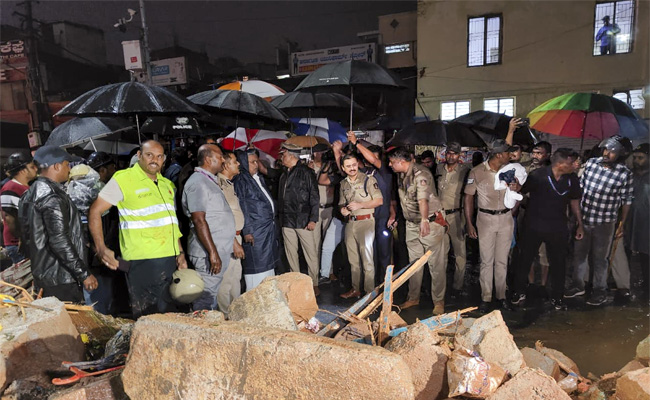
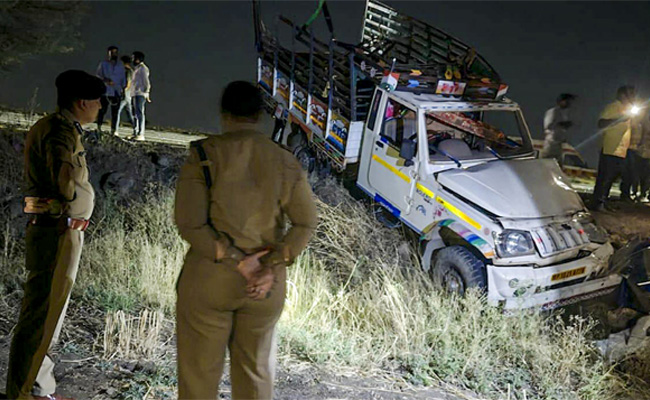
Bengaluru (PTI):The rains in Bengaluru on Wednesday evening wreaked havoc, killing 10 people, authorities said.
Heavy rains coupled with a hailstorm and gusty winds uprooted trees, flooded many key stretches and threw traffic out of gear, they said on Thursday.
Large parts of the city witnessed sudden, intense rainfall for nearly an hour, bringing down trees and electric poles, crushing parked vehicles and inundating low-lying areas, while several roads were rendered impassable, severely disrupting vehicular movement during peak hours.
Seven people, including a six-year-old girl, were killed when a compound wall of the Bowring and Lady Curzon Hospital collapsed amid the downpour.
Among the deceased, two were from Kerala who were on a study tour. They had taken shelter near the wall when it gave way, they said.
ALSO READ: ICSE, ISC results: Girls outperform boys, pass rate over 99%
In another incident, a 35-year-old man, identified as Raghu, died of electrocution on Bannerghatta Road near Vega City Mall.
In a separate case in Yarab Nagar, a student, Syed Sufiyan died after coming into contact with a live electric wire while attempting to park his motorcycle during the rain, police said.
One more fatality was reported from Chamarajapet, where Manjunath died on the spot after a cement block fell and pierced through the roof of a house during the storm.
The sudden spell of rain left a trail of destruction across the city.
“So far, 10 people have died due to rain-related incidents in Bengaluru,” police said, attributing the deaths to wall collapse, electrocution and structural damage triggered by the storm.
Civic authorities said at least 87 trees were uprooted and 131 branches snapped across the city, disrupting daily life.
Of these, 60 trees and 98 branches had been cleared, while restoration work was ongoing.
Several cars and two-wheelers parked along roadsides were crushed under fallen trees.
Key junctions and underpasses were waterlogged, with the KR Circle underpass completely submerged, forcing police to barricade the stretch due to lack of drainage.
Fallen branches and stalled vehicles further worsened traffic congestion, leaving commuters stranded for hours.
Officials said buildings suffered partial damage in several areas, while the sudden and unanticipated nature of the storm caught many residents off guard. Authorities have issued a rain alert for the next three days.