GMU signs MoU with top Medical college of Bahrain for collaboration in Medical Education, Research
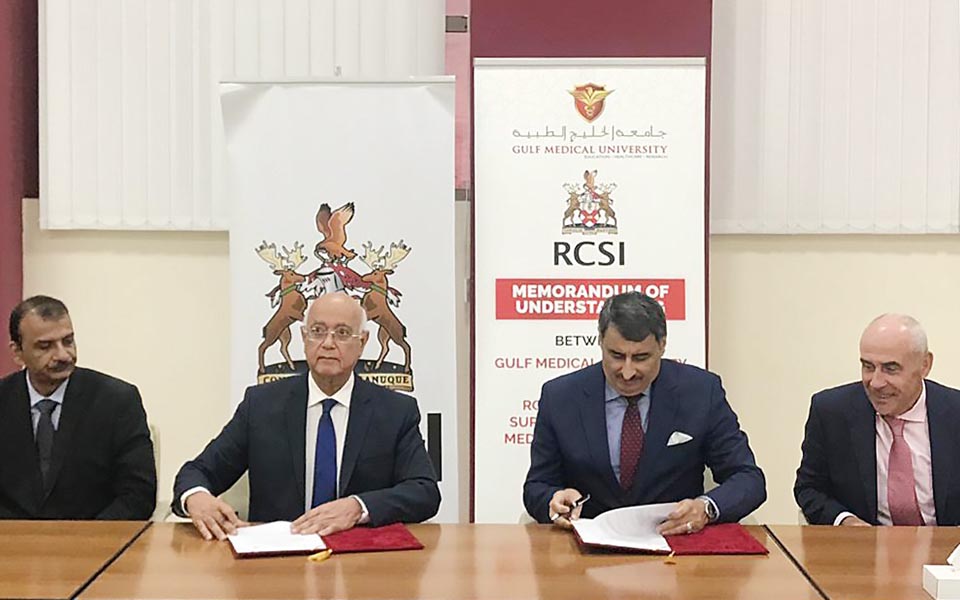
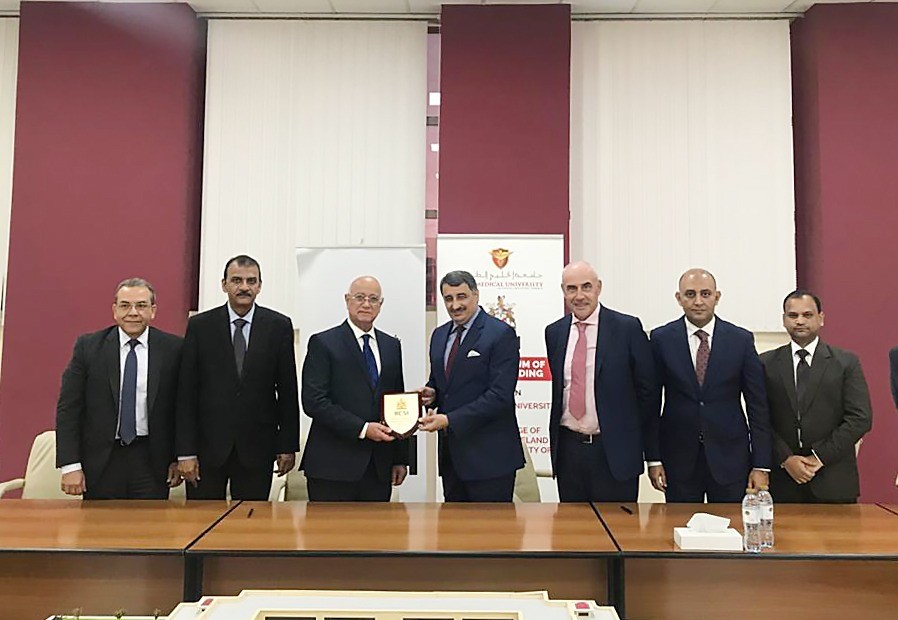
Ajman: Gulf Medical University (GMU), Ajman, on 8th January 2020 signed an agreement for strategic collaboration with the Royal College of Surgeons in Ireland (RCSI), Medical University of Bahrain, aimed to promote mutual cooperation in medical education and research. The MoU was signed at Gulf Medical University on 8th January 2020 by Prof. Hossam Hamdy, the Chancellor, representing GMU and Prof. Sameer Otoom, the President, representing RCSI Bahrain.
The MoU is part of GMU’s strategic objectives concerning internationalization and global collaborations. At present, higher education and training are confined within the walls of universities. E-learning and technological advances maximize the utilization and effectiveness of the learning process. GMU, as a leading medical university in the Gulf region, has close relationships with similar universities in the GMU.
Prof. Hossam Hamdy said the collaboration between GMU and RCSI Bahrain would open up several opportunities in education, research and internationalization. “Both the institutions share the same values and have the same vision and mission of imparting healthcare to the populations of the UAE, Bahrain and the GCC countries through innovations in medical education and healthcare. We hope to take this collaboration ahead in such a way that it benefits both GMU and RCSI Bahrain, as well as the region,” he said.
Prof. Sameer Otoom said that the collaboration would focus on three things mainly: exchange of examiners, joint research and clinical electives. Regarding the delegation’s visit to GMU and the tour of the teaching, training and research facilities, he said, “We are very impressed with the research facilities of GMU that we’ve seen today – a big research center focusing on one type of research and big modern hospitals within the Gulf Medical University Academic Health System. This is an exemplary concept.”
The delegation also complemented GMU for its innovative, technology-intensive training methodology, especially the Virtual Patient Learning (VPL) system developed by GMU to enhance the students’ learning experience.
Gulf Medical University has been establishing tie-ups with leading international universities and research institutions in the United States, Europe, China, India, Japan, Korea, the Gulf States and Egypt, in line with its strategic directions. In the field of research, the University has established international research laboratories that cooperate with a large number of international research centers and work with their counterparts in the UAE, especially in the field of immunology research to treat cancer. GMU receives students from more than 80 countries as its reputation and image goes beyond the region.
Let the Truth be known. If you read VB and like VB, please be a VB Supporter and Help us deliver the Truth to one and all.
Two brothers drown while swimming in lake in Kolar district
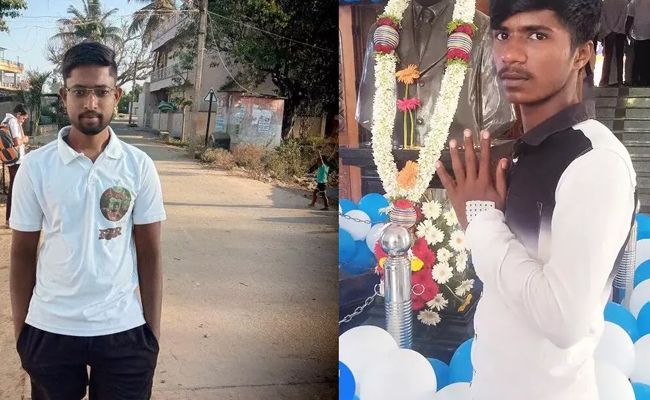
Kolar: Two brothers died after drowning in a village lake near Paccharamakalahalli in Srinivaspur taluk of Kolar district.
The deceased have been identified as Narendra (25) and Chandan (23), residents of Champalli in Ronur hobli.
According to sources, the two had come to Paccharamakalahalli, which falls under the Lakshmipura Gram Panchayat limits, for manual labour work.
They reportedly entered the lake to swim and cool off from the intense afternoon heat but drowned in the water.
The incident occurred within the jurisdiction of the Rayalpad Police Station.