Gulf Medical University celebrates 23rd anniversary in special event

Ajman: Gulf Medical University (GMU), Ajman founded in 1998 by Dr. Thumbay Moideen celebrated its 23nd anniversary in a special event at the University campus on 7th November 2021, attended by Prof. Hossam Hamdy – Chancellor of GMU, in the presence of Vice president Healthcare Division Akbar Moideen Thumbay along with the Vice Chancellors, Deans, Faculty and Staff and a number of students who watched the event streamed live on YouTube.
“23 years ago, there was no Gulf Medical University, but through Dr. Thumbay Moideen’s vision, leadership and hard work and above all his ethical values, we now have this magnificent campus and a strong reputation as Academic Health System ” Said the Chancellor of Gulf Medical University Prof Hossam Hamdy during an Address to the Gathering.
The event also witnessed the official launch of Certificate program for Students as tutor on how to teach and train, this is an important Competency, the student tutor will have lot of benefits as they will gain knowledge and skills of Sharing and Giving knowledge to others it was initially started by the College of Pharmacy, College of Nursing and then Implemented University wide.
The student’s council Represented by Mark Khayat final year College of dentistry and Shariq Khan final year College of medicine also were glad to launch the Peer tutoring Club during this occasion which has more Than 40 students enrolled at present who will undergo this Certificate program.
Wishes from 60 Partner Institutions and Various Alumni from different countries poured in for the GMU team for all the developments and Achievements.
Let the Truth be known. If you read VB and like VB, please be a VB Supporter and Help us deliver the Truth to one and all.
Gujarat builds 870 MW battery power backup network to stabilise renewable energy grid
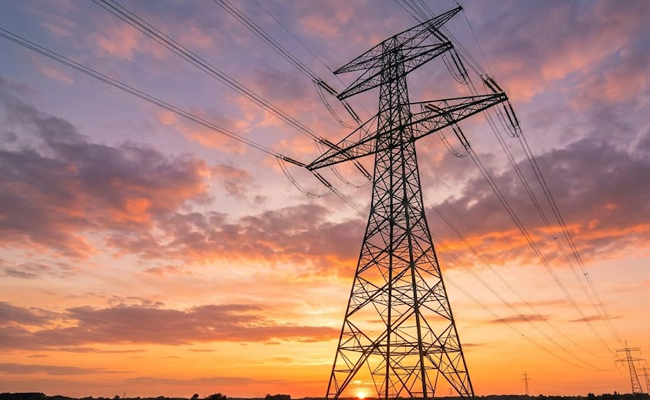
Gandhinagar (PTI): Gujarat has initiated battery storage systems at five locations in the state, with a total capacity of 870 MW, to maintain the stability of the renewable power grid, officials said on Saturday.
Battery Energy Storage Systems (BESS) are essential for storing electricity generated from solar and other renewable sources. They help manage additional load and maintain grid stability.
“Gujarat has initiated battery storage systems at five locations with a total capacity of 870 MW,” an official release stated.
The state has also registered 13 projects across Ahmedabad, Gandhinagar, Banaskantha, Patan and Kutch districts to set up additional battery storage systems, it said.
Modhera in Gujarat, India’s first solar village, has launched the country’s first BESS integrated with a solar power plant, it said.
"Under the leadership of Chief Minister Bhupendra Patel, the state has continued to advance in this direction and has strengthened its position among the leading states driving battery storage systems in India,” the release said.
Recently, a battery storage system was commissioned at Charal in the Sanand taluka of Ahmedabad, it said.
Four systems are operational at Modhera in Mehsana and Lakhpat in Kutch. The state government has also included advanced energy storage systems as a key component in the Gujarat Integrated Renewable Energy Policy, 2025, the release said.
Accordingly, standalone battery storage projects, works linked with new renewable energy installations, and those integrated with existing renewable energy systems are being approved, it said.
Once the Standard Operating Procedure is approved, registrations for battery storage will open for commercial and industrial users, it said, adding that the move will allow them to set up battery storage alongside their solar or wind projects.
The state government is developing battery storage systems across Gujarat, with companies being invited in through a competitive bidding process.
GETCO (Gujarat Energy Transmission Corporation) and power distribution companies strategically identify locations for battery storage systems based on grid capacity and operational requirements, the release said.
Power generation from solar and other renewable sources fluctuates throughout the day. Excess energy generated during peak hours can be stored and supplied later during periods of high demand, especially in the evening when solar output declines. Battery storage systems help reduce stress on the grid and improve grid stability, it added.