Kuwait's ruling emir, Sheikh Nawaf Al Ahmad Al Sabah, dies at age 86
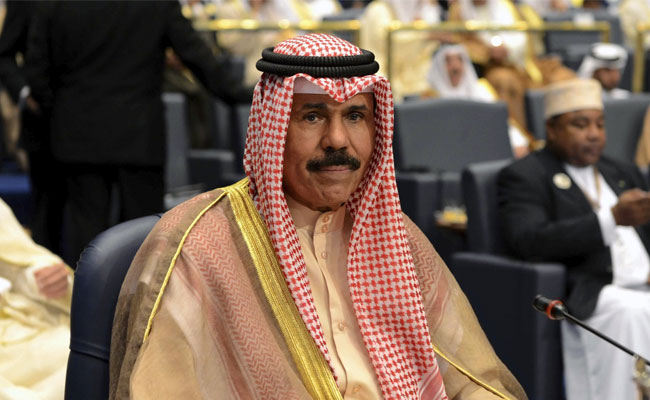
Dubai (AP): Kuwait's ruling emir, the 86-year-old Sheikh Nawaf Al Ahmad Al Sabah, died Saturday.
Kuwait state television broke into programming with Quranic verses just before a somber official made the announcement.
"With great sadness and sorrow, we the Kuwaiti people, the Arab and Islamic nations, and the friendly peoples of the world mourn the late His Highness the emir, Sheikh Nawaf Al Ahmad Al Jaber Al Sabah, who passed away to his Lord today," Sheikh Mohammed Abdullah Al Sabah, the minister of his emiri court, read the brief statement.
Authorities gave no cause of death.
Kuwait's deputy ruler and his half-brother, Sheikh Meshal Al Ahmad Al Jaber, now 83, is believed to be the world's oldest crown prince. He is in line to take over as Kuwait's ruler.
In late November, Sheikh Nawaf was rushed to hospital for an unspecified illness. In the time since, the tiny, oil-rich nation had been waiting for news about his health. State-run news previously reported that he traveled to the United States for unspecified medical checks in March 2021.
The health of Kuwait's leaders remains a sensitive matter in the Middle Eastern nation bordering Iraq and Saudi Arabia, which has seen internal power struggles behind palace doors.
Sheikh Nawaf was sworn in as emir following the 2020 death of his predecessor, the late Sheikh Sabah Al Ahmad Al Sabah. The breadth and depth of emotion over the loss of Sheikh Sabah, known for his diplomacy and peacemaking, was felt across the region.
Sheikh Nawaf previously served as Kuwait's interior and defense minister but wasn't seen as particularly active in government outside those terms. However, he was largely an uncontroversial choice for emir, though his advancing age led analysts to suggest his tenure would be short.
Sheikh Nawaf's term had been focused on domestic issues as struggles through political disputes including the overhaul of Kuwait's welfare system which prevented the sheikhdom from taking on debt. That's left it with little in its coffers to pay bloated public sector salaries, despite generating immense wealth from its oil reserves.
In 2021, Sheikh Nawaf issued a long-awaited amnesty decree, pardoning and reducing the sentences of nearly three dozen Kuwaiti dissidents in a move aimed at defusing a major government standoff. He issued another just before his illness, aiming to resolve that political impasse. Kuwait is perceived as having the Gulf's freest parliament that comparatively allows for dissent.
Meanwhile, the Gulf Cooperation Council states, including Qatar, Saudi Arabia and the United Arab Emirates, restored ties after years of a boycott of Doha, easing regional tensions and allowing Sheikh Nawaf to focus on issues at home.
Kuwait, a nation home to some 4.2 million people which is slightly smaller than the U.S. state of New Jersey, has the world's sixth-largest known oil reserves.
It has been a staunch U.S. ally since the 1991 Gulf War expelled the occupying Iraqi forces of Saddam Hussein. Kuwait hosts some 13,500 American troops in the country, as well as the forward headquarters of the U.S. Army in the Middle East.
Let the Truth be known. If you read VB and like VB, please be a VB Supporter and Help us deliver the Truth to one and all.
SP has ended contract with I-PAC due to fund constraints: Akhilesh Yadav
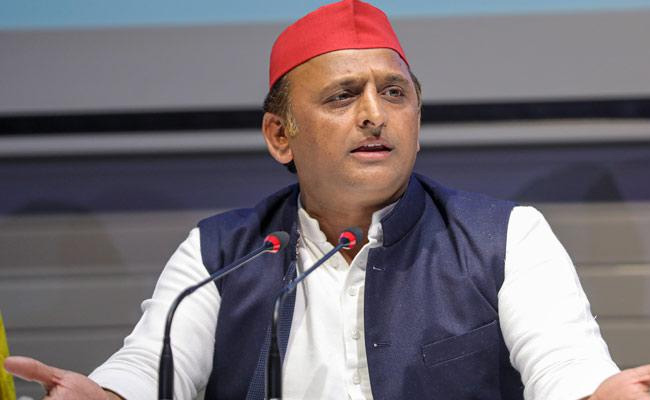
Lucknow (PTI): Samajwadi Party president Akhilesh Yadav on Wednesday said his party has severed its association with the Indian Political Action Committee (I-PAC) due to a lack of funds.
He dismissed speculations that the termination of contract was because of recent election results.
Addressing a press conference here, Yadav said the party had engaged I-PAC for a brief period ahead of the 2027 Uttar Pradesh Assembly elections but could not continue the arrangement.
"Yes, we had an association. They worked with us for a few months, but we are not able to continue because we do not have that kind of funding," he said.
The I-PAC is a political consultancy firm known for managing major election campaigns across the country.
Election strategist-turned-politician Prashant Kishor has also been associated with the organisation in the past and has worked with multiple parties, including the BJP and the Congress.
In a lighter vein, Yadav took a swipe at the ecosystem of political consultancies. "We thought that if we have to work with a 'winning agency', then there are several big companies."
He said that some people suggested conducting surveys, hiring another firm, keeping a social media company, and even engaging agencies for negative campaigning against other parties.
"There are one or two more companies whose names are not yet known. I can get those for you as well," Yadav said.
Yadav rejected the suggestion that the decision to end the deal was influenced by recent election outcomes in states such as West Bengal.
"There is no such thing. Do not ask questions based on baseless reports. That is not true," he said.
"This is not the reason for ending the agreement. We simply do not have enough funds. If you (the media) give us funds, we can hire another company," the former Uttar Pradesh chief minister said.