Saudi Arabia puts 81 to death in its largest mass execution
Dubai, Mar 12: Saudi Arabia on Saturday executed 81 people convicted of crimes ranging from killings to belonging to militant groups, the largest known mass execution carried out in the kingdom in its modern history.
The number of executed surpassed even the toll of a January 1980 mass execution for the 63 militants convicted of seizing the Grand Mosque in Mecca in 1979, the worst-ever militant attack to target the kingdom and Islam's holiest site.
It wasn't clear why the kingdom choose Saturday for the executions, though they came as much of the world's attention remained focused on Russia's war on Ukraine and as the U.S. hopes to lower record-high gasoline prices as energy prices spike worldwide. British Prime Minister Boris Johnson reportedly plans a trip to Saudi Arabia next week over oil prices as well.
The number of death penalty cases being carried out in Saudi Arabia had dropped during the coronavirus pandemic, though the kingdom continued to behead convicts under King Salman and his assertive son, Crown Prince Mohammed bin Salman.
The state-run Saudi Press Agency announced Saturday's executions, saying they included those convicted of various crimes, including the murdering of innocent men, women and children."
A Saudi-led coalition has been battling the Iran-backed Houthis since 2015 in neighboring Yemen in an effort to restore the internationally recognized government to power.
Those executed included 73 Saudis, seven Yemenis and one Syrian. The report did not say where the executions took place.
Let the Truth be known. If you read VB and like VB, please be a VB Supporter and Help us deliver the Truth to one and all.
Gujarat builds 870 MW battery power backup network to stabilise renewable energy grid
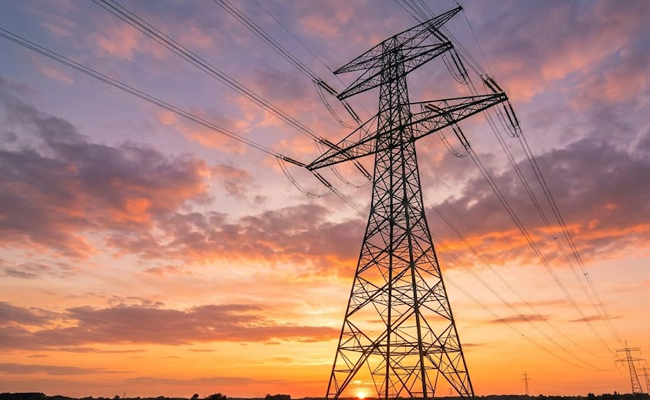
Gandhinagar (PTI): Gujarat has initiated battery storage systems at five locations in the state, with a total capacity of 870 MW, to maintain the stability of the renewable power grid, officials said on Saturday.
Battery Energy Storage Systems (BESS) are essential for storing electricity generated from solar and other renewable sources. They help manage additional load and maintain grid stability.
“Gujarat has initiated battery storage systems at five locations with a total capacity of 870 MW,” an official release stated.
The state has also registered 13 projects across Ahmedabad, Gandhinagar, Banaskantha, Patan and Kutch districts to set up additional battery storage systems, it said.
Modhera in Gujarat, India’s first solar village, has launched the country’s first BESS integrated with a solar power plant, it said.
"Under the leadership of Chief Minister Bhupendra Patel, the state has continued to advance in this direction and has strengthened its position among the leading states driving battery storage systems in India,” the release said.
Recently, a battery storage system was commissioned at Charal in the Sanand taluka of Ahmedabad, it said.
Four systems are operational at Modhera in Mehsana and Lakhpat in Kutch. The state government has also included advanced energy storage systems as a key component in the Gujarat Integrated Renewable Energy Policy, 2025, the release said.
Accordingly, standalone battery storage projects, works linked with new renewable energy installations, and those integrated with existing renewable energy systems are being approved, it said.
Once the Standard Operating Procedure is approved, registrations for battery storage will open for commercial and industrial users, it said, adding that the move will allow them to set up battery storage alongside their solar or wind projects.
The state government is developing battery storage systems across Gujarat, with companies being invited in through a competitive bidding process.
GETCO (Gujarat Energy Transmission Corporation) and power distribution companies strategically identify locations for battery storage systems based on grid capacity and operational requirements, the release said.
Power generation from solar and other renewable sources fluctuates throughout the day. Excess energy generated during peak hours can be stored and supplied later during periods of high demand, especially in the evening when solar output declines. Battery storage systems help reduce stress on the grid and improve grid stability, it added.