Six workers, believed to be Indians, killed at Oman construction site

Dubai: At least six construction workers, believed to be Indian nationals, were killed in Oman when they were buried at an excavation site of a water pipeline project due to heavy rains.
The incident happened in the Seeb area of Muscat following heavy rain on Sunday, the Indian Embassy in Muscat said.
"We are deeply saddened to learn about the incident involving death of six workers, who are believed to be Indian nationals, in Seeb area of Muscat, Oman, following the heavy rains on November 10," the Indian embassy said in a tweet.
The embassy said that they are in close contact with the Omani officials to ascertain the full facts of the incident and confirm the identities of the victims.
"We express our heartfelt condolences to the families of the victims and stand ready to extend all possible support," it said in another tweet.
While there was no confirmation about the exact circumstances under which the workers died, reports in the local media said that the victims were working on a section of pipe that was 14 metres below the ground.
The rescue team took nearly 12 hours to recover the bodies, the Muscat Daily reported.
Let the Truth be known. If you read VB and like VB, please be a VB Supporter and Help us deliver the Truth to one and all.
Two brothers drown while swimming in lake in Kolar district
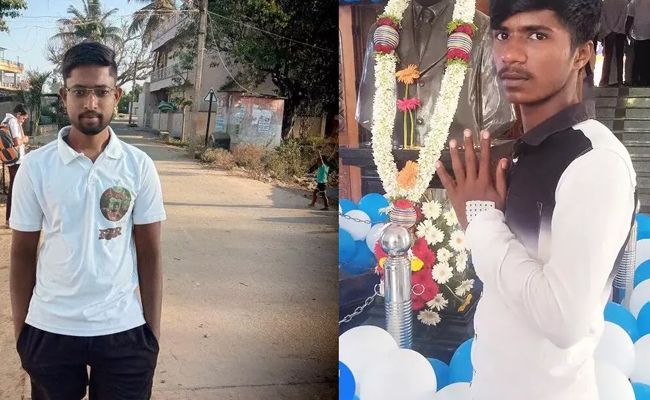
Kolar: Two brothers died after drowning in a village lake near Paccharamakalahalli in Srinivaspur taluk of Kolar district.
The deceased have been identified as Narendra (25) and Chandan (23), residents of Champalli in Ronur hobli.
According to sources, the two had come to Paccharamakalahalli, which falls under the Lakshmipura Gram Panchayat limits, for manual labour work.
They reportedly entered the lake to swim and cool off from the intense afternoon heat but drowned in the water.
The incident occurred within the jurisdiction of the Rayalpad Police Station.