UAE to have 2 and half day weekend starting January 2022
Four and half day working week model
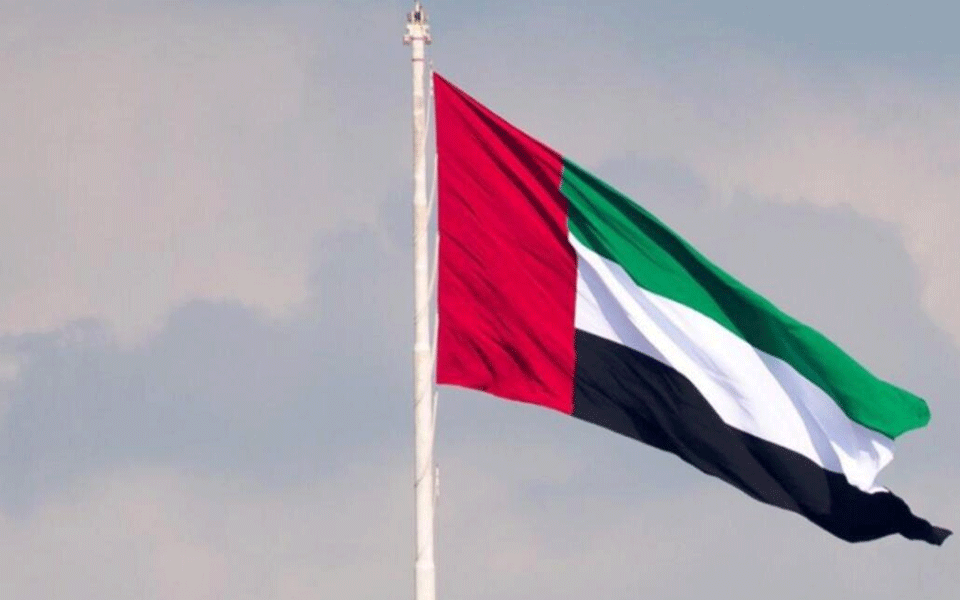
Dubai: The United Arab Emirates said Tuesday its official workweek will move to Monday to Friday, a major change that brings the Islamic nation that is home to major financial institutions in line with Western schedules.
The decision, which is to take effect next month, makes the Gulf Arab state, home to Abu Dhabi and Dubai, one of the few places in the Middle East to operate on Western hours instead of on a Sunday through Thursday working week.
Government employees would work a half-day on Friday, the traditional Muslim holy day, and then take Saturday and Sunday off, the announcement said.
The government shift likely will see private industry and schools follow suit, as they did in 2006, when the week changed from Saturday to Wednesday an Islamic workweek followed in some Muslim countries, such as Iran and Afghanistan.
The Emirati government hailed the decision as making it the first nation in the world to introduce a national working week shorter than the global five-day week a reference to Friday becoming only a half-day workday.
The extended weekend comes as part of the UAE's government efforts to boost work-life balance and enhance social wellbeing, the statement added.
Let the Truth be known. If you read VB and like VB, please be a VB Supporter and Help us deliver the Truth to one and all.
Gujarat builds 870 MW battery power backup network to stabilise renewable energy grid
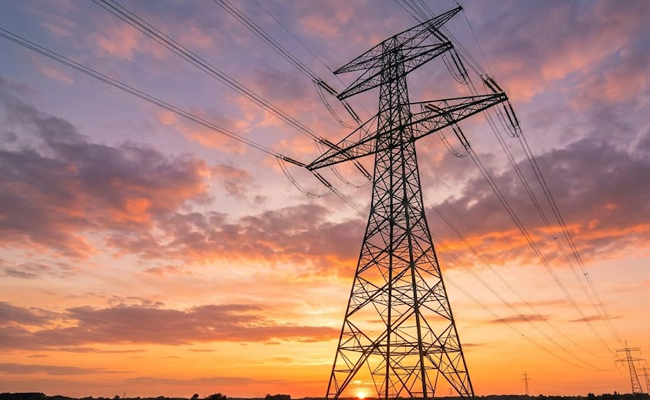
Gandhinagar (PTI): Gujarat has initiated battery storage systems at five locations in the state, with a total capacity of 870 MW, to maintain the stability of the renewable power grid, officials said on Saturday.
Battery Energy Storage Systems (BESS) are essential for storing electricity generated from solar and other renewable sources. They help manage additional load and maintain grid stability.
“Gujarat has initiated battery storage systems at five locations with a total capacity of 870 MW,” an official release stated.
The state has also registered 13 projects across Ahmedabad, Gandhinagar, Banaskantha, Patan and Kutch districts to set up additional battery storage systems, it said.
Modhera in Gujarat, India’s first solar village, has launched the country’s first BESS integrated with a solar power plant, it said.
"Under the leadership of Chief Minister Bhupendra Patel, the state has continued to advance in this direction and has strengthened its position among the leading states driving battery storage systems in India,” the release said.
Recently, a battery storage system was commissioned at Charal in the Sanand taluka of Ahmedabad, it said.
Four systems are operational at Modhera in Mehsana and Lakhpat in Kutch. The state government has also included advanced energy storage systems as a key component in the Gujarat Integrated Renewable Energy Policy, 2025, the release said.
Accordingly, standalone battery storage projects, works linked with new renewable energy installations, and those integrated with existing renewable energy systems are being approved, it said.
Once the Standard Operating Procedure is approved, registrations for battery storage will open for commercial and industrial users, it said, adding that the move will allow them to set up battery storage alongside their solar or wind projects.
The state government is developing battery storage systems across Gujarat, with companies being invited in through a competitive bidding process.
GETCO (Gujarat Energy Transmission Corporation) and power distribution companies strategically identify locations for battery storage systems based on grid capacity and operational requirements, the release said.
Power generation from solar and other renewable sources fluctuates throughout the day. Excess energy generated during peak hours can be stored and supplied later during periods of high demand, especially in the evening when solar output declines. Battery storage systems help reduce stress on the grid and improve grid stability, it added.