UAE to impose federal corporate tax for the first time
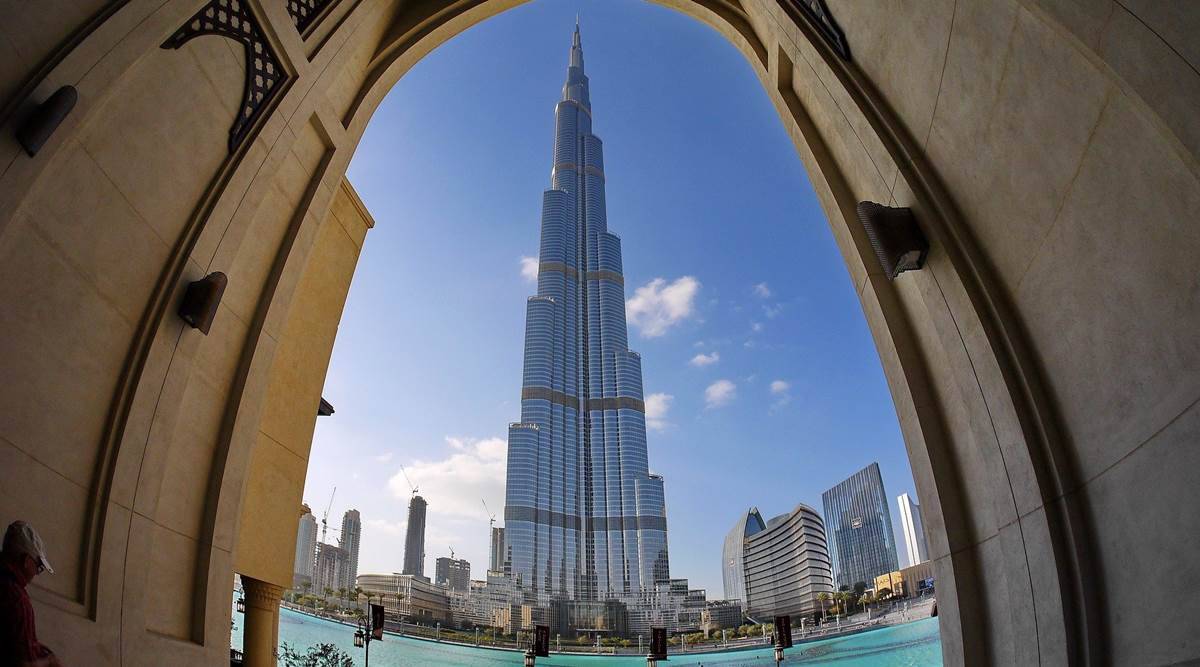
Dubai, Jan 31: The United Arab Emirates announced Monday it is introducing for the first time a federal corporate tax on business earnings. It's the latest measure to bring the country in line with many governments worldwide but one that also chips away at its competitive advantage.
The UAE home to Abu Dhabi, Dubai and five other emirates has been steadily introducing new taxes as it seeks to diversify revenue from its mainstay of oil. It is unclear how the new 9% corporate tax on earnings will impact consumers as some businesses could raise their prices as a result.
Businesses across various sectors in the UAE are still reeling from the effects of the coronavirus pandemic. Untold numbers of foreigners, who comprise around 90% of the UAE's population, lost their jobs amid the pandemic and salaries were slashed in key industries such as tourism, real estate and the construction sector.
The UAE has recently taken steps to try and retain foreign investors, including loosening restrictions on business ownership rules and granting longer-term visas for some. It has also liberalised some of its Islamic laws around alcohol and unmarried couples, and moved to a Monday-Friday workweek.
Still, the UAE faces steep competition from neighbouring Saudi Arabia, which is working overtime to attract businesses and families to relocate to the kingdom.
The UAE's Ministry of Finance said the new federal tax of 9% on profits would be effective starting June 1, 2023. The corporate tax will not apply to personal income from employment, real estate and other investments, or to income earned from a business licensed outside the UAE.
The UAE has long positioned itself as a place where foreign investors are welcome and where incomes are tax free. Low taxes and a friendly business environment helped to transform the 50-year-old nation over the years.
The new corporate tax also does not apply to companies in Emirati free zones unless they conduct their business onshore. Another exception are oil and gas companies, which are subject to their own tax schemes.
Business profits of up to roughly 102,000 will not be taxed, the ministry said, in order to support small businesses and startups. Furthermore, foreign taxes can be credited against the UAE's corporate tax to avoid double taxation. The tax scheme will allow UAE business groups to be taxed as a single entity or apply for relief amid losses or restructuring.
Various emirates in the UAE have been steadily introducing fees and taxes in past years. After oil prices dipped dramatically in mid-2015, the government reduced some subsidies and imposed a 5% value added tax on most goods and services, a standard tax that is still lower than in many countries around the world.
Let the Truth be known. If you read VB and like VB, please be a VB Supporter and Help us deliver the Truth to one and all.
Gujarat builds 870 MW battery power backup network to stabilise renewable energy grid
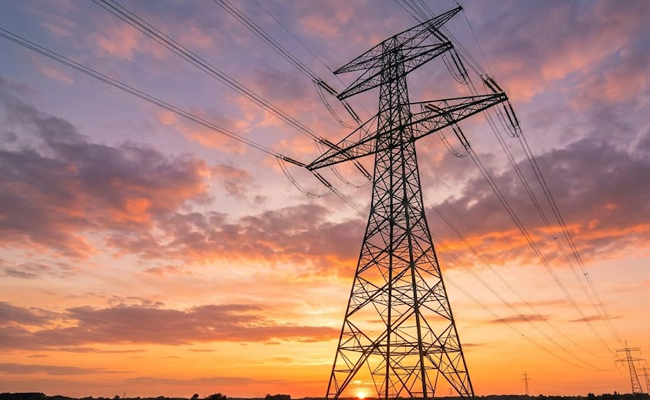
Gandhinagar (PTI): Gujarat has initiated battery storage systems at five locations in the state, with a total capacity of 870 MW, to maintain the stability of the renewable power grid, officials said on Saturday.
Battery Energy Storage Systems (BESS) are essential for storing electricity generated from solar and other renewable sources. They help manage additional load and maintain grid stability.
“Gujarat has initiated battery storage systems at five locations with a total capacity of 870 MW,” an official release stated.
The state has also registered 13 projects across Ahmedabad, Gandhinagar, Banaskantha, Patan and Kutch districts to set up additional battery storage systems, it said.
Modhera in Gujarat, India’s first solar village, has launched the country’s first BESS integrated with a solar power plant, it said.
"Under the leadership of Chief Minister Bhupendra Patel, the state has continued to advance in this direction and has strengthened its position among the leading states driving battery storage systems in India,” the release said.
Recently, a battery storage system was commissioned at Charal in the Sanand taluka of Ahmedabad, it said.
Four systems are operational at Modhera in Mehsana and Lakhpat in Kutch. The state government has also included advanced energy storage systems as a key component in the Gujarat Integrated Renewable Energy Policy, 2025, the release said.
Accordingly, standalone battery storage projects, works linked with new renewable energy installations, and those integrated with existing renewable energy systems are being approved, it said.
Once the Standard Operating Procedure is approved, registrations for battery storage will open for commercial and industrial users, it said, adding that the move will allow them to set up battery storage alongside their solar or wind projects.
The state government is developing battery storage systems across Gujarat, with companies being invited in through a competitive bidding process.
GETCO (Gujarat Energy Transmission Corporation) and power distribution companies strategically identify locations for battery storage systems based on grid capacity and operational requirements, the release said.
Power generation from solar and other renewable sources fluctuates throughout the day. Excess energy generated during peak hours can be stored and supplied later during periods of high demand, especially in the evening when solar output declines. Battery storage systems help reduce stress on the grid and improve grid stability, it added.