Plasma therapy not beneficial in reducing mortality or progression to severe COVID-19: Study
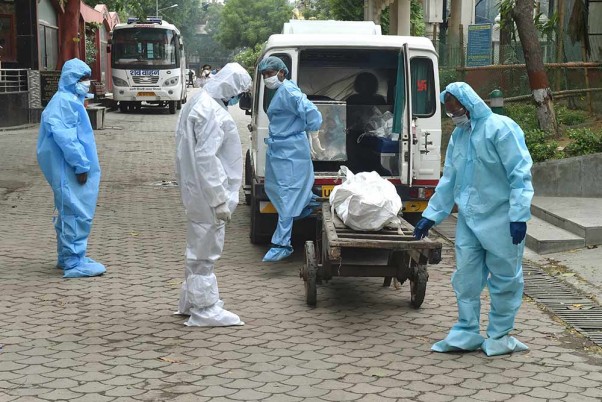
New Delhi: Use of convalescent plasma therapy in coronavirus-infected patients does not help in reducing mortality or progression to severe COVID-19, a multi-centric study funded by the Indian Council of Medical Research (ICMR) has found.
The 'open-label parallel-arm phase II multicentre randomized controlled trial' (PLACID Trial) was conducted across 39 public and private hospitals across India between April 22 to July 14 to investigate the effectiveness of convalescent plasma (CP) for the treatment of COVID-19, it said.
The convalescent plasma (CP) therapy involves taking antibodies from the blood of a person who has recovered from COVID-19 and transfusing those antibodies into an active coronavirus patient to help kickstart the immune system to fight the infection.
A total of 464 participants (moderately ill COVID-19 patients admitted to hospitals) were enrolled for the study, which has not yet been peer-reviewed and has appeared on medRxiv, a preprint server.
The National Task Force for COVID-19, a committee formed by the ICMR to respond to the pandemic, has reviewed and approved this study, it said.
The Clinical Management Protocols for COVID-19 issued by the Union Health Ministry on June 27 allowed use of convalescent plasma (Off label) for treating coronavirus-infected patients in moderate stage of the illness under "investigational therapies"
This authorisation has been paralleled by questionable practices such as calls for donors on social media, and the sale of CP on the black market with exorbitant price tags in India, the study said.
Additionally, although CP is a safe therapeutic modality, plasmapheresis, plasma storage and NAb measurement are all resource-intensive processes, with a limited number of institutes in the country having the capacity to undertake these activities in a quality-assured manner.
"The CP was not associated with reduction in mortality or progression to severe COVID-19," the study said, adding this trial has high generalisability and approximates real-life setting of CP therapy in settings with limited laboratory capacity.
A prior measurement of neutralising antibody titres in donors and participants may further clarify the role of CP in management of COVID-19, it said.
The study trial included 464 moderately ill coronavirus infected hospitalised patients, of whom 235 were given convalescent plasma along with best of standard care while 229 received only standard care, as per the study.
Those in the intervention arm received two doses of 200 ml of CP, transfused 24 hours apart, in addition to the BSC (best standard of care). The two plasma units were collected preferably from different donors depending on the availability and ABO compatibility to increase chances of receiving CP with NAb, it said.
"The PLACID trial results indicate that there was no difference in 28-day mortality or progression to severe disease among moderately ill COVID-19 patients treated with CP along with BSC compared to BSC alone," the study said.
The central implementation team at the ICMR was responsible for study design, study coordination, data analysis, data interpretation and writing of the report, the study stated.
Patient enrolment, data collection and actual conduct of the study was done at public and private hospitals independently and the investigators in the ICMR had no role in it, it added.
Convalescent plasma (CP) as a passive source of neutralising antibodies and immunomodulators is a century-old therapeutic option used for the management of viral diseases.
According to the study, only two randomised controlled trials on CP use in COVID-19 have been published, one from China and the other from the Netherlands.
Both were halted prematurely, the China study due to inadequate patient enrolment and the one from the Netherlands due to a need to redesign the trial based on interim findings.
In both studies, no mortality benefit was noted, and the Dutch study raised uncertainties regarding pre-transfusion antibody-status of patients as a potential factor in identifying appropriate candidates for CP therapy.
This uncertainty in the published evidence is reflected in a recent systematic review, which remained undecided on both the safety and effectiveness of CP as a therapeutic option in hospitalized patients of COVID-19.
Meanwhile, CP therapy has received regulatory approval for use in patients in different countries. This has resulted in its widespread adoption in real-world clinical practice, where it is being used to treat COVID-19 patients with a wide spectrum of disease severity.
"Given these uncertainties, we undertook the current study to determine the effectiveness of using CP in moderately ill COVID-19 patients admitted to hospitals across India in limiting progression to severe disease and determine the associated short-term adverse effects," the study said.
All participants or their family members or legally authorised representatives were provided with information regarding the trial in a language they were comfortable with, and written informed consent was obtained prior to participant recruitment, it said.
Let the Truth be known. If you read VB and like VB, please be a VB Supporter and Help us deliver the Truth to one and all.
Two arrested in K'taka for assaulting minors, uploading CSAM content

Bengaluru (PTI): Two men were arrested for allegedly sexually assaulting two minor girls, recording the acts on mobile phones and uploading the videos online as child sexual abuse material, police said on Thursday.
The accused have been identified as Kiran Kumar (29), hailing from Chitradurga district, and Aditya M K (20), hailing from Shivamogga district, they said.
A probe was initiated after information was received from the NCRP portal regarding a suspected instance of creation of Child Sexual Abuse Material (CSAM) for online dissemination, police said.
Accordingly, a case was registered at Kaggalipura Police Station under relevant sections of the IT Act on May 10, they added.
Investigation revealed that two minor girl victims were exploited and videos were created and uploaded to the internet. The child victims have subsequently recorded their statements as per procedure and further necessary legal steps have been taken, Pronab Mohanty Director General of Police, Cyber Command, said in a statement.
Based on the statements of the victims, the accused persons, who allegedly assaulted the minors, recorded the acts on mobile phones and uploaded the videos online, were arrested, he said.
Following the probe, sections 65(2) (rape) and 70 (gangrape) of the Bharatiya Nyaya Sanhita, along with relevant sections of the POCSO Act, have been added to the FIR, police said.
Officials collected relevant information and on May 12, arrested the accused persons and seized three mobile phones belonging to them, in which the videos had allegedly been recorded, he said.
The accused were later produced before the court and taken into police custody for further investigation, he added.
According to him, in CSAM cases, police usually apprehend offenders who have downloaded such content or have kept them in their possession after obtaining them from elsewhere, usually the internet.
"The present case is one of the very few instances where content creators and uploaders have been apprehended," Mohanty added.