Younger population now falling prey to head and neck cancer: Experts
Kolkata, July 27 : As much as 30 to 40 per cent of males and 11-16 per cent of females among those afflicted with malignancies in India are head and neck cancer patients, experts said here on Friday, expressing concern over the younger population now falling prey to the malady.
"Head and neck cancer patients pose a significant problem in our country, constituting 30-40 per cent of all cancers in male and almost 11-16 per cent in females and there is a need to spread proper awareness," surgical oncologist Gautam Mukhopadhyay said here at the launch of the West Bengal Head and Neck Society.
Mukhopadhyay, a senior trustee of the society, said annually over 200,000 such cancers occur in India out of which 80,000 are oral cancers.
According to him, lifestyle behaviour like chewing tobacco, betel leaves and also smoking remain the main reasons for such a high incidence of oral and pharyngeal cancer.
The symptoms of head and neck cancer can be any persisting ulcers inside the mouth, change in voice, problem in swallowing food, a painless lump inside the neck for almost 4 weeks, chronic coughing, bleeding from ears, nose or throat and so on.
According to P.N. Mahapatra, a senior oncologist and senior trustee of the society, maximum number of mouth cancer is seen in patients after the age of 55.
"But there is an alarming trend towards the younger patient population. Malignancy of thyroid gland affecting all age groups is also rising and India stands second in prevalence of oesophageal cancer after China."
Mukhopadhyay said the newly formed society would create awareness about head and neck cancer in the state.
"Our primary focus is on cohesive work, communication between Public and Private sector, through scientific seminars, awareness camps, conferences and workshops to give world-class facilities to patients," he said.
Another senior oncologist Aniruddha Dam said the society would try to fill up the gap between city and district-based diagnosis of such cancers.
According to him, there is a need for a population based cancer registry for head and neck cancer, and the society aims to reach out to the maximum number of hospitals in that regard.
He also said that training of the upcoming doctors will help in early diagnosis and give the best treatment to the patients of head and neck cancer.
This year, the World Tour of International Federation of Head and Neck Oncologic Societies will be held in Kolkata from October 26-28.
Let the Truth be known. If you read VB and like VB, please be a VB Supporter and Help us deliver the Truth to one and all.
US VP JD Vance says Lebanon not part of ceasefire, calls it ‘misunderstanding’
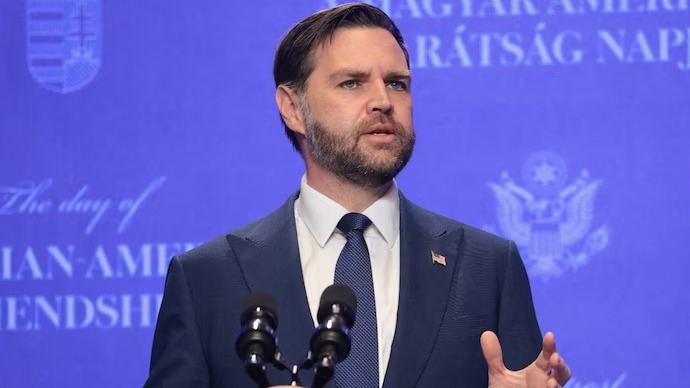
Budapest/Washington: US Vice President J D Vance has said that Lebanon was never included in the ceasefire understanding with Iran, describing the confusion as a “legitimate misunderstanding”.
Speaking to reporters before departing from Hungary, Vance said, “I think the Iranians thought that the ceasefire included Lebanon and it just didn’t. We never made that promise.”
He stressed that the United States had not included Lebanon in the scope of the ceasefire at any stage.
His remarks come amid continued Israeli strikes in Lebanon, where more than 200 people were reported killed, even as ceasefire talks between Iran and the US move forward.
Vance said Israel had “offered … to check themselves a little bit in Lebanon because they want to make sure that our negotiation is successful”.
He warned that if Iran allows the situation in Lebanon to affect the negotiations, it could derail the talks.
“If Iran wants to let this negotiation fall apart in a conflict where they were getting hammered over Lebanon, which has nothing to do with them and which the United States never once said was part of the ceasefire, that’s ultimately their choice,” he said.