
Subfertility has cure; Patience, Persistence and Positive attitude are key factors

Dr. Shaweez Faizi is a consultant in gynaecology and reproductive medicine at Unity Hospital Mangaluru.
Infertility by definition is the inability of a couple to conceive a child after 1 year of unprotected sexual intercourse. With the advent of science and research in this particular field, many couples who believe they have infertility have been regrouped as being sub-fertile where there is only a delay in conceiving. Unlike any other medical condition, the diagnosis of subfertility is not made in a day.
The sub-fertile couple
For the couple, it gradually sinks in when they realize that they have not been able to bear a child one month after the other. A negative urine pregnancy test where they are hoping for that second line of confirmation to appear, even faintly! Or the start of your periods- A sign that you are not pregnant is the sign and stuff that triggers a feeling that cannot be put in words by the couple.
However, like any other long-standing problem, the stages are probably the same. The realization of the problem, denial, trying for a few more months may help, re-realization! And finally gradual acceptance of the issue.
Then comes the next step- The decision to meet a doctor for an opinion. Several rounds of discussion, frustration-filled months, and depression may follow. Hesitation to visit a clinic, social stigma associated with the problem, worries of expenditures involved in the treatment process may lead to further delay in addressing the problem.
As doctors, we feel the society needs a change in the mental setup for this issue. Of course, there are couples who are showing up earlier, seeking treatment for want of a baby, but the above said hurdles still exist in all strata of the community. For the mental setup to change and more people to come forward for treatment, one of the most important factors is awareness of the issue.
The following section is a set of FAQ’s linked with infertility.
Q: Who should visit an infertility specialist?
A: A couple staying together and having unprotected intercourse with the inability of having conceived for 1 year.
Q: Should you consider visiting a specialist earlier than 1 year?
A: Yes, if the age of the female partner is ≥ 35years, if the couple suspects any underlying cause for infertility, it is advisable to get evaluated even 6 months after unprotected intercourse.
Q: What are the symptoms/pointers towards a potential underlying cause for infertility?
A: Female partner experiencing irregular, delayed periods/heavy bleeding/excessive pain during periods/during sexual intercourse. Male partner with difficulty in maintaining an erection/other coital difficulties.
Q: What to expect when visiting a fertility clinic?
A: Your preliminary visit will comprise a detailed history of your menstrual cycles/previous pregnancy details/past treatment history followed by initial hormonal evaluation, ultrasound, and semen analysis.
You will be explained in detail about the factors attributing to infertility for you as a couple and the possible treatment options.
For a better understanding, one must be aware of the natural process of conception/ becoming pregnant.
In a regularly menstruating woman, an egg is released between day 12 to day 14 of the menses cycle, which is carried by the fallopian tube. Following sexual intercourse after millions of sperms are released, the sperm must travel to the fallopian tube and fertilize the egg (in the fallopian tube). After fertilization, the embryo reaches the uterus 4 days later to attach to the inner uterine lining, following which the growth of the embryo occurs.
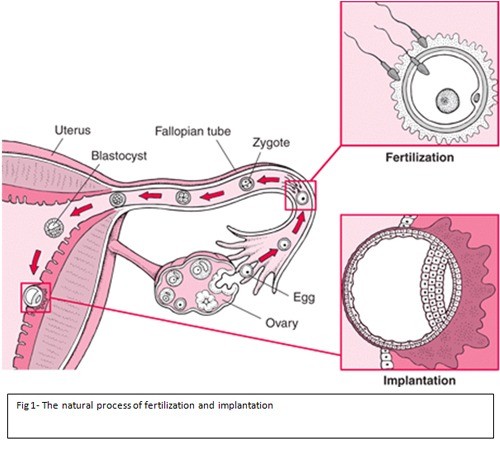
Depending on the risk factors/ pointers towards a problem, necessary investigations may need to be carried out and treatment will be planned accordingly.
Q: What can you do to contribute to better results in your treatment?
A: Lifestyle modifications such as maintaining a normal BMI, avoiding weight gain (both male and female partners), curtailing habits such as smoking/ consumption of alcohol/ junk foods will help a long way.
The process of evaluation and treatment for a couple with a fertility issue is a gradual one. Many investigations and treatments will be planned as per your menstrual cycles, few treatment results may need a follow up for even 3 to 6 months depending on the factors.
Hence it requires patience, persistence, and most of all a positive attitude by the couple to over the top of the issue goals.
Come start this journey with us and we assure you to guide you and partner in your journey towards parenthood. Meeting a fertility specialist is one of the several important steps you have to take to begin this journey so why postpone it for tomorrow!
Let the Truth be known. If you read VB and like VB, please be a VB Supporter and Help us deliver the Truth to one and all.
Several Gurugram schools receive hoax bomb threats

Gurugram (PTI): Several Gurugram schools received another hoax bomb threat emails on Wednesday morning, prompting police to launch searches on the premises.
Police said the email was sent by the 'Khalistan National Army', with threats issued to Haryana Chief Minister Nayab Singh Saini to declare April 29 as the "40th Khalistan Declaration Day". It also threatened to bomb the Red Fort in Delhi.
Police said it was a hoax as no suspicious items were found after an intensive search.
Several schools, including Shri Ram, Amity, and the HDFC school, received threatening emails at 8.33 am, when classes had already begun, police said.
The school administrations became aware of the threats around 9 am and immediately informed the police, a senior police officer said.
The schools immediately implemented emergency protocols, with many declaring a holiday and asking parents to take their children home safely, the officer said.
A large number of anxious parents gathered outside the schools, as police and bomb squad teams reached the spots and started checks.
"Around 10 schools have approached the police from morning until now over bomb threats. Police teams are alert, and searches are underway on all the premises", the officer said.
As soon as the information about this email was received, police in Gurugram and Delhi swung into action and started investigation.
Schools immediately implemented emergency protocols upon receiving the mail. Many schools declared a holiday and sent messages to parents, asking them to take their children home. Large crowds of parents gathered outside the schools.
The schools were sanitised by sending a bomb disposal squad as well as a dog squad.
A senior police officer said that police teams thoroughly searched the school premises, classrooms, buildings, and surrounding areas. No suspicious objects or explosive materials were found during the investigation.
"Police teams are seriously investigating the entire matter. Cyber experts are being consulted to determine the authenticity of the email, its source, and the identity of the sender", added the officer.
This is the third time since January that schools have received fake bomb threats.
In March, at least a dozen schools in the city received bomb threat emails, which later turned out to be hoaxes.
Similarly, on January 28, as many as 13 schools received hoax bomb threats via email, forcing authorities to evacuate campuses and suspend classes.
Last month, police arrested a Bangladeshi national whose email ID was allegedly used to make a bomb threat for some payment.


