CJI Chandrachud underlines ‘Constitutional Morality’ as means to preserve India’s diversity

Kolkata (PTI): Espousing the importance of implementing ‘Constitutional Morality’ in Indian jurisprudence, Chief Justice of India D Y Chandrachud on Saturday insisted on the commitment of courts to ensure diversity, inclusion and tolerance.
Speaking at the inaugural session of the two-day East Zone II Regional Conference of the National Judicial Academy, the CJI also focused on the importance of technological advancements in the justice delivery system.
CJI Chandrachud elaborated on the notion of ‘Constitutional Morality’ as a restraining factor on the state that should derive from the Preambluar values of the Constitution.
Underlining the country’s federal structure that’s “marked by a great deal of diversity”, the CJI focused on the role of judges in “preserving the diversity of India”.
“I am reticent when people call courts a temple of justice. Because that would mean the judges are deities which they are not. They are instead servers of the people, who deliver justice with compassion and empathy,” CJI Chandrachud said at the conference titled ‘Contemporary Judicial Developments and Strengthening Justice Through Law and Technology’.
Calling judges “servants and not masters of the Constitution”, the CJI warned the judiciary of the pitfalls of personal values and belief systems of judges interfering with judgments that are opposed to values enshrined in the Constitution.
“We could be masters of Constitutional interpretation, but a just society is established with the court’s vision of Constitutional Morality,” he said.
While speaking on the need for technological assistance in ensuring the effective delivery of justice to citizens, the CJI said, “The idea is to not modernise for the sake of modernisation. It is a step to aid something else we want to achieve.”
CJI Chandrachud spoke of AI-assisted software aiding the work-in-progress to translate the 37,000-odd Supreme Court judgments delivered since Independence from English into all Constitution-recognised regional languages.
Making available digitised formats of Supreme Court judgments free for all, decentralised access to courts to provide travel relief to litigants, using technology to create awareness of court procedures and categorisation of cases are also some of the technology-driven measures in aiding effective justice which the CJI spoke about.
Delivering a special address at the programme, West Bengal Chief Minister Mamata Banerjee appealed to members of the judiciary to ensure that political bias should not interfere with the justice delivery system.
“Judiciary should be pure, honest and sacred. I believe that the judiciary is of, by and for the people. If the judiciary cannot deliver justice to people, who can? It’s the ultimate frontier for getting justice and the last recourse to save our country’s democracy and our Constitution,” Banerjee said.
Chief Justice of Calcutta High Court TS Sivagnanam was also present at the programme which was organised in collaboration with the Calcutta High Court and West Bengal Judicial Academy.
Let the Truth be known. If you read VB and like VB, please be a VB Supporter and Help us deliver the Truth to one and all.
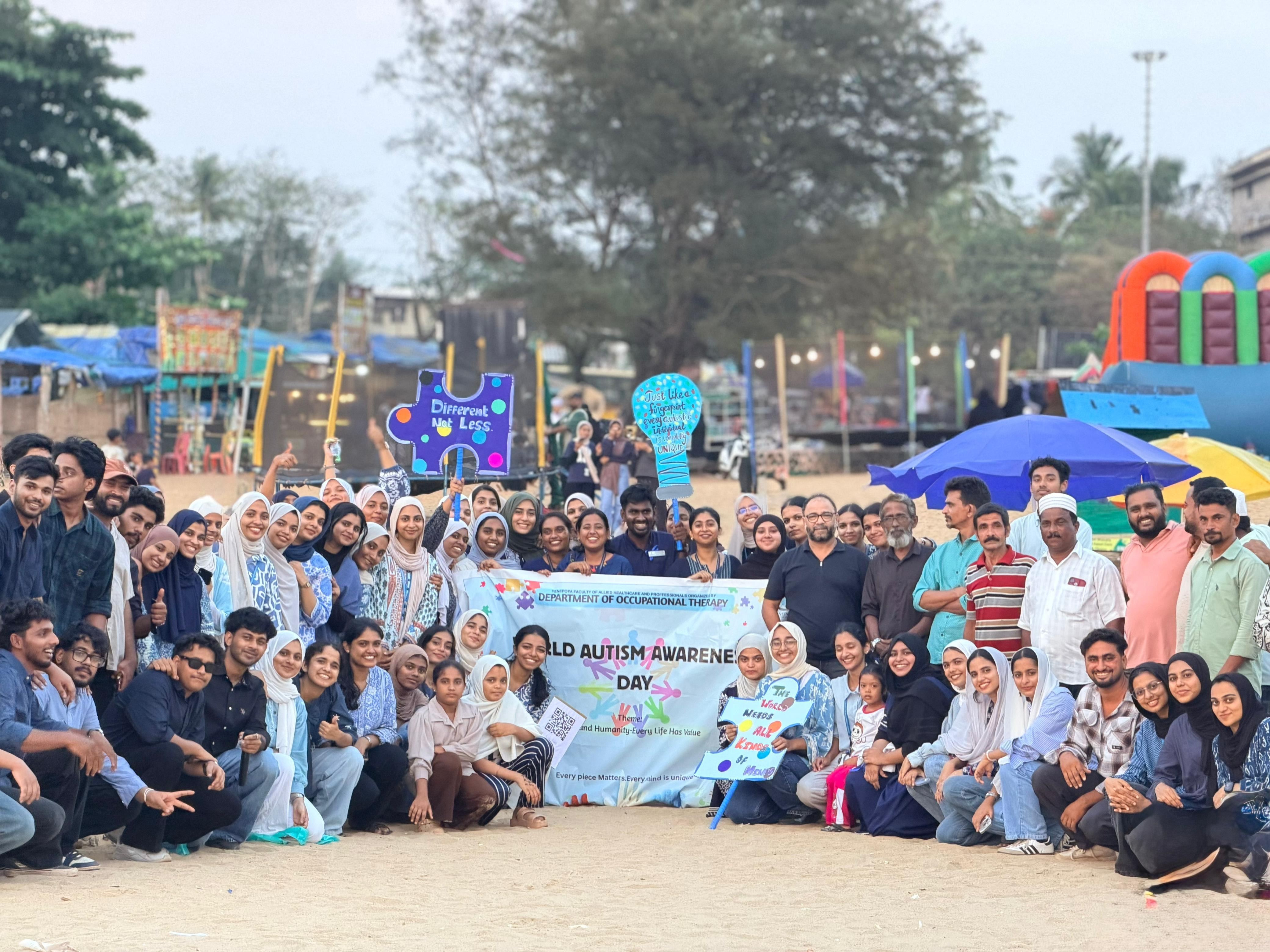
Yenepoya University conducts autism awareness campaign in Mangaluru

Mangaluru: The Department of Occupational Therapy at Yenepoya (Deemed to be University) conducted a community-based Autism Awareness Campaign at Fiza Mall and Ullal Beach in the city.
The campaign was aimed at promoting awareness, inclusion, and early identification of autism, in line with the global theme, “Autism and Humanity – Every Life Has Value.”
The programme was led by Dr. Dhayanithi K and Dr. Ananya Jana as organising chairpersons, with Dr. Anas, Dr. Amanda S. Phillip, and Dr. Ansu V. David served as organising members.
Students of the Bachelor of Occupational Therapy (BOT) programme participated in conducting the campaign.
The event included activities such as flash mobs, street plays, face painting, mehendi, and direct interaction with the public.
These activities focused on highlighting early signs of autism, the need for early intervention, and the importance of inclusion and acceptance of individuals with autism.
The campaign reached around 300 to 500 members of the public. It also provided students with practical exposure to community-based rehabilitation and public health education.
As part of the initiative, QR-based digital resources were introduced to help the public access reliable information on autism.
“Awareness is the first step towards inclusion, and early intervention can significantly improve outcomes,” the organising team said.
The department thanked the university for its support in organising the campaign. It also acknowledged the cooperation of the management of Fiza Mall and the Ullal Beach Police Department in facilitating the event.