1.2 lakh Indian pilgrims undertook Haj, 40,000 above age 60: Union health secretary
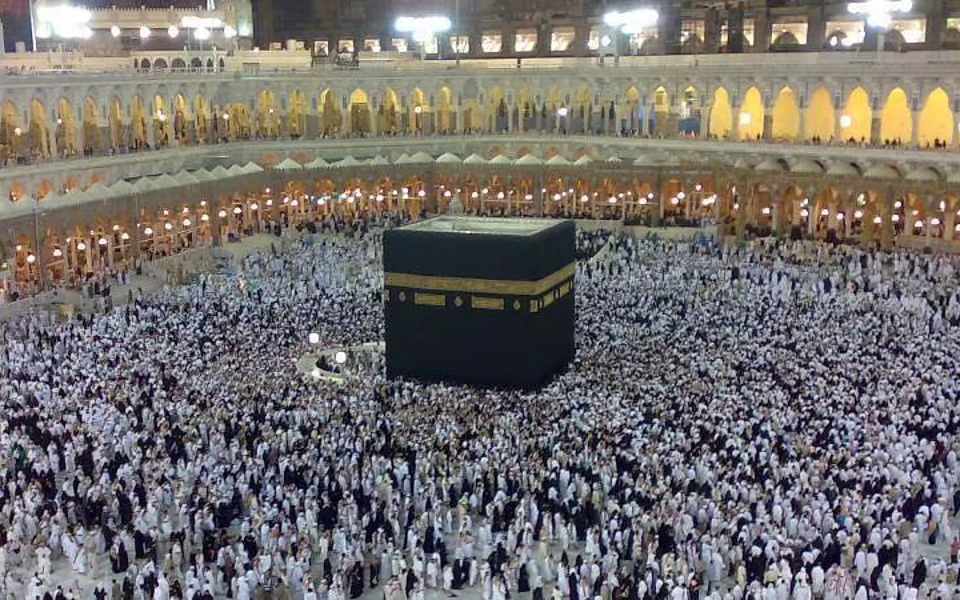
New Delhi, Jun 21: Around 1,20,000 pilgrims undertook the Haj pilgrimage this year from India and 356 doctors and paramedics were deployed for the medical care.
Union Health Secretary Apurva Chandra released a document titled 'Medical Care Arrangements for Haj Pilgrimage' here on Friday in collaboration with the ministry of minority affairs.
Mohammed Shahid Alam, Consulate General of India in Jeddah (who joined virtually), representatives of WHO and other stakeholders were also present.
Haj represents the largest and most enduring annual mass gathering event globally, the health ministry said in a statement.
The responsibility for medical care arrangements lies with the Emergency Medical Relief Division and the International Health Division of the Directorate General of Health Services under ministry of health, it said.
On the occasion, Chandra stated that "this document lays the roadmap of the health services and how those services can be availed of by the pilgrims".
Noting that this is only the second year since the healthcare responsibilities have been assigned to the Union health ministry, he said, "The experience has provided significant learning for improving the healthcare services. Around 1,20,000 pilgrims undertook the Haj pilgrimage this year from India, of which approximately 40,000 were above the age of 60.
"In view of the harsh weather conditions this year, the health challenges have necessitated round the clock services for the pilgrims. Last year, oral health and dental care services have been added learning from the past experience," he said.
The Union health secretary also added that nearly two lakh OPDs have been conducted this year, along with visits by the medical teams to the pilgrims.
Chandra stated that with the help of National Informatics Centre (NIC), a live portal has been developed that provides real time data and analysis on the pilgrims seeking medical care and the services being provided.
"We are continuously monitoring and this will help us to improve our services significantly, such that we become the beacon of excellence to be emulated by other countries," he added.
The Union health secretary said, "It is a matter of pride to be of assistance to our citizens wherever they might be. Be it for evacuating our students from Ukraine or assisting our people who got stuck in the fire incident in Kuwait, India has always been at the forefront in helping its citizens."
He stated that India has even helped citizens from other countries, including the European countries who sought its help during crisis.
Ministry of Health and Family Welfare (MoHFW) Additional Secretary L S Changsan emphasised on the importance of comprehensive healthcare planning for such a large gathering, especially in the demanding Saudi Arabian climate, the statement said.
She highlighted the strategic placement of medical teams in Mecca and Medina for easy convenience of the pilgrims and the collaboration between MoHFW and NIC on creating a portal for real time access of data on admissions and operations of the health mission.
She also acknowledged the tireless efforts of the medical teams in Saudi Arabia which are still there and working hard for ensuring health and safety of pilgrims. She commended the dedication of all stakeholders involved, which included ministry of minority affairs, consulate general of India, Jeddah; Haj Committee of India, NIC, WHO India, HLL Lifecare Limited, central government hospitals, all AIIMS and all states and institutions from across the country for their support towards this endeavour.
Alam highlighted that the publication of the document is vital for institutionalising the healthcare arrangement system for the Indian pilgrims. He explained the on-field experiences and challenges faced during Haj.
Let the Truth be known. If you read VB and like VB, please be a VB Supporter and Help us deliver the Truth to one and all.
Man arrested with Rs 2.54-crore heroin in Mumbai

Mumbai (PTI): Police have arrested a man and seized over 500 grams of heroin worth Rs 2.54 crore in the illicit market from him in Mumbai, officials said on Friday.
The police's Anti-Narcotics Cell (ANC) made the drug seizure in Santacruz in the western suburbs. The operation was conducted by the Kandivali unit of the ANC on Thursday as part of a special crackdown against drug trafficking in the area, they said.
Acting on specific inputs, an ANC team conducted a raid in Santacruz (East) and intercepted a man. During a search, the team recovered 508 grams of high-grade heroin from his possession, an official said.
The seized contraband, a highly addictive, opioid drug derived from morphine, is estimated to be worth Rs 2.54 crore in the international market, he informed.
Following the seizure, a case was registered against the man under relevant sections of the Narcotic Drugs and Psychotropic Substances (NDPS) Act, 1985, and he was formally placed under arrest in the early hours of Friday.
The police are currently investigating the source of the drug and trying to identify the intended recipients of the consignment, he said.