13 dead in another horrific road accident in Rajasthan, dumper truck ploughs into multiple vehicles
Jaipur (PTI): A road bustling with daily commuters in Jaipur's Harmada area turned into a scene of devastation Monday afternoon when a rashly driven dumper truck ploughed into at least 17 vehicles, leaving 13 people dead and 10 injured.
Bodies were strewn across the road, mangled cars lined the highway, and several motorbikes were crushed under the dumper's wheels following the horrific chain collision that occurred near Loha Mandi when the truck, whose driver was allegedly under the influence of alcohol, ploughed into these vehicles on a 300 metre stretch before crashing into a trailer.
Rajasthan Chief Minister Bhajanlal Sharma, his deputies Diya Kumari and Premchand Bairwa and former chief minister Ashok Gehlot expressed grief over the loss of lives.
"The road accident that occurred in the Lohamandi area of Harmada in Jaipur, resulting in loss of life, is extremely tragic and heart-wrenching. Officials concerned have been directed to ensure proper treatment for the injured," Sharma posted on X.
Eyewitnesses described the scene as nothing short of a massacre.
"We saw people pulling out one body after another from the wrecked cars. Some were trapped inside, others were lying on the road. It was chaos, screams and blood everywhere," said Mahesh Sharma, a local shopkeeper.
According to Jaipur District Collector Jitendra Soni, the dumper came from Road No. 14 towards the Loha Mandi petrol pump at high speed, hitting vehicles in its path.
"Thirteen people died and 10 are injured. The injured are being treated at SMS Hospital's trauma centre, and several are in critical condition," Soni told PTI.
Additional Police Commissioner Rajiv Pachar, who was present at the scene, said that the dumper was being driven recklessly.
The driver hit a car, prompting locals to chase him. He accelerated further, hitting pedestrians and bikers along the road. He then stopped after colliding with a trailer truck and a car on the Delhi-Ajmer Highway.
Locals managed to nab the driver and handed him over to the police.
On whether the driver was intoxicated, he said, "Since the accused driver is injured, the situation will become clear only after a medical examination. However, the nature of the accident indicates it could certainly be due to intoxication or medical factors."
CCTV footage showed the dumper truck speeding at over 100 kmph, ramming into vehicles and crushing motorcyclists.
Among the victims were members of a family from Agra -- Nanji Bhai, his brother, two women and a child -- who were returning from Khatushyamji after offering prayers.
"Our car was parked on the roadside when the dumper hit it from behind. The dumper hit our car. Five people of the family have sustained injuries," Nanji Bhai said.
Rakesh, a relative of deceased Mahendra (38), a weaver, said, "They live on Bainad Road in Jaipur. Mahendra's elder brother has two daughters, Varsha (19) and Bhanu (5), who had come to Jaipur to celebrate Diwali with their uncle.
"After the holidays, Mahendra had come to the bus stand with his two nieces to take them back to Sikar. This is when the accident occurred. Varsha is in the trauma centre, while Mahendra and Bhanu have died."
The accident triggered protests in the area, with residents demanding stricter enforcement of road safety laws.
This is the second major road accident in Rajasthan in as many days. At least 15 people, including 10 women and four children, died and two others were injured when a tempo traveller rammed into a stationary trailer truck in Phalodi area on Sunday evening.
Let the Truth be known. If you read VB and like VB, please be a VB Supporter and Help us deliver the Truth to one and all.
No unannounced load shedding in Kerala, outages due to overload, says Minister
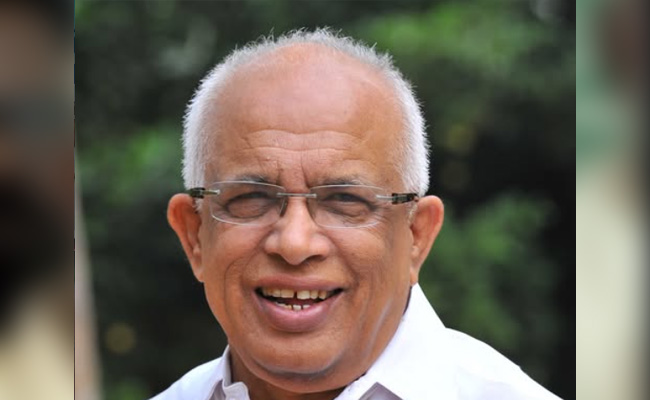
Palakkad (PTI): Kerala Electricity Minister K Krishnankutty on Saturday said there was no unannounced load shedding in the state, attributing recent power interruptions to temporary overload caused by high consumption.
Clarifying concerns raised from various parts of the state, the minister said the disruptions are not deliberate but occur when demand peaks, particularly between 10 pm and 11 pm.
"It is not being done intentionally. Power consumption has risen sharply, and when there is excessive and indiscriminate usage, the system experiences overload, leading to natural supply interruptions," he told reporters here.
His remarks come amid complaints that several areas have been witnessing frequent power cuts, often lasting around 15 minutes and occurring multiple times during the night.
Krishnankutty said the state's power demand has crossed 6,195 MW, putting pressure on the supply system. He added that around 70 per cent of Kerala's electricity is procured from outside, and existing power banking arrangements have been exhausted.
"We have approached the Regulatory Commission seeking permission to purchase more power. However, this will come at a higher cost," he said.
The minister said the government is trying to avoid increasing electricity tariffs and urged consumers to exercise restraint in usage to help manage the situation.
Responding to opposition criticism over the ruling LDF's earlier claims of a decade without power cuts, he said the current situation is not unique to Kerala.
A power crisis is emerging across the country, he said, and sarcastically asked the Opposition to take note of the role of natural factors in this.
Krishnankutty expressed confidence that the situation would improve within two days, while cautioning that long-term energy security would depend on enhancing in-state power generation.
He also warned that future generations could face serious challenges if adequate electricity production capacity is not developed within Kerala.