16-year-old boy thrashed for refusing to chant ''Jai Shri Ram'' in Kanpur
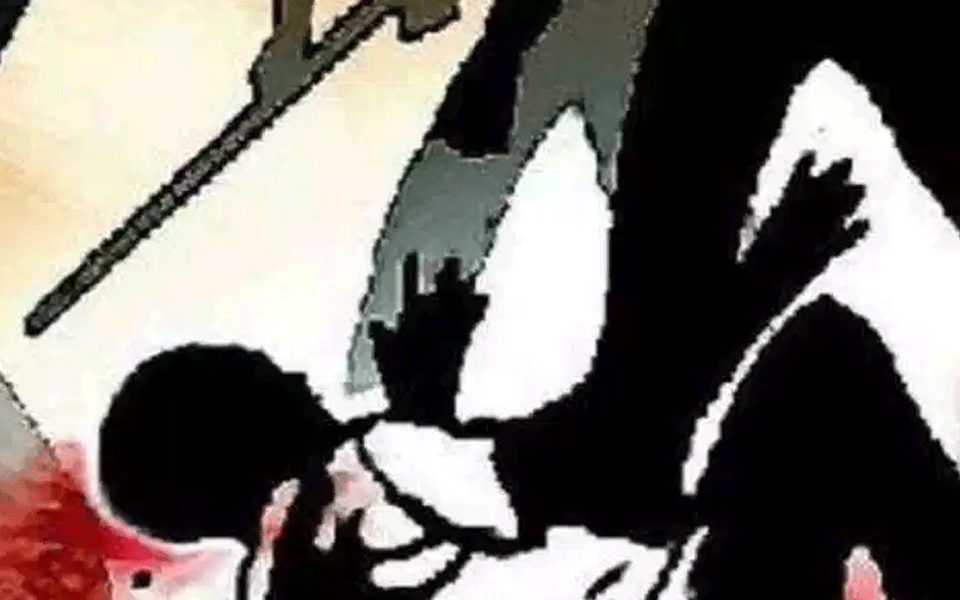
Kanpur, June 29: A 16-year-old Muslim boy was allegedly beaten by unidentified men here for wearing a skull cap and refusing to chant ''Jai Shri Ram.
According to police reports, the incident took place on Friday when the victim, Mohammad Taj, a resident of Barra, was returning home after offering namaaz in Kidwai Nagar.
Four unidentified motorcyclists stopped Taj a few hundred metres from his house and objected to his wearing the skull cap.
Station House Officer (Barra) Satish Kumar Singh said, "The attackers asked the teenager to chant ''Jai Shri Ram'' and kicked and punched him after he refused to do so."
Taj alleged that the men told him that wearing skull cap was ''not allowed'' in the area.
The teenager said he cried for help and begged a couple of shopkeepers to rescue him. Later, some passersby rushed to help him after which the accused fled.
An FIR has been registered under different sections of the Indian Penal Code, including Section 153A (causing enmity between people of different religions), the officer said.
A medical examination of the victim has been conducted and efforts are on to identify the accused.
Let the Truth be known. If you read VB and like VB, please be a VB Supporter and Help us deliver the Truth to one and all.
What is Iran’s 10-point plan? Key demands ahead of US talks in Islamabad
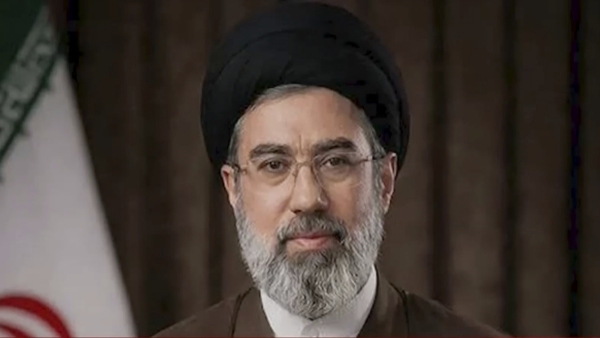
Tehran/Islamabad: Iran has outlined a 10-point plan as the basis for upcoming talks with the United States, expected to begin in Islamabad on April 11, according to a statement from the Iranian Supreme National Security Council.
The plan lays out Tehran’s key political, military and economic demands, and is being seen as a framework for negotiations following the recent escalation in the region.
Strait of Hormuz at the centre
A major focus of the plan is the Strait of Hormuz, a critical global shipping route. Iran has proposed “controlled passage through the Strait of Hormuz in coordination with the Iranian armed forces,” which it says would give the country a unique economic and geopolitical position.
The plan also calls for the “establishment of a safe transit protocol” in the Strait that would guarantee Iran’s dominance under an agreed mechanism.
Call to end conflict
Iran has demanded “the necessity of ending the war against all elements of the axis of resistance,” signalling its expectation that hostilities should stop not only in Iran but also involving allied groups in the region.
US troop withdrawal
Another key demand is the “withdrawal of US combat forces from all bases and deployment points in the region,” indicating Tehran’s long-standing position against American military presence in West Asia.
Sanctions relief and compensation
The plan places strong emphasis on economic measures. It calls for “full payment of Iran’s damages according to estimates,” along with “the lifting of all primary and secondary sanctions and resolutions of the Board of Governors and the Security Council.”
It also seeks “the release of all Iranian assets and properties frozen abroad,” which have been a major point of contention for years.
Binding global guarantee
Finally, Iran has demanded that all these terms be formally recognised through “a binding Security Council resolution,” suggesting it wants international legal backing to ensure enforcement.
What this means
The 10-point plan reflects Iran’s broader push for security guarantees, economic relief and regional influence. The upcoming talks in Islamabad are expected to test how far both sides are willing to negotiate on these demands.