2 more persons arrested in singer Zubeen Garg's death
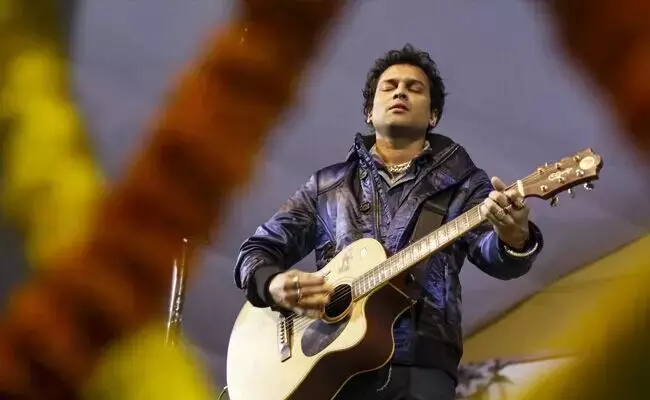
Guwahati (PTI): Musician Shakharjyoti Goswami and singer Amritprabha Mahanta were arrested on Thursday in connection with the death of singer Zubeen Garg, police said.
Garg's musician Goswami and singer Amritprabha, who were present at the spot when the incident happened, were called for interrogation during the day and later arrested, they said.
"We have found some evidence against them. So, to enquire further, their arrest was necessary," an officer said.
With this, four persons were arrested in the case, including Garg's manager Siddharth Sharma and festival organiser Shyamkanu Mahanta, police said.
Mahanta and Sarma were arrested on Wednesday and booked under various sections of the Bharatiya Nyaya Sanhita (BNS) for culpable homicide not amounting to murder, criminal conspiracy and causing death by negligence, they said.
Special DGP of the Assam Police's CID Munna Prasad Gupta told reporters that the interrogation of Mahanta and Sarma is underway after a court remanded them to 14-day police custody.
"The investigation is going on, and I cannot share much detail. We have added Section 103 of the BNS in the FIR now," he said.
Section 103 of the Bharatiya Nyaya Sanhita (BNS) deals with the punishment for murder. It mandates that whoever commits murder shall be punished with death or imprisonment for life, and a fine.
Shyamkanu is the younger brother of former DGP Bhaskar Jyoti Mahanta, who is presently the Chief Information Commissioner of the Assam State Information Commission. His another elder brother is Nani Gopal Mahanta, who was the Education Advisor to CM Himanta Biswa Sarma before becoming the vice chancellor of Gauhati University.
The CID is probing the case of Garg's death after more than 60 FIRs have been lodged across the state against Mahanta, the chief organiser of the Northeast India Festival, where the singer had gone to perform, and almost 10 others, including the icon's manager, Sharma.
Meanwhile, Gupta said that the report of the autopsy conducted in Singapore will be handed over to Garg's family after completion of the formalities.
"The Singaporean authorities also did their investigation. The autopsy report from them will be directly shared with the family as per protocol. As per our information, they have already contacted Garg's family and will share the report soon," he said.
When asked about the second post-mortem examination carried out in Guwahati, the special DGP said the authority is waiting for the report on the viscera sample, which was sent to the Central Forensic Laboratory (CFL) in Delhi for a detailed examination.
"Once the viscera report is received, I guess the post-mortem report by the Gauhati Medical College and Hospital will be ready and available to us," Gupta said.
Garg died under mysterious circumstances in Singapore on September 19 while swimming in the sea. He had gone to the Southeast Asian nation to attend the 4th edition of the Northeast India Festival, organised by Mahanta and his company.
Assam Police formed a nine-member Special Investigation Team (SIT) to probe the case.
Gupta, who is heading the SIT, said a team will leave for Singapore to collect evidence and other details related to the case once it gets approval from that country.
"Our team is ready to go to Singapore. There are some formalities to be done. We have sent the request through the proper channel, and it will take some time. Once they inform us, our team will go," he said.
The Indian government has invoked the Mutual Legal Assistance Treaty (MLAT) with Singapore, seeking cooperation in the investigation into the death of the singer in the Southeast Asian country.
Gupta said the CID has already issued notices to all people who were present or aware of the events leading to singer Zubeen Garg's death in Singapore, asking them to appear before its officers.
"We have served notices to the members of the Assam Association Singapore. As it is a foreign nation, we cannot directly go and nab them. The notices were served through the Indian High Commission and the Singaporean authority," he said.
Gupta also said they have quizzed Sandipan Garg, a Deputy SP and cousin of the singer, who was present with him during the incident.
"We have interrogated musician Shekharjyoti and singer Amritprava, who were with Garg at the time of his death. Beyond this, I cannot share any further details," he added.
Assam Police earlier initiated a separate probe against event manager Shyamkanu Mahanta for alleged organised financial crimes and acquiring huge amounts of benami properties by money laundering.
The CID claimed that it seized bundles of incriminating documents and other items from his home during the raid on September 25 and 26, such as multiple PAN cards in the name of the same firm, nearly 30 stamp seals of different companies and government officials, and documents related to several benami properties.
Let the Truth be known. If you read VB and like VB, please be a VB Supporter and Help us deliver the Truth to one and all.
Nashik court sends ‘godman’ Kharat to 3-day police custody in 7th sexual exploitation case
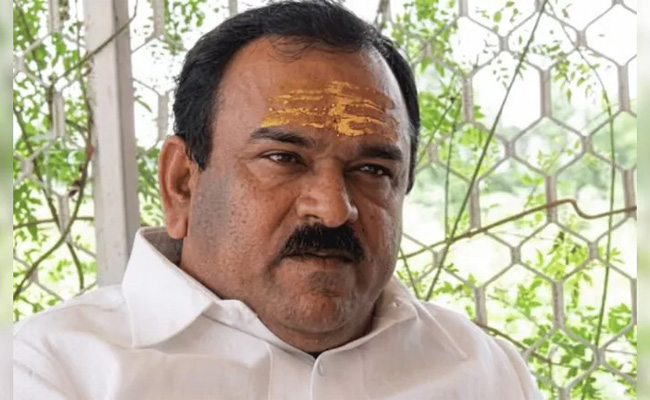
Nashik (PTI): A court in Maharashtra's Nashik has remanded self-styled astrologer-cum-godman Ashok Kharat to police custody till April 29 in the seventh case of sexual exploitation registered against him.
Kharat, a former Merchant Navy officer arrested on March 18, is accused of sexually exploiting several women and indulging in large-scale financial fraud by claiming to have divine powers and knowledge of black magic.
In the seventh case, Kharat sexually exploited a married woman who had approached him in search of solutions to her family problems.
ALSO READ: ED cracks down on suspected interstate liquor racket, raids 9 sites in Arunachal
The accused allegedly gave the woman something to drink, sexually assaulted her while her husband sat outside his office and threatened to kill her if she told anyone about it.
The Special Investigation Team (SIT), which is probing into 12 cases of sexual exploitation and financial fraud registered against Kharat in Nashik and Ahilyanagar districts, on Sunday filed a request application in the court demanding his custody in the seventh case.
Kharat was produced in court for a virtual hearing in the seventh case on Monday.
The prosecution demanded six-day police custody for Kharat, citing the discovery of a locker in Kharat's house during the investigation, from which the police recovered two blank cheques and other documents, all of which have to be probed.
The court agreed to the prosecution's demand and remanded Kharat to three-day police custody till April 29 in the case.
Kharat has been at the centre of a political firestorm, as he was well-connected, and photographs of him with political leaders and other important members of society have been surfacing in mainstream and social media since his arrest.