3 govt school teachers booked for assaulting Dalit boy, placing scorpion in his pants in Shimla

Shimla (PTI): Three teachers of a government school in Shimla, including the headmaster, have been booked for repeatedly assaulting an eight-year-old Dalit boy and placing a scorpion in his pants, police said on Sunday.
In a police complaint, the father of the boy -- a Class 1 student of Government Primary School at Khaddapani area in Rohru sub-division of Shimla district -- accused headmaster Devendra and teachers Babu Ram and Kritika Thakur of frequently physically assaulting his son for almost a year.
The complainant said that continuous beating caused the child's ear to bleed and damaged his eardrum. He also said the teachers took his son to the school's toilet, where they placed a scorpion in his pants.
Following the complaint, police have registered a case under Sections 127(2) (wrongful confinement), 115(2) (voluntarily causing hurt), 351(2) (criminal intimidation), 3(5) (criminal acts in furtherance of a common intent) of the Bharatiya Nyaya Sanhita and for cruelty towards a child under the Juvenile Justice Act.
The teachers have also been charged under sections of the SC/ST (Prevention of Atrocities) Act pertaining to forcibly removing clothes or similar acts derogatory to human dignity, and crime against a member of the Scheduled Caste or Scheduled Tribe.
A communication is being sent to seniors for directions as to whether the investigation is to be conducted by a gazetted officer, police said.
According to the father, the teachers intimidated the boy telling him that if he complained at home, they would have him arrested.
He said that on October 30, the headmaster allegedly threatened to expel the child from the school. He said the complainant's family would face severe consequence if the matter was made public and threatened them saying, "We will burn you."
The boy's father was also warned not to lodge a police complaint or post about the incident on social media, or he would have to "wash his hands of life."
The complainant also alleged that Kritika Thakur's husband Nitish Thakur has been illegally teaching students at the school in her place for the last one year.
He also alleged caste-based discrimination by teachers at the school. Nepali and Harijan students were made to sit separately from Rajput students during meals, he said.
This is not the first incident of teachers assaulting students or caste discrimination in Rohru.
Last week, a teacher at Government Primary School in Gawana area of Rohru was suspended for beating a student with a prickly bush.
Earlier, a 12-year-old Dalit boy allegedly committed suicide at Limda village in Rohru after some upper caste women locked him up inside a cowshed for entering their house.
Let the Truth be known. If you read VB and like VB, please be a VB Supporter and Help us deliver the Truth to one and all.
We received request; will decide soon whether to support TVK: Thirumavalavan
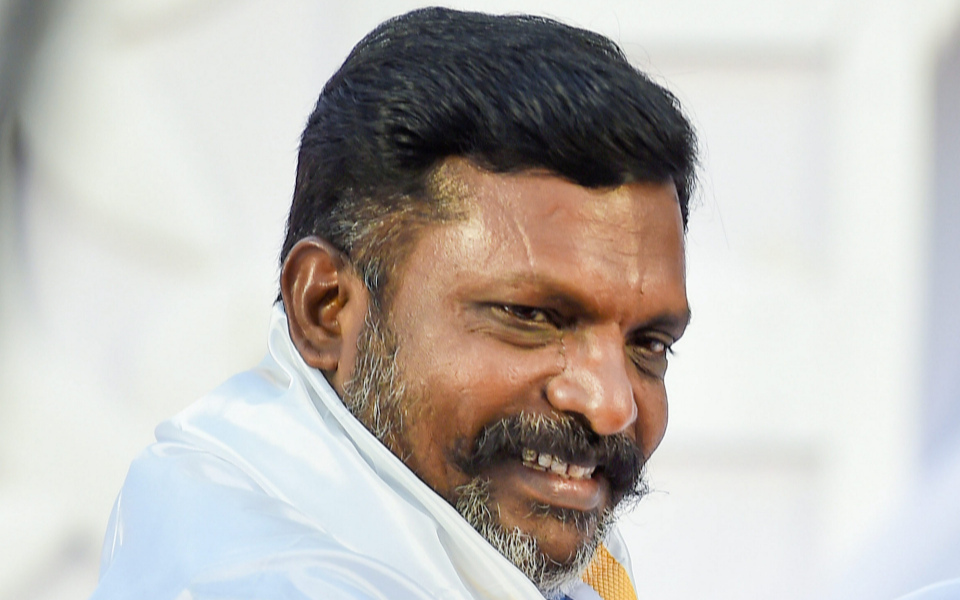
Chennai (PTI): VCK leader Thol Thirumavalavan on Thursday said that his party received a request from TVK for support and the high-level committee of his party will decide whether to support the Vijay-led party to form the government.
The TVK won 108 seats in the 234-member Assembly and emerged as the single largest party. Vijay will have to resign from one of the two constituencies he has won.
Though the Congress party, which has five MLAs, has extended support to TVK, the actor-politician-led party was still short of as many seats to touch the magic number of 118, the majority mark in the 234-member House.
"We received the request letter from TVK. We are thankful for that. We have not ignored his (Vijay's) request. We have a procedure. Therefore, our party's high-level committee will decide soon. We are going to discuss the merits and demerits of our position," the VCK leader told reporters here.
With regard to the delay in the governor's call to the TVK, which is the single largest party, to form the government, Thirumavalavan requested the governor to invite Vijay to form the government. "It is a constitutional right and people's verdict," he added.
Asserting that the governor cannot say that Vijay should hold 118 MLAs' support now itself to form the government, he said that after taking over power, Vijay has to prove an absolute majority only on the floor of the Assembly.