36 killed, 19 hurt as bus falls into gorge in J&K's Doda
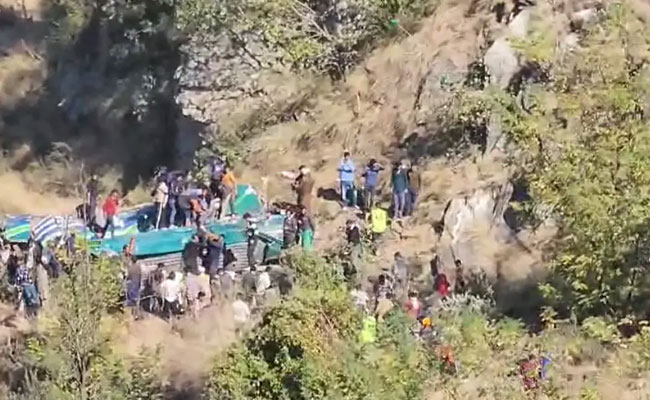
Doda (J&K) (PTI): At least 36 people were killed and 19 injured when a bus carrying passengers skidded off the road and rolled down into a 300-foot gorge in Jammu and Kashmir's Doda district on Wednesday, officials said.
The bus bearing registration number JK02CN-6555 was reportedly carrying around 40 passengers, the officials said, adding that it skidded off the road near Trungal-Assar on the Batote-Kishtwar national highway and fell 300 feet downhill.
A rescue operation has been launched and some bodies have been retrieved, they said.
"Saddened to share the update from DC #Doda Sh Harvinder Singh from the spot of the accident. Unfortunately 36 persons have died and 19 injured, out of whom 6 injured are serious. The injured are being shifted to GMC Doda and GMC #Jammu as per requirement. All possible help being provided. Sincere condolences to the bereaved families," Union minister Jitendra Singh, who is the member of Parliament from Jammu and Kashmir's Anantnag, said.
Prime Minister Narendra Modi and Union Home Minister Amit Shah expressed grief over the incident.
"The bus accident in Doda, Jammu and Kashmir is distressing. My condolences to the families who have lost their near and dear ones. I pray that the injured recover at the earliest," Modi said on X.
He announced that an ex-gratia amount of Rs 2 lakh each would be given to the next of kin of the deceased and Rs 50,000 each would be given to the injured from the from the Prime Minister's National Relief Fund (PMNRF).
"Deeply anguished to learn about the loss of precious lives due to a tragic bus accident at Doda, Jammu and Kashmir. The local administration is conducting the rescue operation in the gorge where the bus had the accident. My heartfelt condolences to the families of the deceased and prayers for the speedy recovery of the injured," Shah said on X.
"Extremely pained by the loss of lives in a tragic bus accident in Assar, Doda. My heartfelt condolences to bereaved families and wishing for a speedy recovery of those injured in the accident. Directed Div Com and Dist Admin to provide all necessary assistance to affected persons," Jammu and Kashmir Lieutenant Governor Manoj Sinha said on the microblogging website.
Due to the fall from a considerable height, the bus has got badly damaged, sources said.
Police and State Disaster Response Force (SDRF) personnel, besides locals, are involved in the rescue operation, they said, adding that some of the injured passengers have been shifted to hospitals.
Let the Truth be known. If you read VB and like VB, please be a VB Supporter and Help us deliver the Truth to one and all.
Karnataka: College student dies by suicide in Dharwad, 3 policemen suspended
Dharwad (Karnataka) (PTI): A college student allegedly died by suicide here, following which three policemen were suspended over allegations of harassment linked to his death by the victim's family.
Aditya Myageri, a BSc student at a private college here, was among 18 students detained by the Vidyagiri police on April 25 during an anti-drug drive, police said on Wednesday.
He hailed from Belur village in Bagalkot district, but was staying with his friends at a rented accommodation in Girinagar area of Dharwad city, police said.
Among the 18 students tested, Aditya was among the 10 who had tested negative for ganja consumption and was subsequently released.
Some of his roommates, however, tested positive.
According to police, Aditya's family alleged that despite testing negative, he was harassed by police. They also claimed some policemen demanded Rs 2,000 to settle the matter and threatened legal action if he failed to pay.
He had called his mother asking for money, but she could not arrange it immediately, the family claimed.
On Monday night, Aditya allegedly died by suicide by hanging from a ceiling fan at his rented accommodation, with his family alleging police harassment and pressure over demand for money drove him to the extreme step, a senior police officer said.
Police Commissioner N Shashi Kumar told PTI that an unnatural death case has been registered at Vidyagiri police station. Three policemen have been suspended over the allegations, and further investigation is underway.