4, including fake doctor, held as patients die after surgeries: Delhi Police
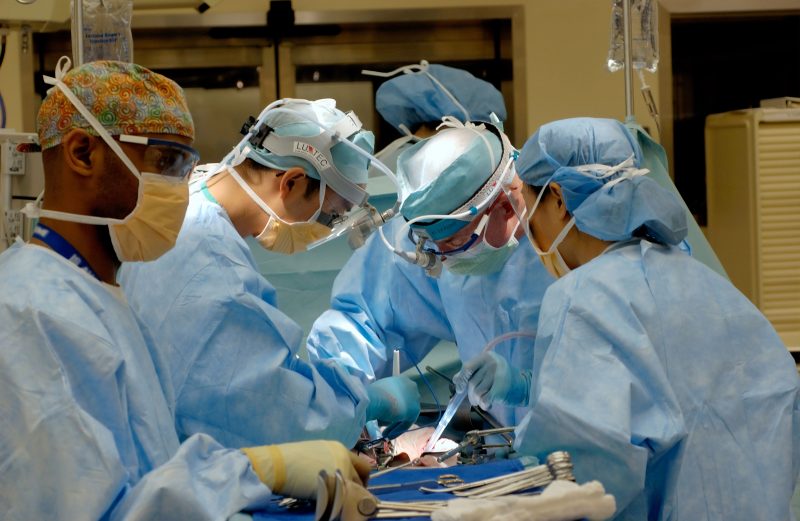
New Delhi, Nov 16: The Delhi Police on Wednesday said three doctors and a fake doctor have been arrested for their alleged involvement in the surgeries of two patients who died in a clinic in south Delhi's Greater Kailash.
Police said the three doctors -- Neeraj Agarwal, who runs the Agarwal Medical Centre, Jaspreet Singh and Agarwal's wife Pooja -- and former laboratory technician Mahender Singh were arrested on Tuesday.
Police said the accused were arrested following complaints received in October.
The attendants of the two patients had alleged that Agarwal and three others were involved in performing surgeries of vital organs of various patients, without following proper medical procedure.
According to the complainants, Agarwal is a physician, but performs surgeries as he possesses fake documents.
On October 10, a woman from Sangam Vihar got a complaint filed at the Greater Kailash police station, alleging that on September 19, she took her husband to the Agarwal Medical Centre for the removal of his gallbladder stone.
Before the commencement of the surgery, Agarwal said it will be performed by famous surgeon Jaspreet Singh. But before the surgery, he said Jaspreet Singh could not turn up due to some urgency and Dr Mahender Singh will perform it.
The complainant stated that her husband's surgery was performed by Mahender Singh, Neeraj Agarwal and Pooja Agarwal. When the patient was brought out of the operation theatre, he complained of severe pain and was rushed to the Safdarjung Hospital where he was declared "brought dead".
According to Deputy Commissioner of Police (DCP) Chandan Chowdhary, Agarwal would take the help of non-qualified people, including his wife and former laboratory technician Mahender Singh, while performing surgeries and Jaspreet Singh would make fake surgery notes.
A probe revealed that seven complaints were submitted to the Delhi Medical Council against Agarwal Medical Centre, Neeraj and Pooja Agarwal since 2016. In all the cases, patients had died due to alleged negligence, Chaudhary said.
"On November 1, a medical board consisting of four doctors was called to examine the medical centre and a lot of shortcomings and deficiencies were observed," the DCP said, adding that during investigation, it was revealed that Agarwal used to prepare fake documents pertaining to the treatment and surgery of patients frequently.
Police said they have seized 414 prescription slips containing only signatures of doctors after leaving considerable space at the top, two registers containing details of the patients whose medical termination of pregnancy (MTP) was conducted at the clinic, several banned medicines and injections that were not supposed to be stored except in hospitals.
Police also said they have seized expired surgical blades, original prescription slips of different patients, cheque books of 47 different banks, 54 ATM cards of different banks, passbooks of different post offices and six POS terminal credit card machines from Agarwal's residence and clinic.
Let the Truth be known. If you read VB and like VB, please be a VB Supporter and Help us deliver the Truth to one and all.
Karnataka: College student dies by suicide in Dharwad, 3 policemen suspended
Dharwad (Karnataka) (PTI): A college student allegedly died by suicide here, following which three policemen were suspended over allegations of harassment linked to his death by the victim's family.
Aditya Myageri, a BSc student at a private college here, was among 18 students detained by the Vidyagiri police on April 25 during an anti-drug drive, police said on Wednesday.
He hailed from Belur village in Bagalkot district, but was staying with his friends at a rented accommodation in Girinagar area of Dharwad city, police said.
Among the 18 students tested, Aditya was among the 10 who had tested negative for ganja consumption and was subsequently released.
Some of his roommates, however, tested positive.
According to police, Aditya's family alleged that despite testing negative, he was harassed by police. They also claimed some policemen demanded Rs 2,000 to settle the matter and threatened legal action if he failed to pay.
He had called his mother asking for money, but she could not arrange it immediately, the family claimed.
On Monday night, Aditya allegedly died by suicide by hanging from a ceiling fan at his rented accommodation, with his family alleging police harassment and pressure over demand for money drove him to the extreme step, a senior police officer said.
Police Commissioner N Shashi Kumar told PTI that an unnatural death case has been registered at Vidyagiri police station. Three policemen have been suspended over the allegations, and further investigation is underway.