$4 Trillion Mirage: Unraveling India's false narrative of economic growth under Modi guarantee
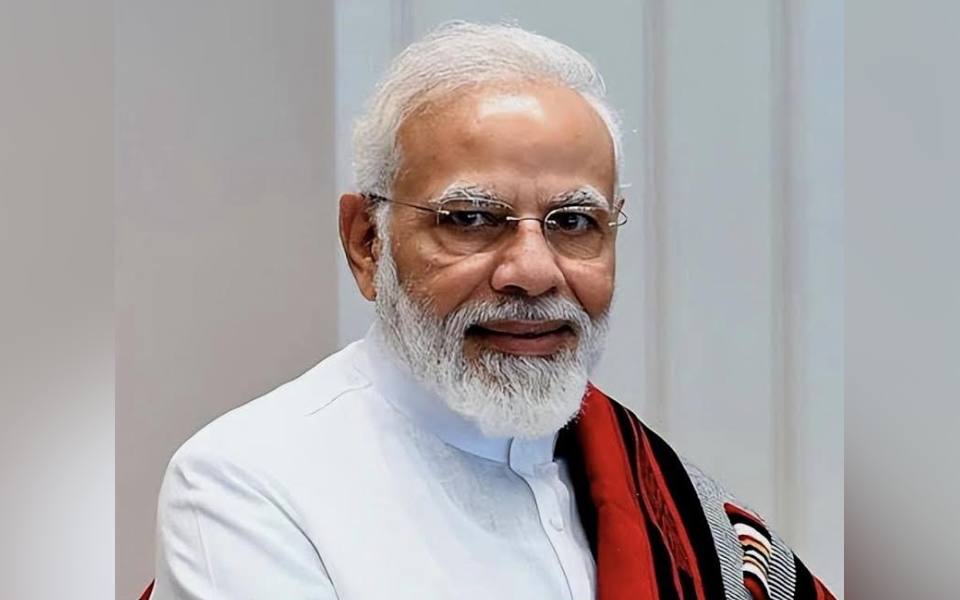
In November, as part of the election campaigns, PM Narendra Modi made a promise called the "Modi Guarantee" to transform India into a developed country by 2047. The message that India is progressing rapidly under PM Modi and could become the fifth richest nation in the world was widely spread. However, on November 19, false information started circulating that India had already achieved the status of the fourth richest country in the world under PM Modi. This misinformation was spread by an unidentified source.
Surprisingly, influential figures in politics, government officials, ministers, and business leaders were involved in spreading this untrue story. Typically, false narratives that politically benefit PM Modi are not monitored or controlled by the Central Government, and this seems to be the case with this particular narrative at the time of writing this report.
Several prominent individuals, including Union Minister of Law and Justice Arjun Ram Meghwal, Gautam Adani (a controversial friend of PM Modi), Deputy Chief Minister of Maharashtra Devendra Fadnavis, Union Minister of Jal Shakti Gajendra Singh Shekhawat, Union Minister G Kishan Reddy, and others, took part in spreading the false narrative that India had already become the fourth wealthiest country in the world. After receiving criticism for spreading falsehoods, some of them, such as Meghwal and Adani, have deleted their posts.
Adani had expressed congratulations to India, stating that within the next two years, the country is poised to become the third largest nation in terms of global GDP. This achievement would involve surpassing Japan, whose GDP stands at $4.4 trillion, as well as Germany, whose GDP is at $4.3 trillion. Adani's message conveyed optimism for India's continued progress, symbolized by the surge of the Tricolour flag, while also expressing patriotic sentiments with the phrase "Jai Hind."
Many people continue to post on social media, spreading rumors and circulating narratives in India, particularly in election-bound Rajasthan and Telangana, in order to sway voters in favor of PM Modi. The BJP is competing in the state elections using PM Modi's name.
Rajasthan's election campaign is coming to an end soon, on November 23rd. The focus of the campaign is still on development, with the Congress party highlighting the social development carried out by CM Ashok Gehlot's government. On the other hand, PM Modi and BJP leaders accuse the Congress of neglecting development and engaging in corruption wherever they are in power. This false narrative of growth was previously propagated in Chhattisgarh and is now being spread in Rajasthan, with Union Minister Shekhawat, who hails from Rajasthan, being one of the main participants. The BJP is countering the Congress's development narrative with its own false narrative of development in Rajasthan.
Fake screenshots containing alleged live GDP data from over 190 countries were circulated, falsely depicting India as having a GDP of over $4 trillion, making it the fourth largest economy. It is noteworthy that the Indian government has not made any official statement regarding this matter, allowing the false narrative to continue circulating.The true origin of this false narrative remains unknown. Neither national nor international institutions have confirmed or denied the figures presented. Despite this, the Deputy Chief Minister of Maharashtra not only shared this narrative but also attributed the alleged rapid growth to PM Narendra Modi's leadership, which was actually untrue.
Furthermore, it is important to mention that India is scheduled to release its official GDP data for the quarter ending September 2023 by the end of November. The Union Ministry of Statistics and Programme Implementation has reported that the GDP at current prices experienced a growth of 8% in the first quarter of the current fiscal year, reaching Rs 70.67 lakh crore compared to Rs 65.43 lakh crore.
According to economists analyzing government data, India might surpass the $4 trillion mark in its economy around 2024-25. However, IMF data suggests that India, aiming to become a $5 trillion economy, may only achieve this goal by 2026-27, contingent upon favorable economic conditions and mitigating potential risks.
From a political perspective, the rumor mill has artfully constructed a false narrative of economic growth under PM Modi to the extent that many individuals, without questioning, fail to ask a simple question - if India has become the fourth wealthiest country in the world, why is the PM still emphasizing the "Garib Kalyan Ann Yojna"(giving little food to the poor for their welfare ) (PMGKAY) or the scheme for the welfare of the poor? During the election campaign, PM Modi announced, in violation of the election code, that free ration would be extended until 2028, covering a period of five years. However, it raises a valid question as to why over 80 crore people in the country are unable to afford their own meals and require free foodgrains if India is experiencing rapid economic growth under PM Modi's leadership.
In this context, PM Modi's guarantee should be understood as a situation where there is a significant opportunity for the wealthy few to amass great wealth while leaving the general population impoverished. It can be compared to a feudalistic policy where token benevolence is shown by providing some basic necessities to the poor, but the real wealth and power are reserved for a select few. The very name of PMGKAY suggests that PM Modi is more focused on providing limited assistance to the poor for their well-being, rather than actively working towards eradicating poverty through concrete programs.
India remains the country with the highest number of people living in poverty. According to the National Food Security Act, 2013, a total of 81.35 crore individuals were supposed to be covered, including 75% of the rural population and 50% of the urban population. This coverage was determined based on the Census Data of 2011.However, it is quite alarming to discover that even after 10 years, the identification of all the individuals in need under the Act remains incomplete. As per the latest information from the Press Information Bureau (PIB) posted on November 15, shortly after the conclusion of the election for the second phase, only around 80.48 crore individuals have been identified under the PMGKAY scheme.
The recent release has sparked doubts regarding PM Modi's announcement made approximately 10 days ago during an election rally in Chhattisgarh, where he stated that free ration would be extended until 2028. Surprisingly, the PIB release does not make any mention of this announcement and simply states that the free ration scheme will be effective "for a period of one year beginning from 1st January 2023."
According to the World Bank, over 97 crore people in India are unable to afford nutritious food. This raises questions about what the Modi Guarantee truly means for the common people. Since 2014, PM Modi and his RSS-BJP party have made a series of guarantees, starting with the promise of "Achche Din" (Good days), followed by numerous others, many of which have proven to be false. Moreover, there is the dissemination of a false narrative of economic growth through the rumor mill, claiming that India has already surpassed the $4 trillion mark in its economy. The electorate must take note of these factors as it is an election year, with ongoing state elections serving as the semi-finals and the final Lok Sabha election taking place in 2024, where the BJP and PM Modi will be aiming for their third term.
Girish LingannaAerospace & Defence Analyst
Let the Truth be known. If you read VB and like VB, please be a VB Supporter and Help us deliver the Truth to one and all.
Man kills 12-year-old nephew over property dispute in Karnataka’s Sindhanur
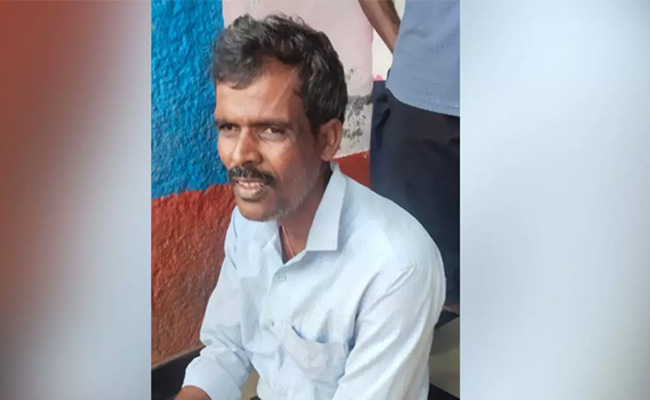
Sindhanur: A 12-year-old boy was killed and his mother seriously injured after a man allegedly attacked his elder brother’s family with a knife over a property dispute in Alabanur village of Sindhanur taluk on Wednesday morning.
The deceased has been identified as Nagaraj Siddappa Alvi (12). Amrutha Siddappa (42) sustained serious injuries in the attack. Police said the accused is Basavaraj Rudrappa Alvi, the younger brother of the victim boy’s father.
According to preliminary information, Basavaraj had arrived in Alabanur village on Tuesday and was staying at his mother’s house.
On Wednesday morning, he allegedly went to the house of his brother Siddappa carrying a knife. At the time, Siddappa’s wife Amrutha and children Nagaraj and Dhanush were present in the house.
Police said the accused allegedly attacked them with the knife. Nagaraj died in the incident, while Amrutha and Dhanush suffered serious injuries.
The injured were shifted to the government hospital in the city for treatment.
Deputy Superintendent of Police G. Chandrashekhar visited the spot and gathered information.
Sources said Chinnamma Rudrappa of Alabanur village has two sons Siddappa, who lives in Alabanur, and Basavaraj, who resides in Alliganur village of Siruguppa taluk.
Police suspect the long-standing property dispute between the two brothers led to the fatal attack.