50,000 children still await justice as juvenile boards battle 55% case backlog: Report

New Delhi (PTI): More than 50,000 children in conflict with the law remain stuck in a slow-moving justice system where over half the cases are pending at 362 Juvenile Justice Boards (JJBs), according to a new India Justice Report (IJR) study released on Thursday.
Despite ten years of the Juvenile Justice Act coming into force, glaring gaps, ranging from missing judges, under-inspected homes, absent data systems and wide state-level disparities continue to afflict justice delivery, the study said.
The report, Juvenile Justice and Children in Conflict with the Law: A Study of Capacity at the Frontlines, shows that as of October 31, 2023, 55 per cent of 100,904 cases before JJBs were pending, with pendency ranging from 83 per cent in Odisha to 35 per cent in Karnataka.
Though 92 per cent of India's 765 districts have constituted JJBs, one in four boards operates without a full bench. On average, each JJB carried a backlog of 154 cases.
The findings come against the backdrop of 40,036 juveniles being apprehended in 31,365 cases under the IPC and special laws in 2023, with three-fourths of them aged between 16 and 18, according to Crime in India data.
Yet, a decade after decentralising juvenile justice architecture, the study says systemic limitations continue to block timely support and rehabilitation.
The report highlights that 30 per cent of JJBs do not have an attached legal services clinic. Fourteen states and Jammu and Kashmir lack places of safety, vital for housing children above 18.
Oversight of Child Care Institutions (CCIs) is also falling short – across 166 homes in these states, only 810 of the mandated 1,992 inspections were carried out.
Data from 292 districts further show there are just 40 child care homes exclusively for girls.
The study flagged the near absence of publicly available national-level data on juvenile justice.
With no equivalent of the National Judicial Data Grid for JJBs, the IJR team had to file more than 250 RTI applications. The response pattern itself pointed to weak transparency — of over 500 replies received from 28 states and two Union Territories, 11 per cent were rejected, 24 per cent received no response, 29 per cent were merely transferred, and only 36 per cent provided usable information.
Calling the findings a warning sign, Maja Daruwala, chief editor of the India Justice Report, said the juvenile justice system relies on a regular flow of information from authorities.
But the attempt to gather basic data showed that "authorised oversight bodies neither receive it routinely nor insist on it. Scattered and irregular data makes supervision episodic and accountability hollow," she said.
Let the Truth be known. If you read VB and like VB, please be a VB Supporter and Help us deliver the Truth to one and all.
US renews sanctions waiver for purchase of Russian oil

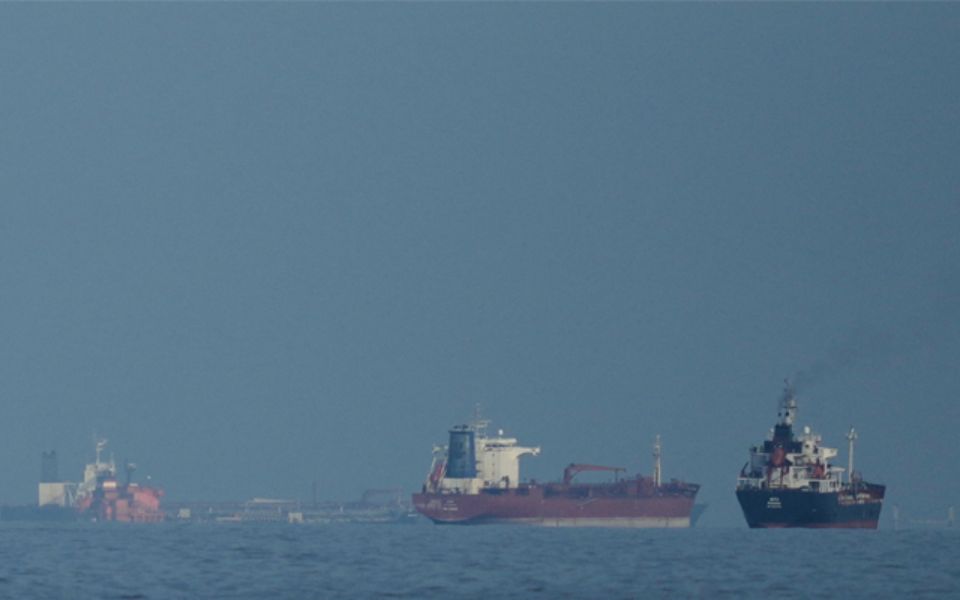
Washington (PTI): The United States has extended by a month a waiver from sanctions to allow countries to buy petroleum products from Russia, days after it ruled out renewal of the special measure.
The US Department of Treasury issued an order late Friday extending the waiver from sanctions on Russian oil that is already at sea on or before April 17 through May 16.
Earlier, the US had granted an exemption from sanctions to India for buying Russian oil for a month beginning March 5. A few days later, a similar waiver was extended to several other countries, which ended on April 11.
The general licence issued by the US on Friday does not authorise any transaction involving a person, entity or joint venture located in Iran, North Korea, Cuba, or parts of Ukraine.
On Wednesday, Treasury Secretary Scott Bessent said Washington would not be renewing the waiver for Russian oil and another for Iranian oil.
The previous waiver of sanctions had made available 140 million barrels of Russian oil already loaded on ships to global markets as prices soared against the backdrop of the US war with Iran.
"Effective April 17, 2026, General License No. 134A, which was dated March 19, 2026 and expired on April 11, 2026, is replaced and superseded in its entirety by this General License No. 134B," said the order issued by the Department of Treasury.