6 patients killed in Rajasthan hospital fire, kin allege staff ignored warnings; PM condoles deaths
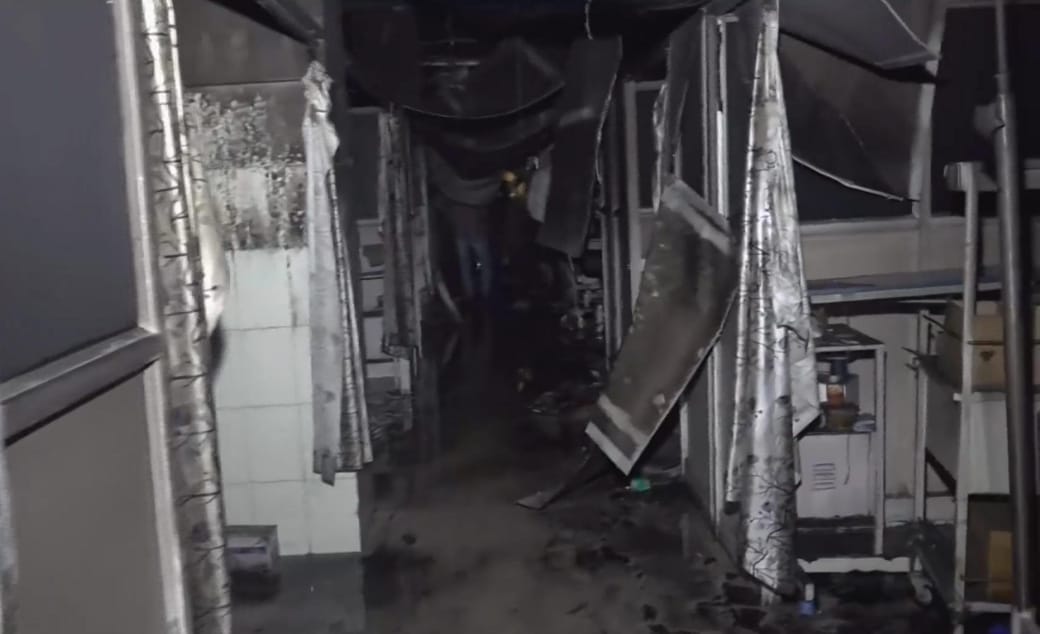
Jaipur (PTI): Six critical patients were killed in a blaze at the trauma centre of the state-run Sawai Man Singh (SMS) Hospital in Jaipur late Sunday, officials said.
Trauma centre in-charge Dr Anurag Dhakad said 11 patients were being treated in the Neuro ICU when the fire erupted in the storage area, suspected to have been caused by a short circuit.
Prime Minister Narendra Modi expressed grief over the tragedy, saying in a post in Hindi on X, "The loss of lives due to a fire tragedy at a hospital in Jaipur, Rajasthan, is deeply saddening. Condolences to those who have lost their loved ones. May the injured recover soon."
According to officials, the deceased were identified as Pintu from Sikar, Dilip and Bahadur from Jaipur, Shrinath, Rukmini, Khurma -- all from Bharatpur.
"Six of them, two women and four men, died in the incident," Dhakad said. "Fourteen other patients were admitted in a different ICU, and all were successfully evacuated to safer locations," he added.
The fire caused chaos in the building as thick smoke spread rapidly, triggering panic among patients and their families. Several documents, ICU equipment, and medical supplies were destroyed in the fire.
Hospital staff and attendants evacuated patients, with some wheeling beds outside the building. Firefighters brought the fire under control in around two hours.
Vikas, a ward boy who was at the scene, told PTI that he and other staff members rescued as many people as they could before the fire worsened.
"We were inside the operating theatre when we heard about the fire, so we immediately rushed to rescue the people inside the centre. We managed to save at least three to four patients. However, as the flames intensified, we could no longer go into the building. We did our best to rescue as many as we could," he said.
He added that the police arrived later, but they could not enter the building immediately due to the heavy smoke.
When the fire team arrived, the entire ward was engulfed in smoke. The firefighters had to break a window to start extinguishing the fire.
Chief Minister Bhajanlal Sharma, Parliamentary Affairs Minister Jogaram Patel and Minister of State for Home Jawahar Singh Bedham visited the trauma centre to take stock of the situation.
When Patel and Bedham initially arrived, relatives of some patients expressed anguish, alleging that the staff had ignored early warning and fled during the fire. They also claimed that the hospital staff could not provide updates on the patients' condition.
"We noticed smoke and immediately informed the staff, but they did not pay any heed. When the fire broke out, they were the first to run. Now, we cannot get any information about our patients. We want to know their condition, but no one is telling us," one of the attendants said.
Later, the chief minister also spoke to doctors and patients.
Let the Truth be known. If you read VB and like VB, please be a VB Supporter and Help us deliver the Truth to one and all.
KKR defeat LSG via Super Over
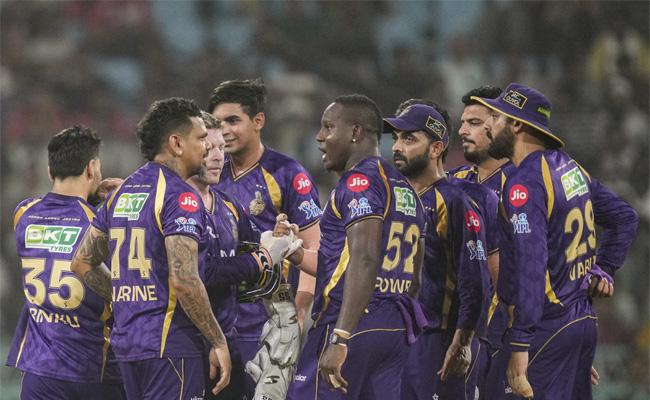
Lucknow (PTI): Kolkata Knight Riders edged Lucknow Super Giants via Super Overs in a battle between two bottom-placed teams in the IPL, here on Sunday.
Chasing a modest 156, LSG suffered a batting collapse and managed to tie the contest and take it to Super Over with No. 9 Mohammed Shami striking a last-ball six against a wayward Kartik Tyagi, who leaked 16 runs in the final over.
But Sunil Narine bowled a stunning Super Over conceding just one run and taking two wickets to give KKR an easy target.
Rinku Singh then finished the chase with a boundary off first ball from Prince Yadav.
Earlier the KKR were in deep trouble with 93/7 in 15 overs but Rinku smashed a sensational 83 not out from 51 balls including four sixes in a row in the final over to lift them to 155/7.
Cameron Green (34) was the only other batter to reach double-digit scores as KKR suffered a familiar batting meltdown with Mohsin taking his maiden fifer.
In reply, LSG continued their dismal show with the bat to succumb to their fifth loss in a row.
Brief Scores:
Kolkata Knight Riders 155/7; 20 overs (Rinku Singh 83 not out, Cameron Green 34; Mohsin Khan 5/23). Lucknow Super Giants 155/8; 20 overs (Rishabh Pant 42). KKR won via Super Over.