86 nations, two int'l organisations sign AI Impact Summit declaration: IT Min Vaishnaw
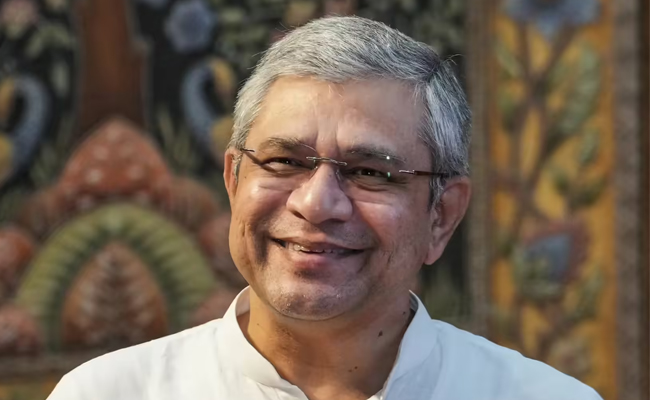
New Delhi (PTI): As many as 86 countries and two international organisations have signed the AI Impact Summit declaration, IT Minister Ashwini Vaishnaw on Saturday said, adding that the US, UK, Canada, China, Denmark, and Germany are among the signatories.
The strong global backing for the declaration comes at the conclusion of the India AI Impact Summit in New Delhi.
Vaishnaw told reporters that nations across the world have formalised and upheld principles of 'welfare of all, and happiness of all'.
"Prime Minister Narendra Modi's human-centric AI vision been accepted by the world. Democratising Artificial Intelligence resources so AI facilities, services and technology can reach everyone in society has been accepted by all," the minister said.
Balancing economic growth with social good has been prioritised, he added.
"Not just economic growth, even social harmony has to be kept in mind. Safety and trust are at the centre, they have been brought among the main points," Vaishnaw said, adding that a secure, trustworthy and robust AI framework has been focused on.
Other major areas of thrust include innovations and development of human capital, he noted.
"For all these areas, all countries have agreed to work together. Almost all countries that participated, including the US, the UK, Canada, China, Denmark, Egypt, Indonesia, and Germany... everyone has participated," the minister said.
The mega AI Impact Summit secured investment commitments of over USD 250 billion in infrastructure alone, with Vaishnaw on Friday terming it a "grand success".
Vaishnaw had said participation at the summit crossed five lakh visitors, reflecting strong domestic and global engagement with India's AI push.
The India AI Impact Summit brought together global policymakers, industry leaders and technology experts, positioning India as a key player in shaping international AI governance and infrastructure development.
"More than five lakh visitors participated in the exhibition, learnt a lot, and interacted with many experts from around the world. We had practically every major AI player in the world participating in large numbers. We had so many startups getting the opportunity to showcase their work. Overall, the quality of the discussion was phenomenal," he had said.
Be it the ministerial dialogue, the leaders' plenary, the main inauguration function, or the Summit overall, the quality of participation and dialogue was phenomenal, Vaishnaw had pointed out.
The investment pledges have crossed USD 250 billion for infra-related capital and around USD 20 billion on VC/deep tech investments.
Vaishnaw had said that the Summit reflected the world's confidence in India's role in the new AI age.
Delhi played host to a lineup of global tech heavyweights this week - Google's Sundar Pichai, OpenAI's Sam Altman, Microsoft's Brad Smith and Anthropic's Dario Amodei - as discussions spanned most intensely debated global topics in the tech universe, from AI's opportunities and risks, all the way to AGI, governance and the future of jobs.
Let the Truth be known. If you read VB and like VB, please be a VB Supporter and Help us deliver the Truth to one and all.
4 held for sexually assaulting woman, girl on moving bus after social media alert in UP's Agra

Agra (UP) (PTI): Four people were arrested, after a prompt response by police following a social media alert, for allegedly sexually assaulting a woman and a girl inside a moving bus here, officials said on Tuesday.
According to an official police statement, at 12:27 am on April 27, information was received on the social media platform X about an incident of sexual assault on a bus travelling from Kanpur to Ahmedabad, which was approaching Namner crossing in Agra.
Acting under the direction of Police Commissioner Deepak Kumar, the Agra Police social media team immediately alerted the Rakabganj police station within minutes and coordinated with the victims to confirm the incident and obtain the exact location, it stated.
Police teams launched intensive checking at Namner crossing and intercepted the bus as it reached the spot. The four accused involved in the incident were apprehended on the spot, and legal action was initiated against them, the statement said.
The police said the swift response and coordination between the social media team and field units ensured timely action, bringing relief to the victims and other passengers, who expressed gratitude towards the police, it added.