New Delhi, April 24: Lack of severe punishment is considered as the most rampant cause of sexual harassment by 86 per cent respondents in the NCR region, as per as study.
The study, done by Indian Institute for Integrated Women and Child Development (ISI-WCD) and released by the Women and Child Development Ministry, was one of 18 projects the ministry had sponsored, between 2015-17, in areas like economic empowerment of women, skill development,
child trafficking, nutrition management and others.
For the survey, 5,221 responses were collected from Delhi, Gurgaon and Noida to understand the factors and possible remedies of sexual harassment against women and girls in public places.
According to the survey, 84 per cent of the responsdents think that availability of pornographic materials on mobile phone is also a cause of sexual harassment in NCR region while 83 per cent believes it is because of easy access to social media site Facebook or the internet.
"Revealing dresses of women has been seen as the reason for sexual assault by 53 per cent, 35 per cent and 37 per cent by residents of Delhi, Gurgaon and Noida respectively while informal behaviour of women has also been seen as the reason by 49 per cent, 30 per cent and 70 per cent from the three locations respectively," the study notes.
The study also revealed that 35 per cent of men and 50 per cent women have perceived sexual aggression in men as responsible for sexual harassment of women.
It is also found that 70 per cent of the respondents have said to face sexual abuse from work partners or colleagues, 63 per cent from office seniors, 48 per cent from friends and 38 per cent from teachers.
According to the study, 87 per cent respondents agreed that women suffer from verbal abuse, 88 per cent have suffered from physical abuse and 94 per cent stated that they are being stared at.
On enhancing safety for women in public places, 96 per cent respondents suggested that crowded buses or stations should be under constant camera surveillance, 93 per cent wanted public places well lit, 90 per cent prefers frequent police patrolling, 94 per cent said legal punishments should be made harsher while 92 per cent said judicial disposals should be made quicker.
Let the Truth be known. If you read VB and like VB, please be a VB Supporter and Help us deliver the Truth to one and all.
Thumbay University Hospital inaugurates Institute of Neurosciences in Ajman
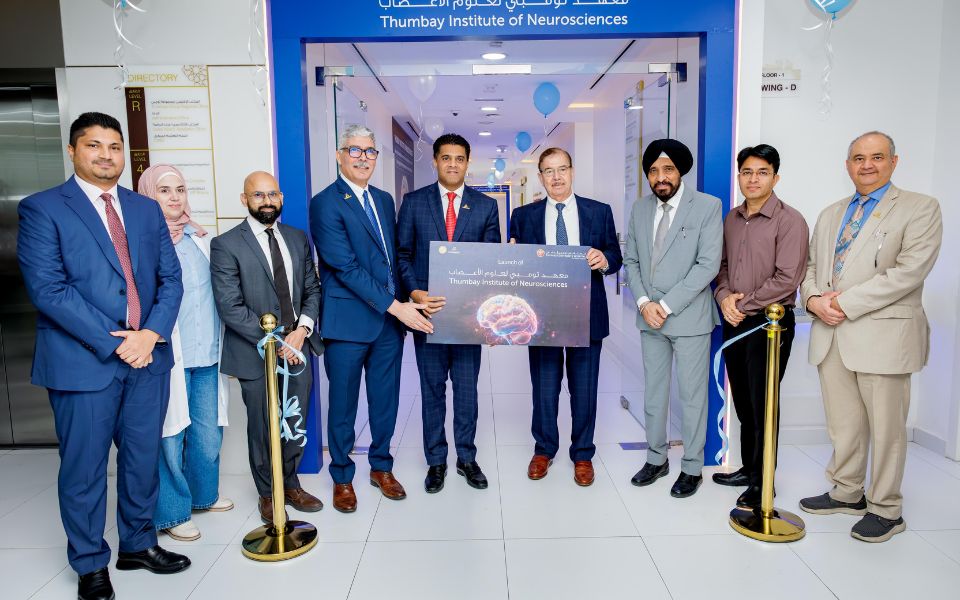
Ajman: Thumbay University Hospital has inaugurated the Thumbay Institute of Neurosciences, a specialised centre for the diagnosis, treatment, and management of disorders related to the brain, spine, and nervous system.
The inauguration was presided over by Dr. Thumbay Moideen, Founder and President of Thumbay Group, in the presence of senior healthcare officials and representatives from the group. Dr. Abdul Karim Msaddi, Consultant Chief Neurosurgeon and Chairman of the ArabSpine Course Diploma and Dubai International Spine Conference, attended the event as the chief guest.
According to the hospital administration, the institute will function with a multidisciplinary team comprising neurosurgeons, neurologists, interventional radiologists, neurotechnicians, and rehabilitation specialists. Neurology services will address conditions such as stroke, epilepsy, Parkinson’s disease, multiple sclerosis, Alzheimer’s disease, migraines, neuropathy, vertigo, and sleep disorders. Diagnostic support includes electroencephalography (EEG), electromyography (EMG), nerve conduction studies, and neuroimaging.
The institute will also provide surgical interventions for brain, spine, and nerve-related conditions, including brain tumours, vascular abnormalities, traumatic brain injuries, spinal disorders, and paediatric neurological cases. Procedures such as cranioplasty, hydrocephalus management, and spinal fixation will be carried out using microsurgical and minimally invasive techniques, supported by neuronavigation systems and intraoperative neuro-monitoring.
Rehabilitation services at the institute include technology-assisted therapies such as robotic rehabilitation, transcranial magnetic stimulation, hyperbaric oxygen therapy, gait and motion analysis, EMG-based functional assessments, and exoskeleton-assisted rehabilitation.
Hospital authorities stated that the institute will follow a structured care model in which neurologists manage non-surgical cases and neurosurgeons undertake surgical interventions when required.
.jpeg)