A deafening sound and screams before it turned dark: Survivors recall dreadful train collision
Bilaspur (PTI): Moments before the collision, Sanjeev Vishwakarma (35), a passenger of Gevra Road-Bilaspur train, was scrolling through his phone, while some passengers were busy chatting, and some were dozing off, unaware that within seconds, their journey would turn into a nightmare.
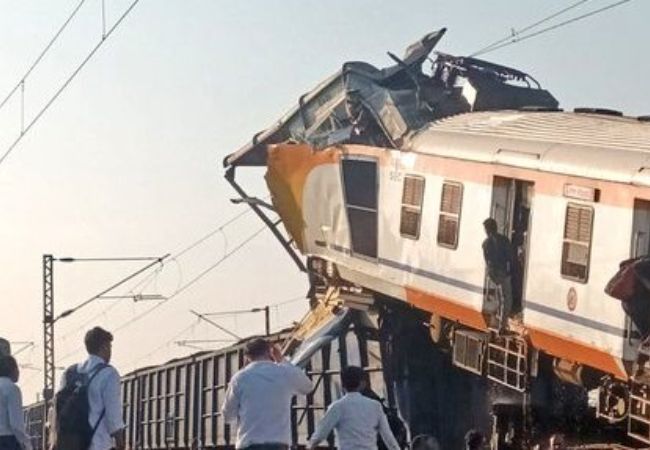
Around 4 pm, the MEMU (mainline electric multiple unit) passenger train rammed into a goods train from behind near Bilaspur station, leaving its first coach (engine assembled coach) climbing onto the cargo wagon with a thunderous jolt.
Metal screeched, windows shattered and panic swept through the compartments.
At least eight persons, including the loco pilot, were killed and 14 others, including the female assistant loco pilot, injured in the accident between Gatora and Bilaspur railway stations on Howrah-Mumbai rail route section.
For Vishwakarma, a resident of Bilha (Bilaspur), what began as a routine return trip from his in-laws' house in Akaltara ended in chaos and screams.
He is a vehicle driver.
"I was sitting in the first coach. There were about 16-17 of passengers, including men, women, and children. Suddenly, around 500 metres after leaving Gatora, the train shook violently and crashed into something. There was a thunderous sound followed by people's screams...Then everything went dark," he recalled.
"When I opened my eyes, I was pinned under the seat. People were crying for help. My coach had climbed onto the goods train. I saw bodies right in front of me. Three people, including a woman, died. Their faces still haunt me," he said, lying on his hospital bed.
Mohan Sharma, a marketing professional from Raipur, had boarded the train from Champa (in neighbouring Janjgir-Champa district).
"I had planned to go to Raipur by Link Express train, but the train was late so I thought I would save time by taking this (MEMU) train. Although I de-boarded this train, thinking of once again taking the Link Express but again boarded the same," he said.
"I was using my mobile phone when there was a violent jerk, the next thing I knew, I was thrown to the floor. My phone flew away," he said.
"When I looked out, I saw the first coach resting on the goods train's wagon. My right leg was trapped, I couldn't move it. Railway staff pulled me out and rushed me for treatment. It all happened in seconds," he said.
Had the train slowed down even a little, those people would have been alive, he added.
Mehbish Parveen (19), a second-year BSc Mathematics student at D P Vipra College Bilaspur, was returning to Bilaspur from her home Naila in neighbouring Janjgir-Champa district after attending a family wedding.
"I was travelling in the first coach. It was supposed to be a happy journey back. Then came the crash. My leg broke. I can't forget the screams as everyone was shouting for help," she said.
Geeta Dev Nath (30), an advocate from Bilaspur, said she was in the first coach.
"The impact was so strong that my leg got trapped. I couldn't move. Rescuers pulled me out after several minutes. I had gone to Akaltara for court work. I never imagined I would return like this," she said.
All four of them are currently admitted at Chhattisgarh Institute of Medical Sciences (CIMS) Bilaspur.
Let the Truth be known. If you read VB and like VB, please be a VB Supporter and Help us deliver the Truth to one and all.
VP, PM greet civil servants on Civil Services Day
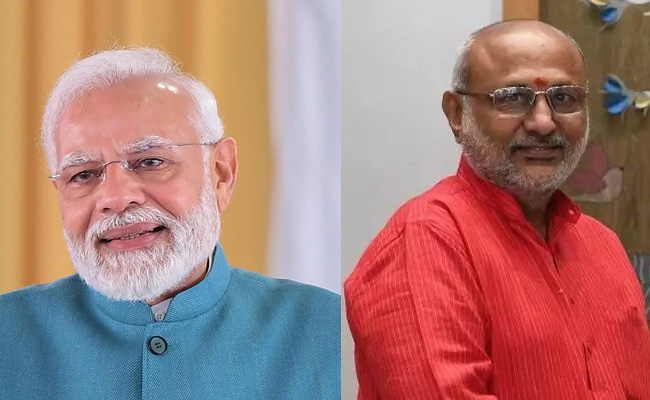
New Delhi (PTI): Vice President C P Radhakrishnan and Prime Minister Narendra Modi on Tuesday greeted civil servants on the occasion of Civil Services Day and said it is time to further strengthen the resolve to work towards good governance and nation building.
The Vice President said as the enduring pillar of India's administrative framework, the efforts of the civil servants in strengthening governance and delivering public services are of immense significance.
The prime minister said from the grassroots to policy-making, the efforts of civil servants touch countless lives and contribute to India's progress
"On the occasion of Civil Services Day, I extend my warm greetings to all civil servants and convey my sincere appreciation for your dedication and exemplary service to the nation," Radhakrishnan said in a post on X.
ALSO READ: 5.2-magnitude quake jolts Manipur
He said the theme for this year, "Viksit Bharat: Citizen-Centric Governance and Development at the Last Mile", aligns with the vision of Viksit Bharat 2047 and underscores the Government's commitment to transparent, accountable, and citizen-centric governance, with a strong emphasis on last-mile delivery and inclusive development.
"Let us all celebrate the day and continue to work collectively towards building an inclusive and developed India," he said.
The Vice President will deliver the keynote address at the Civil Services Day celebrations at Vigyan Bhawan here on Tuesday.
In his message, Modi greeted all civil servants on Civil Services Day and said this is an occasion to further strengthen the resolve to work towards good governance and nation building.
"May our civil servants continue to serve with excellence, compassion and innovation, upholding the highest standards of duty," he said.
The prime minister said service to the nation is the foundation of a 'Developed India'.
"On the glorious occasion of Civil Services Day, let us reaffirm our resolve to build a strong, prosperous, and sensitive India by bringing the person standing at the last line into the mainstream of development," he said.
The central government celebrates April 21 every year as 'Civil Services day' as an occasion for civil servants to rededicate themselves to the cause of citizen and renew their commitments to public service and excellence in work.
This date is chosen to commemorate the day when the first Home Minister of Independent India, Sardar Vallabhbhai Patel, addressed the probationers of Administrative Services Officers in 1947 in Delhi, and referred to civil servants as the 'steel frame of India'.