About 80 lakh e-passports issued till date in India; system upgrade to check fraudulent applications
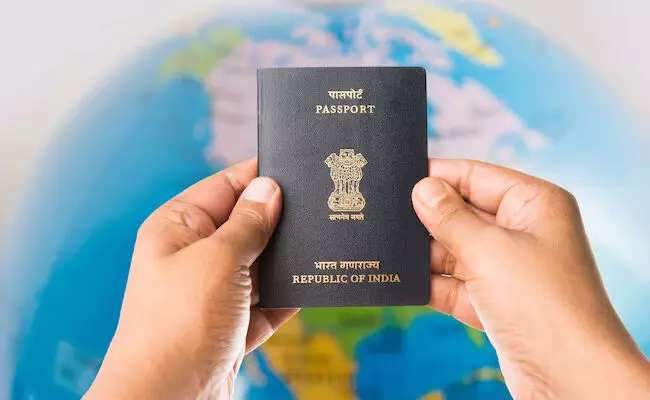
New Delhi (PTI): In a major upgrade of its passport-related system, the government has introduced a next-generation "e-passport" that combines both paper and electronic elements, a step that also seeks to detect and check forgery, impersonation and other fraudulent acts.
A senior official of the Ministry of External Affairs (MEA) on Tuesday said old legacy passports, which have not expired, will continue to remain valid till 2035 or until their expiry.
The MEA recently announced the successful rollout of the upgraded version of its flagship Passport Seva Programme (PSP), which includes the Passport Seva Programme (PSP V2.0), the Global Passport Seva Programme (GPSP V2.0), and the e-Passport, for citizens in India and those who are residing abroad.
The e-passport is a hybrid passport that combines both paper and electronic elements. It features an embedded radio frequency identification (RFID) chip and an antenna, which store and secure the holder's data in accordance with International Civil Aviation Organization (ICAO) standards, the officials said.
The passport's critical information is printed on its data page as well as stored in the chip, thus making it harder to forge, they said.
Pilot testing of the e-passport began at Regional Passport Offices in Bhubaneswar and Nagpur in 2024.
After the successful pilot launch and requisite certifications, subsequently, it was rolled out at the remaining Regional Passport Offices across India in a phased manner and completed in May 2025.
"Around 80 lakh e-passports have been issued in India, till date, since the beginning of the rollout. And around 62,000 e-passports, till date, have been issued through Indian missions and posts abroad since June 2025," another senior MEA official said.
The data stored in the embedded chip of an e-passport is "read-only" and gets accessed by the system when it is tapped on a platform used during the immigration process at an airport.
"This data cannot be retrieved by anyone else, in case a person's e-passport gets lost or stolen by someone. And in case of theft, once a police complaint has been filed, the entire data on the chip can be locked by authorities," the senior official said.
Also, the embedded data is matched with pre-stored biometric data during the course of application for a passport, as this is a "major upgrade" in the entire passport-related system using modern technology, the official said.
"So, if someone tries to forge a passport or attempts to impersonate someone or get a passport issued in someone else's name, the new system will first alert if a passport with that name and demographic data already exists, and then compare and match the data furnished by an applicant with stored biometric data, and alert in case someone attempts fraudulence acts," he said.
Besides, in an e-passport, the photo used will be compliant with ICAO standards, the other official said.
The PSP Version 2.0 is designed to create a digitally integrated ecosystem connecting all stakeholders involved in passport services, with a focus on efficiency, transparency, and user convenience.
With AI-powered chat and voice bots, citizens can get help while filling out applications or when they have passport-related grievances. The new and improved passport website and mobile app give users a better experience through features like auto-filled forms, simpler document uploads, and easy online payments using UPI or QR codes, according to the MEA.
The introduction of e-passports, alongside PSP V2.0, marks "another significant milestone" for the ministry, it said.
"Critical information printed on the data page is also stored electronically on the chip, enabling enhanced security and authentication. Going forward, all newly issued passports will be e-passports, while existing non-electronic passports will remain valid until their expiry," the MEA said.
PSP V2.0 was successfully implemented across all 37 Passport Offices in India, along with their respective 93 Passport Seva Kendras (PSKs) and 451 Post Office Passport Seva Kendras (POPSKs) on May 26, 2025.
Subsequently, GPSP V2.0 was launched across Indian embassies and consulates worldwide on October 28.
There are 202 Indian missions and posts abroad, the official said.
An e-passport carries a particular symbol, and nearly 100 countries have such facilities in their immigration system, he said, adding that, in countries where such facilities are not available, "machine-readable data" printed on the e-passport page can be read by the system at an airport.
The government has three "data centres", one each in Noida and Chennai and Bengaluru, and the system and data are "owned" by the central government, the official said.
Also, there is a seven-layer security control in the security architecture to avoid any attempts of hacking and other kinds of disruption, he said.
Let the Truth be known. If you read VB and like VB, please be a VB Supporter and Help us deliver the Truth to one and all.
Banned tobacco products seized in Ulhasnagar, one arrested

Thane (PTI): Police have arrested a 26-year-old man and seized banned tobacco products valued at more than Rs 5 lakh following a raid in the Ulhasnagar area of Thane district, an official said on Saturday.
The operation was conducted on the premises late Wednesday night near Shahad gate, based on a complaint filed by officials from the Food and Drug Administration (FDA), a police officer said, adding that a police team found a large consignment of contraband from different brands, stocked for illegal sale.
The arrested accused has been identified as Arbaz Nasir Khan (26). Two other suspects have been named as wanted in the case, and a hunt has been launched to nab them.
The seized tobacco products are valued at approximately Rs 5,05,658.
An FIR has been registered at the Ulhasnagar police station under various sections of the Bharatiya Nyaya Sanhita (BNS), along with relevant provisions of FDA regulations.