Actor Dalip Tahil sentenced to two months in jail in 2018 accident case
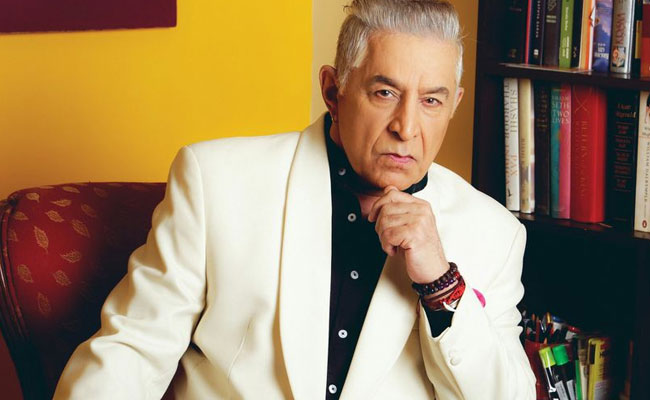
Mumbai (PTI): A court here has sentenced Bollywood actor Dalip Tahil to two months in jail in a 2018 accident case, citing that the medical officer's evidence made it clear that the actor was driving under the influence of alcohol.
The court held that the defence's argument that the victim and her friend being "social media predators" encashed the actor's celebrity status, is not sufficient to discard the evidence of the prosecution.
The metropolitan magistrate court in Bandra on October 16 had convicted the veteran actor of charges under section 337 (causing hurt to any person by doing any act so rashly or negligently as to endanger human life or the personal safety of others) of the Indian Penal Code and relevant provisions of the Motor Vehicles Act.
The detailed order was available recently.
As per case details, Tahil's car rammed into an autorickshaw, injuring two passengers, in suburban Khar area in September 2018.
The court noted that the evidence of the medical officer made it clear that the accused was under the influence of alcohol.
Responding to an argument of the defence, the court said the status of the accused and the nature of the informant's and the witness' work is not the criteria to discard their testimony.
"The evidence of the informant and witness is in corroboration to each other that the vehicle of the accused dashed the auto from behind," the order said.
The court further said in the present case, it is proved that "the accused is well mature and a respectable citizen of India having gained the status of a public image".
"The nature of the offence and overall impact on society in respect of the offence committed by the accused is required to be dealt with sentence according to law and not only on the imposition of the fine," the court said while sentencing the actor to two months in jail.
Let the Truth be known. If you read VB and like VB, please be a VB Supporter and Help us deliver the Truth to one and all.
Hospital wall collapse: CM orders suspension of executive engineer; kin of victims get solatium
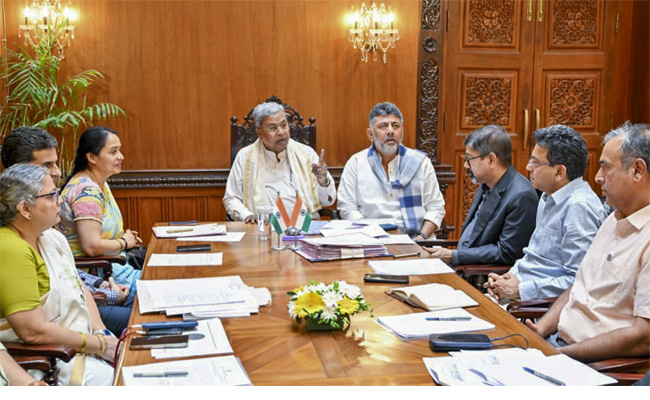
Bengaluru (PTI): Karnataka Chief Minister Siddaramaiah on Thursday ordered the immediate suspension of an executive engineer for the Bowring and Lady Curzon Hospital wall collapse that claimed the lives of seven people, during a high-level review meeting at Vidhana Soudha.
A compensation of Rs 5 lakh, as announced by the CM Siddaramaiah, was distributed to the families of seven victims who lost their lives in the tragedy on Wednesday evening, which occurred due to heavy downpour with gusty winds and hailstorm.
The meeting of municipal commissioners of the five corporations, chaired by the chief minister and attended by Deputy Chief Minister D K Shivakumar, focused on fixing accountability and examining lapses that led to the tragedy.
"Why was soil dumped in a way that damaged the wall? Why did you not monitor this?" Siddaramaiah asked, pulling up hospital authorities during the meeting.
A statement from the chief minister's office said that the CM ordered the immediate suspension of the executive engineer of the Karnataka Health Systems Development Project (KHSDP).
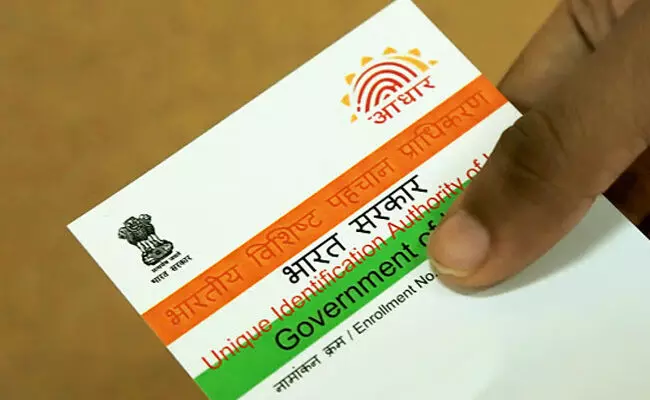
ALSO READ: Three arrested for running fake Aadhaar racket in UP's Badaun
He also questioned the hospital authorities, asking why they failed to monitor the dumping of soil that weakened the structure.
The chief minister directed that a notice be issued to the head of the Hospital.
During the meeting, Siddaramaiah said the rains had caused extensive damage in the city, with over 250 trees uprooted.
The Chief Minister instructed officials to take necessary measures before the onset of the monsoon to avoid untoward incidents.
Commissioners of all five municipal zones in Bengaluru have been asked to take precautionary steps, including trimming dry and dangerous tree branches, the CMO said.
Siddaramaiah also directed them to get the silt cleared from stormwater drains to prevent flooding, and that immediate action be taken to remove debris and fallen branches from roads.
Further, he instructed that barricades be placed at underpasses where water stagnates and restricts public movement.
The Greater Bengaluru Authority (GBA) Chief Commissioner M Maheshwar Rao said in a statement that Shivajinagar MLA Rizwan Arshad distributed compensation cheques of Rs 5 lakh each to the families of the deceased on Thursday.
Seven people, including a six-year-old girl, were killed and seven others injured when the compound wall collapsed amid heavy rain, strong winds and a hailstorm on Wednesday evening.
Police said the victims, comprising three from Bengaluru, two from Kerala on a study tour and one each from Uttar Pradesh and Assam, had taken shelter near the wall when it suddenly gave way, trapping them under the debris.
The chief minister questioned officials over the dumping of soil near the wall despite knowing it could weaken the structure, and directed that a notice be issued to the head of Bowring Hospital.
Siddaramaiah, who had visited the spot soon after the incident along with senior officials, reviewed the situation and ordered a detailed probe into the collapse.