Adani-Hindenburg row: Plea in SC seeks contempt action against SEBI
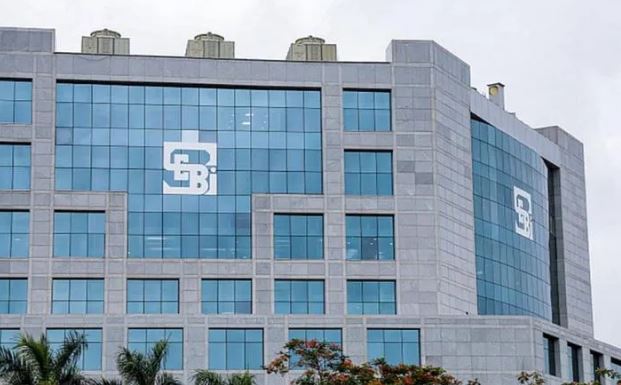
New Delhi, Nov 19: A plea has been filed in the Supreme Court for initiation of contempt proceedings against the Securities and Exchange Board of India (SEBI), alleging it has violated the timeline for completing the investigation and submitting its report on the allegations of stock price manipulation by the Adani group.
An application has been filed by PIL petitioner Vishal Tiwari saying that despite the deadline given to the SEBI it has failed to comply with the direction of the court and has not submitted the final conclusion/report as was directed by the court.
It said by the order dated May 17, 2023, the apex court directed SEBI to submit its report till August 14, 2023. It said on August 25, 2023, SEBI filed the status report regarding its investigation stating that overall it has done 24 investigations, out of which 22 investigations have achieved finality and two are of interim nature.
The application also referred to the latest report by the Organised Crime and Corruption Reporting Project (OCCRP) against the Adani Group and its alleged investments via "opaque" Mauritius funds.
The application said that the primary focus of the PIL was on what steps shall be taken in future to strengthen the regulatory system so that the investors could be protected and their investment in the share market remains safe.
"Because after the publication of the Hindenburg report against the Adani Group .... thousands of crores of the investors' money got lost.
"But now the question arises, whether the present regulatory authority is efficient enough or if some changes are required by setting up a new regulatory body with a more efficient mechanism so that in future such damaging incidents may not occur in the share market and the investors' money may be protected," it said.
Tiwari in his application said that a strong mechanism is also required to keep vigil upon the companies' conduct and practises - whether they are complying with necessary rules and regulations laid down by the regulatory authority.
"That till now after the recommendations and suggestions given by the expert committee in its report the Union Government has not taken any strong step in compliance of that and has not apprised the court with any secured framework for the protection of investors in future," it said.
Tiwari said that SEBI in its application has objected to the suggestion of a necessary timeline for the completion of the investigation.
"The SEBI objection is contrary to the present need of a strong and efficient regulatory mechanism because timeless investigations lead to the disappearance of evidence and vital information against any entity which is under investigation and it also reduces the confidence of the investors in the market," it said, adding that SEBI failed to file its report despite timeline fixed by the court till August 14.
"The inordinate delay in investigation impacts upon investigation and it also raises suspicion in the minds of investors and refrains them from investing in future. Delay in the investigation also leads to the manipulations and damage of vital material and evidence," it said.
The application said that the expert committee constituted by this court is still working in the present matter and has not been discharged.
"As the issue has again risen by the new disclosures and report of Organised Crime and Corruption Reporting Project (OCCRP) against Adani Group, the need has arisen to get it investigated by the independent body which was constituted by this court," the application said.
It said an explanation should be sought from SEBI for not complying with the timeline framed by this court in the order dated May 17, 2023 for completing the investigation and submitting a report.
On November 6, the top court said the apex court registry would look into the issue of listing for hearing PILs related to allegations of stock price manipulation by the Adani group.
On July 11, the top court asked the SEBI about the status of its ongoing investigation into the allegations of stock price manipulation by the Adani group.
The court, which had granted time till August 14 for a probe by the SEBI, had said the inquiry has to be concluded expeditiously.
Later, the capital markets regulator filed a status report on the Adani-Hindenburg probe and said it was awaiting information from tax havens.
The SEBI, in its report, had said that it has completed the probe in all but two allegations against the Adani group and is still awaiting information from five tax havens on actual owners behind foreign investors investing in the conglomerate.
The report said out of the 24 matters it was probing, findings in as many as 22 are final.
Without divulging the outcome of its investigations, the SEBI had given a detailed breakdown of the steps taken by it during its probe, including related party transactions.
"SEBI shall take appropriate action based on the outcome of the investigations in accordance with law," the regulator had said.
The probe reports finalised include allegations of manipulation of stock prices, alleged failure to disclose transactions with related parties and possible violation of insider trading in some of the group stocks.
On May 17, the apex court granted SEBI time till August 14 to complete its probe into the allegations of stock price manipulation by the Adani group.
A Supreme Court-appointed expert committee had in an interim report in May stated that it saw "no evident pattern of manipulation" in billionaire Gautam Adani's companies and there was no regulatory failure.
It, however, cited several amendments the SEBI made between 2014 and 2019 that constrained the regulator's ability to investigate, and its probe into alleged violations in money flows from offshore entities has "drawn a blank".
The apex court had on May 17 directed that copies of the report submitted before it by the top court-appointed Justice (retd) A M Sapre expert committee be made available to the parties to enable them to assist it in further deliberations in the matter.
Adani Group stocks had been bludgeoned on the bourses after Hindenburg Research made a litany of allegations, including those about fraudulent transactions and share-price manipulation, against the business conglomerate.
The Adani Group dismissed the charges as lies, saying it complies with all laws and disclosure requirements.
Let the Truth be known. If you read VB and like VB, please be a VB Supporter and Help us deliver the Truth to one and all.
Three private doctors arrested in illegal scanning case involving 31 minor pregnant girls in KR Pet

Mandya: Police on Tuesday arrested three private doctors in connection with a case involving alleged illegal scanning of 31 minor pregnant girls at a private diagnostic centre in KR Pet. The accused were later remanded to judicial custody.
The arrested doctors have been identified as Dr. Divyachetan of Chetana Maternity Centre, Dr. Harshit of Navi Diagnostic Centre, and Dr. Harish of Kushal Diagnostic Centre.
Police said Priyanka, a gynaecologist attached to a government hospital, is absconding and efforts are under way to trace her.
The case came to light after Karnataka Lokayukta Police recently conducted raids, during which illegal sex determination tests on minor pregnant girls were allegedly detected at two diagnostic centres in KR Pet town.
Following the raids, District Health and Family Welfare Officer Dr. Mohan, Deputy Director of the Women and Child Development Department P.S. Asha, and District Child Protection Officer Rashmi inspected several diagnostic centres and filed cases at KR Pet Town and Rural police stations.
According to the allegations, Navi Diagnostic Centre conducted scans on 24 minor pregnant girls, including 19 cases in 2024 and five in 2025. Kushal Diagnostic Centre is accused of conducting scans on seven minor pregnant girls.
Meanwhile, Deputy Commissioner Dr. Kumar has directed taluk vigilance committees to inspect all 63 ultrasound scanning centres in the district and submit reports within 10 days.
Officials said the Tahsildar of each taluk has been appointed chairperson of the respective committee.