After 5-year gap, India, China to resume direct flight services on October 26

New Delhi (PTI): After a gap of five years, India and China will resume direct flight services later this month as part of efforts to rebuild their ties that came under severe strain following a border standoff in eastern Ladakh.
The announcement by the Ministry of External Affairs (MEA) came a month after Prime Minister Narendra Modi and Chinese President Xi Jinping held talks on the margins of the Shanghai Cooperation Organisation's (SCO) summit in China's Tianjin city.
Indian carrier IndiGo and China Eastern will be the first two airlines to resume direct flights between the two countries, people familiar with the development said.
IndiGo said it plans to operate daily flights from Kolkata to Guangzhou from October 26.
The flight services between the two sides were suspended following the COVID-19 pandemic in 2020. They were not restored in view of the over-four-year border face-off in eastern Ladakh, which ended in October last year.
"Since earlier this year, as part of the government's approach towards gradual normalisation of relations between India and China, the civil aviation authorities of the two countries have been engaged in technical-level discussions on resuming direct air services between the two countries and on a revised air services agreement," the MEA said.
It has now been agreed that direct air services connecting designated points in India and China can resume by late October, in keeping with the winter-season schedule and subject to commercial decisions of the designated carriers from the two countries and the fulfilment of all operational criteria, it added.
"This agreement of the civil aviation authorities will further facilitate people-to-people contact between India and China, contributing towards the gradual normalisation of bilateral exchanges," the MEA said in a statement.
IndiGo said in a statement that it plans to operate daily flights from Kolkata to Guangzhou from October 26. "Subject to regulatory approvals, IndiGo will also introduce direct flights between Delhi and Guangzhou shortly," it said.
In a social media post, the Ministry of Civil Aviation said India and China will resume direct air services by the end of October.
"This follows continuous technical-level engagement between civil aviation authorities as part of broader efforts to normalise bilateral ties," it said.
"The move will greatly enhance air connectivity, support people-to-people exchanges and contribute to the strengthening of economic collaboration between the two countries," it added.
In his remarks at the meeting with Xi on August 31, Modi had said that direct flights are being resumed between the two countries.
India-China relations plunged to their lowest point since the 1962 war following the Galwan valley clashes in June 2020.
After a series of diplomatic and military talks, the two sides withdrew their troops from several friction points along the Line of Actual Control (LAC) in eastern Ladakh.
In October last year, the two sides firmed up a disengagement pact for Depsang and Demchok, the last two friction points.
Days after the agreement was finalised, Modi and Xi held talks in Kazan and took a number of decisions to improve the ties.
In the last few months, the two sides have taken a series of measures to repair the ties, including the resumption of the Kailash Mansarovar Yatra.
Let the Truth be known. If you read VB and like VB, please be a VB Supporter and Help us deliver the Truth to one and all.
Akola hottest in India at 46.9 deg C; Vidarbha under grip of heat wave
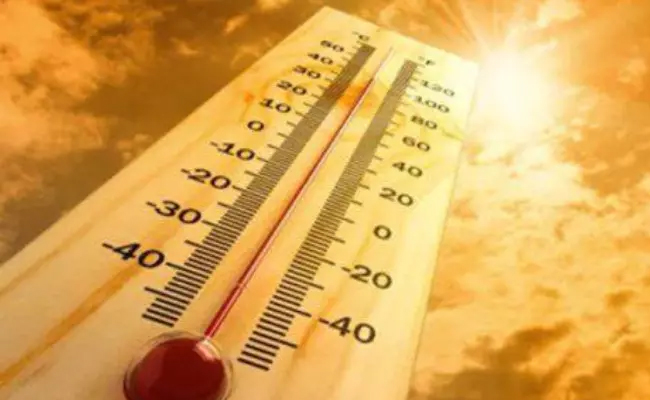
Nagpur (PTI): Akola in Maharashtra has recorded the highest temperature in the country at 46.9°C, while Nagpur and several other parts of Vidarbha reeled under a severe heat wave, MeT officials said on Monday.
Heat wave conditions are expected to persist across parts of the state's Vidarbha region till Tuesday, as maximum temperatures may reach 45 to 46 degrees Celsius and touch 47 degrees Celsius at isolated locations, they said.
On Sunday, Akola recorded 46.9 degrees Celsius, the highest temperature in the country, followed by Amravati at 46.8 degrees Celsius, according to the India Meteorological Department's Regional Meteorological Centre (RMC) in Nagpur.
Wardha sizzled at 46.4 degrees Celsius, Yavatmal logged 46 degrees Celsius, Nagpur scorched at 45.4 degrees Celsius, while Chandrapur recorded 45 degrees Celsius, as per the data.
Akola, Amravati, Wardha, Yavatmal, Chandrapur and Nagpur experienced heat wave conditions, while several other districts reported above-normal temperatures, RMC scientist Dr Praveen Kumar told PTI.
The prevailing above-normal and persistently high temperatures over Vidarbha can be attributed to an anticyclonic circulation over Maharashtra and adjoining areas. At the same time, hot and dry northwesterly winds have been continuously affecting the region, he said.
In addition, weak western disturbances and the absence of moisture incursion or any significant weather systems have contributed to the intensification of heat over the region, the official said.
As per the Met department, heat wave conditions are likely to continue at a few or isolated places over the region till Tuesday.
The IMD has issued an 'orange' alert for Akola, Amravati and Wardha and a 'yellow' alert for Nagpur, Chandrapur and Yavatmal for Tuesday, saying that the maximum temperatures are likely to reach 45 to 46 deg C and possibly up to 47 deg C at isolated locations.
A relief from the heat wave is expected thereafter and the mercury is likely to dip by 2 to 3 deg C, with the possibility of rainfall and gusty winds in the coming days, it added.
The IMD grades the severity of any weather system through colour-coded alerts – green (no warning), yellow (be aware), orange (be prepared) and red (take action).