AHINDA groups urge Rahul Gandhi to declare Siddaramaiah as CM for 5 years
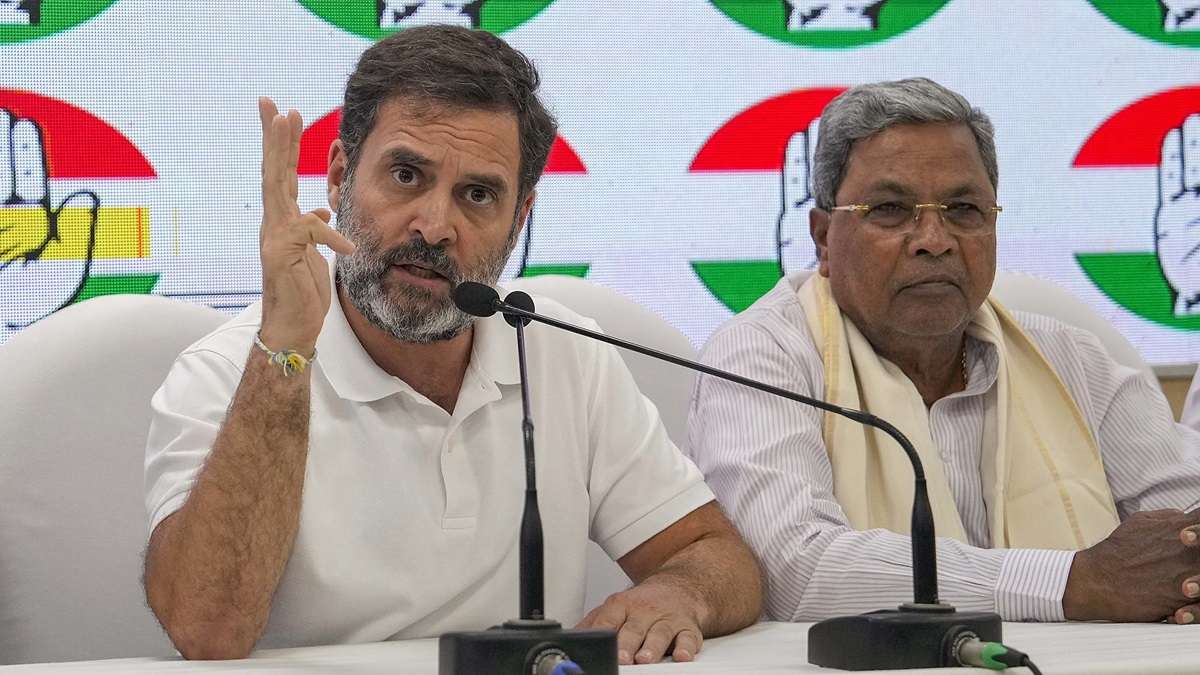
Mysuru (PTI): AHINDA organisations here have appealed to Congress leader Rahul Gandhi to declare that Siddaramaiah will serve as the chief minister for a full five-year term.
Representatives of various AHINDA organisations have launched a campaign here on Wednesday, posting letters to Leader of the Opposition in the Lok Sabha Rahul Gandhi, urging him and AICC president Mallikarjun Kharge to intervene immediately to end the speculation over the leadership change.
AHINDA (Kannada acronym for minorities, backward classes, and Dalits) is a grouping that remains a support base for Siddaramaiah.
The move comes against the backdrop of speculations about chief minister change in the state, when the Congress government reaches the halfway mark of its five-year term in November.
"The Congress party won 135 seats in the 2023 assembly elections under the leadership of Siddaramaiah, the unrivaled leader and the strong voice of the oppressed communities, and the identity of the AHINDA communities, which led to the formation of the Congress party government in Karnataka again," AHINDA organisations said in a letter addressed to Rahul Gandhi.
The "huge victory" was due to the leadership of the Siddaramaiah and the AHINDA communities voting for the Congress party under his leadership, it said.
"The Congress party's base in Karnataka is very strong, and the main reason for this is the administration of Siddaramaiah, his pro-people guarantee scheme, his love and concern for the AHINDA communities, his ideology of social justice, his contributions to the welfare of exploited communities, and his belief in the principle of equality for all," it added.
The AHINDA groups pointed out that Siddaramaiah was elected as the leader of the legislature party in 2023 for five years by the Congress MLAs. But, the opposition parties such as the BJP, are creating confusion among the public through misleading statements that the chief ministers will be changed. Some Congress party leaders have also echoed this.
"This opposition may hinder the progress of the Congress party. The propaganda that Siddaramaiah will be removed from the post of chief minister is impossible for the AHINDA communities to tolerate. Therefore, we hereby request you and AICC President Mallikarjun Kharge to immediately intervene and declare that Siddaramaiah will continue as the Chief Minister of Karnataka for a period of five years, and clear all the confusion," they said, seeking time for a delegation of AHINDA leaders to meet Gandhi.
There has been speculation within state's political circles, especially within the ruling Congress, for some time now about the chief minister change later this year, citing alleged power-sharing agreement involving incumbent Siddaramaiah and Deputy CM D K Shivakumar.
Amid speculations, Chief Minister Siddaramaiah on Monday said he would continue in office for the full five year term, subject to the Congress high command's decision.
Let the Truth be known. If you read VB and like VB, please be a VB Supporter and Help us deliver the Truth to one and all.
Madhu Kishwar booked over alleged misleading content on social media
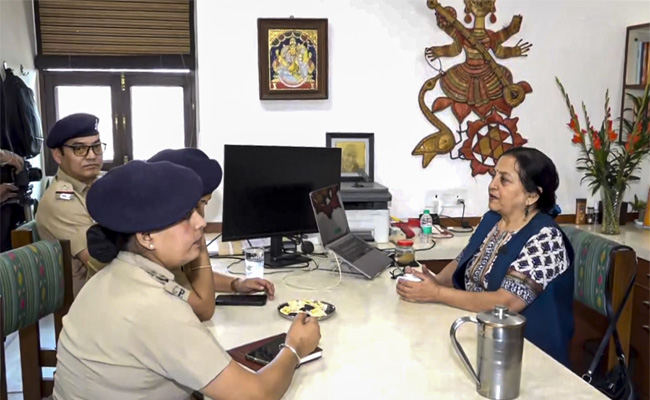
Chandigarh (PTI): Academician Madhu Kishwar has been booked on charges of criminal defamation, promoting enmity and other offences by Chandigarh police following a complaint by a resident alleging circulation of forged and misleading content on social media.
A Chandigarh police team on Tuesday served notice to Kishwar in Delhi, asking her to join the investigation in the case.
Sarita Roy, the Station House Officer of Sector-19 police station in Chandigarh, where the FIR was filed, told reporters in the national capital that the notice was issued under Section 35(3) of the BNSS and that Kishwar has been asked to appear and present her side.
Kishwar and some other social media users have been booked under various sections of Bharatiya Nyaya Sanhita, including 196 (criminalises acts that promote enmity, hatred, or ill-will between groups based on religion, race, language), 336 (1) (forgery) and 356 (criminal defamation), and the IT Act, according to the FIR.
ALSO READ: 21 hours raid fetch nothing for ED, claims Karnataka Cong MLA’s son
They have also been charged under Section 353 (penalises making, publishing, or circulating false information that cause public mischief...) and those related to cheating and forgery under the BNS.
According to a statement by the Chandigarh police, a city-based complainant on April 19 alleged that some forged and misleading social media posts and video clips with obscene text and content were being circulated by various social media users, misidentifying the person in the video.
The complainant alleged that it is a deliberate act of creating a false electronic record using obscene words and phrases, having knowledge and sufficient reason to believe that the posts are misleading and false, with the intent to cause damage or injury.
The video, which circulated with the intent to cause harm to the reputation of a constitutional authority and to disturb public peace and tranquillity, should be investigated, and appropriate action should be taken, the complainant said.
The complainant said the person seen in the video is a travel vlogger whose wife regularly posts updates about their activities on social media. The original video was shared from her social media account.
"As per the statement of the woman, she disclosed that the person in the video shared from her account is her husband. Statements of her husband and another lady in the video have also been recorded during preliminary investigation," said the police statement, adding that further probe is underway.
Meanwhile, Kishwar, in a social media post, said that a Chandigarh police team had visited her late Monday night to serve her notice regarding the FIR registered against her.
"Since the law forbids the police to visit or arrest women after dark and before sunrise, I spoke on phone to the leader of the delegation. She told me that their team has come to serve notice regarding an FIR registered against me in Chandigarh. I insisted that they go by the law and come in the morning," she wrote on X.