'AI double-edged sword in education sector', educationist calls for ensuring data privacy
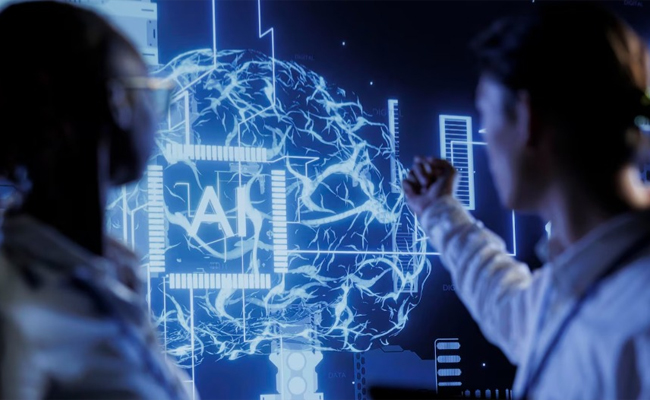
New Delhi (PTI): Artificial intelligence is a force multiplier in the education sector but unethical use of AI tools for cheating, data and privacy breach is a matter of concern, according to educationist Shishir Jaipuria.
Jaipuria, Chairman of the Seth Anandram Jaipuria Group of Educational Institutions, said the purpose of education is to nurture knowledgeable, skilled, conscientious and emotionally strong individuals who go on to make a positive impact on society, but the rat race defeats it and pushes students to take extreme steps.
“The advent and prevalence of artificial intelligence has been a watershed moment in the history of human progress. AI is not just transforming industries, but also reshaping the jobs of the future. Its integration and application in the education sector will have far-reaching implications," Jaipuria told PTI.
ALSO READ: K'taka Legislative Council adopts resolution urging Centre to include 56 pc quota in 9th Schedule
“AI platforms allow schools to map each child's learning style, identify the learning gaps, and recognise the strengths and weaknesses to optimise learning outcomes. Secondly, AI is helping teachers cut down on their routine tasks, improving productivity, efficiency and allowing more time for classroom delivery,” he added.
By adopting artificial intelligence, many schools have created an ecosystem of personalised learning, Jaipuria said.
With the availability of information on the internet, technology promotes self-learning in geographies that don't have an adequate number of teachers. Having said that, there are legitimate concerns regarding the ethical use of AI, he highlighted.
“There have been instances of AI being used for cheating, particularly in online assessments. Schools also have to develop guardrails to prevent data breaches and ensure privacy,” he said.
The educationist also highlighted that teacher training and professional development have to be directed towards creating digital competencies to enable educators to leverage the full potential of AI.
“Pre-emptive measures coupled with guardrails and policy initiatives and investments to close digital infrastructural gaps can make AI a force multiplier in the education sector,” he underlined.
On the changes in school education after the implementation of the National Education Policy (NEP), Jaipuria said that NEP-2020 is a forward-looking document envisioning competency-based education with a focus on interdisciplinary approach, critical thinking, experiential learning, multilingualism and research.
“On the other hand, there is a need to speed up the implementation of NEP. Challenges do exist in the form of nationwide implementation of the three-language formula, with resistance from the southern states. There also needs to be an uptick in annual budgetary allocation for education to reach the proposed figure of 6 per cent of GDP,” he pointed out.
On the incidents of student suicide, Jaipuria said, “They are extremely unfortunate. I see it as a larger issue – a societal and systemic problem. At a very fundamental level, we have to clearly understand the purpose of education.
“The purpose is to nurture knowledgeable, skilled, conscientious and emotionally strong individuals who go on to make a positive impact on society. But if this purpose is neglected in the race to crack competitive exams and secure top grades, the pressure of performance builds up on the learners.”
Jaipuria stressed that this problem needs to be addressed collaboratively by the schools, parents and communities.
“Success should not be viewed through the lens of marks or grades alone. We have to adopt a more holistic and broader view. There has to be a strong parental engagement to identify the early signs and address the problem in the nascent stage with early interventions,” he said.
Talking about the Jaipuria Group’s expansion plans, the chairman said the growth roadmap includes expanding to a network of 50 schools by 2030.
Presently, the Seth Anandram Jaipuria Group of Educational Institutions has a strong presence in north India with 23 K-12 schools, five preschools, two management institutions and one teacher training academy.
“We have a new school coming up in the NCR, and we are targeting new markets in Rajasthan as well. We also plan a stronger outreach through our Saamarthya Teachers Training Academy of Research (STTAR) to facilitate professional development of teachers, school development programmes and education leadership projects,” he said.
Let the Truth be known. If you read VB and like VB, please be a VB Supporter and Help us deliver the Truth to one and all.
Maharashtra sets up state vaccination task force to strengthen immunisation programme

Mumbai (PTI): The Maharashtra government has set up a State Vaccination Task Force to strengthen the regular immunisation programme and review the progress of related campaigns, a health department official said on Monday.
The State Vaccination Task Force will comprise at least 29 members and will be headed by the administrative head of the health department, he informed.
The government has also constituted separate district-level and municipal vaccination task forces to improve implementation and address challenges at the grassroots level, he said.
Municipal task forces, chaired by respective civic commissioners, have been constituted in view of the vast urban population in Maharashtra and the role of civic bodies in implementing different health programmes.
The district-level task forces will function under the chairmanship of collectors.
"Complete immunisation of children at the appropriate age is an extremely simple, cost-effective and highly effective measure to reduce child mortality and the prevalence of diseases among kids. Immunisation is a powerful tool for reducing illness in children," maintained the official.
To ensure full vaccination of all children, the state government implements various campaigns from time to time as per the central government guidelines, he pointed out.
"Active participation and cooperation of other relevant government departments are essential (in making these campaigns successful)," according to the official.
The state-level body will review the regular immunisation programme, associated campaigns and vaccine-preventable diseases in detail. It will also conduct focused assessments of high-risk districts and municipal corporations, including vacancies at district, municipal and sub-district levels, availability of cold chain equipment, resource gaps and training requirements, he noted.
The state task force will review allocation and utilisation of funds for immunisation and ensure timely action by officers concerned based on reports from district and municipal task forces and state-level monitoring mechanisms, the official said.
It will also ensure active coordination and participation of other government departments in immunisation drives, while district and municipal task forces will carry out similar functions at their respective levels, the official added.