Air pollution in Delhi drops from very poor to poor
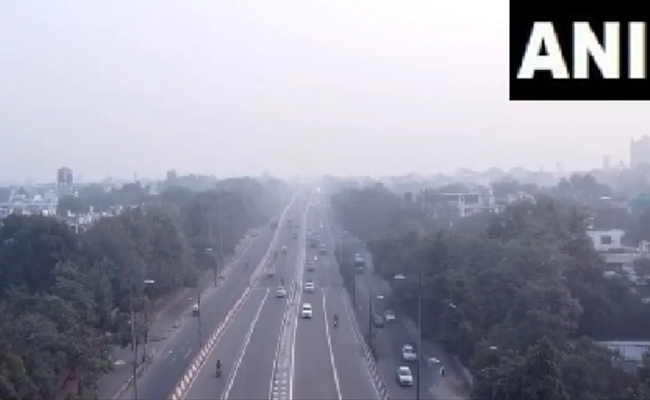
New Delhi (PTI): Air quality in Delhi and its suburbs improved further on Sunday due to favourable atmospheric conditions, primarily wind direction and speed, monitoring agencies said.
The city's air quality index stood at 290 at 7 am. The 24-hour average AQI, recorded at 4 pm every day, was 319 on Saturday, 405 on Friday and 419 on Thursday.
Neighbouring Ghaziabad (275), Gurugram (242), Greater Noida (232), Noida (252) and Faridabad (318) also recorded very poor air quality.
An AQI between zero and 50 is considered good, 51 and 100 satisfactory, 101 and 200 moderate, 201 and 300 poor, 301 and 400 very poor, 401 and 450 severe and above 450 severe plus.
The Centre on Saturday removed stringent curbs, including a ban on construction work related to linear projects and the entry of polluting trucks into Delhi, in view of the dip in air pollution levels.
These measures constitute the final stage, Stage IV, of the Centre's air pollution control plan called the Graded Response Action Plan (GRAP).
The Commission for Air Quality Management in National Capital Region and Adjoining Areas (CAQM), a statutory body responsible for formulating strategies to combat pollution in the region, asked Delhi and NCR states to revoke all emergency measures, under which only CNG, electric and BS VI-compliant vehicles from other states are allowed to enter Delhi, with exemptions granted to those involved in essential services.
All medium and heavy goods vehicles not engaged in essential services were also banned in the capital under Stage IV of GRAP, according to the latest CAQM order.
The pollution control body said all other curbs under stages I, II and III of GRAP, including a ban on non-essential construction work, mining, stone crushers and diesel generators will continue.
The air quality forecasts by the India Meteorological Department/Indian Institute of Tropical Meteorology do not indicate any steep degradation in the overall air quality of Delhi-NCR in the coming days, the CAQM said.
Recent findings from a joint project by the Delhi government and Indian Institute of Technology (IIT), Kanpur found out that vehicular emissions accounted for about 45 per cent of the capital's air pollution on Friday. This reduced to 33 per cent on Saturday.
Secondary inorganic aerosols -- particles such as sulfate and nitrate that are formed in the atmosphere due to the interaction of gases and particulate pollutants from sources like power plants, refineries and vehicles -- is the second major contributor to Delhi's foul air, accounting for 19 to 36 per cent of the air pollution in the city over the last few days.
Let the Truth be known. If you read VB and like VB, please be a VB Supporter and Help us deliver the Truth to one and all.
Three private doctors arrested in illegal scanning case involving 31 minor pregnant girls in KR Pet
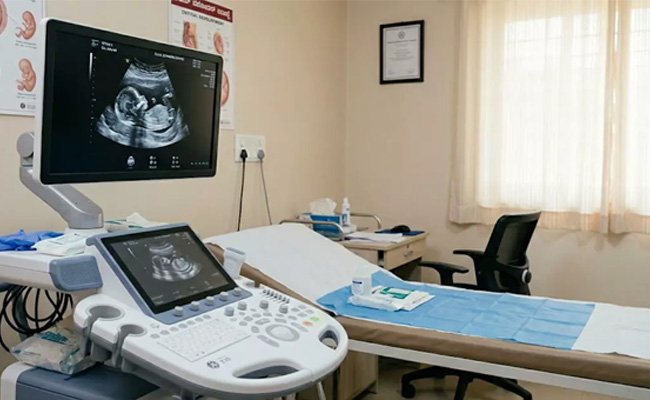
Mandya: Police on Tuesday arrested three private doctors in connection with a case involving alleged illegal scanning of 31 minor pregnant girls at a private diagnostic centre in KR Pet. The accused were later remanded to judicial custody.
The arrested doctors have been identified as Dr. Divyachetan of Chetana Maternity Centre, Dr. Harshit of Navi Diagnostic Centre, and Dr. Harish of Kushal Diagnostic Centre.
Police said Priyanka, a gynaecologist attached to a government hospital, is absconding and efforts are under way to trace her.
The case came to light after Karnataka Lokayukta Police recently conducted raids, during which illegal sex determination tests on minor pregnant girls were allegedly detected at two diagnostic centres in KR Pet town.
Following the raids, District Health and Family Welfare Officer Dr. Mohan, Deputy Director of the Women and Child Development Department P.S. Asha, and District Child Protection Officer Rashmi inspected several diagnostic centres and filed cases at KR Pet Town and Rural police stations.
According to the allegations, Navi Diagnostic Centre conducted scans on 24 minor pregnant girls, including 19 cases in 2024 and five in 2025. Kushal Diagnostic Centre is accused of conducting scans on seven minor pregnant girls.
Meanwhile, Deputy Commissioner Dr. Kumar has directed taluk vigilance committees to inspect all 63 ultrasound scanning centres in the district and submit reports within 10 days.
Officials said the Tahsildar of each taluk has been appointed chairperson of the respective committee.