Akhilesh Yadav calls on SP workers to gear up for 2027 polls, cautions against BJP’s ‘conspiracies’
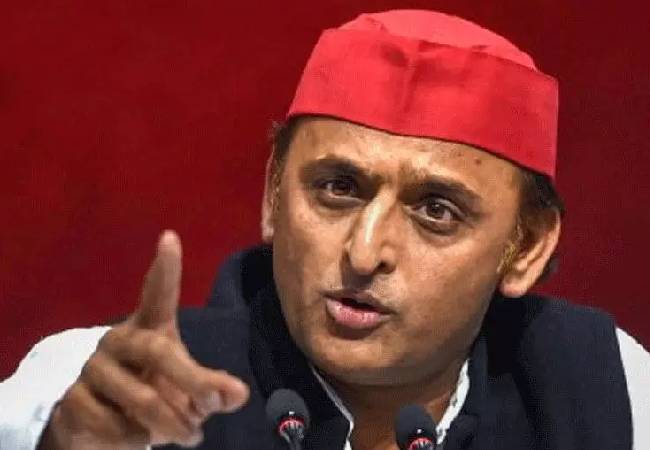
Lucknow (PTI): Samajwadi Party president Akhilesh Yadav on Thursday asked party workers to start preparing for the 2027 Assembly elections and remain alert to the “conspiracies” of the BJP.
Addressing party functionaries from Agra, Mathura and Hathras at the SP state headquarters here, Yadav alleged that the BJP is working on a "strategy to manipulate” elections.
“The BJP is planning to rig elections and destroy the sanctity of democratic institutions. The people of UP have already made up their mind to form a Samajwadi government in 2027, but each worker has to remain active, vigilant and cautious,” Yadav, according to the party statement, said.
He said that the goal of the Samajwadi Party is to establish the rule of social justice.
"Caste census will enable all sections of society to get rights and respect on the basis of their numbers. PDA (Pichhda, Dalit and Alpsankhyaks or backwards, Dalits and minorities) panchayats have awakened society and people have also realised its power. The BJP is scared of the power of PDA. It has started fearing defeat in the elections," he said.
Yadav stressed the need for vigilance regarding electoral rolls.
“Special attention must be given to ensure there is no tampering with the voters’ list. We must ensure that our people’s names are not deleted. The BJP tries to capture power by manipulating voter rolls and committing fraud in elections,” he alleged.
He also targeted the ruling party on law and order, inflation, unemployment and women’s safety.
“Crime is uncontrolled, women and children are unsafe, youths are jobless, education and health services have collapsed, and inflation is not coming down. The BJP government has failed on all fronts,” he said.
The SP chief claimed several development projects were launched for Agra, Mathura and Hathras during his government, but those initiatives had been “ruined” under the present BJP rule.
“The Samajwadi Party will come out with separate manifestos for these three districts in 2027 with fresh development promises,” he said.
Highlighting the importance of Agra and Mathura, Yadav said, “Agra is an international city and has global importance in tourism, while Mathura is known worldwide as the birthplace of Lord Krishna. The BJP is only misleading the people of Mathura by misusing power, while real development was carried out only under the SP government.”
Yadav exhorted party workers to stay connected with the masses and highlight the SP’s work and schemes such as the Agra-Lucknow Expressway, metro projects, pension schemes, laptop distribution and ambulance services.
“Workers must work unitedly at the booth level. People are desperate to get rid of the BJP. Only when the SP comes to power will students, youths, traders, and farmers prosper, and sisters and daughters feel safe,” he said.
Let the Truth be known. If you read VB and like VB, please be a VB Supporter and Help us deliver the Truth to one and all.
Sonam Raghuvanshi, accused of killing husband during honeymoon in Meghalaya, granted bail
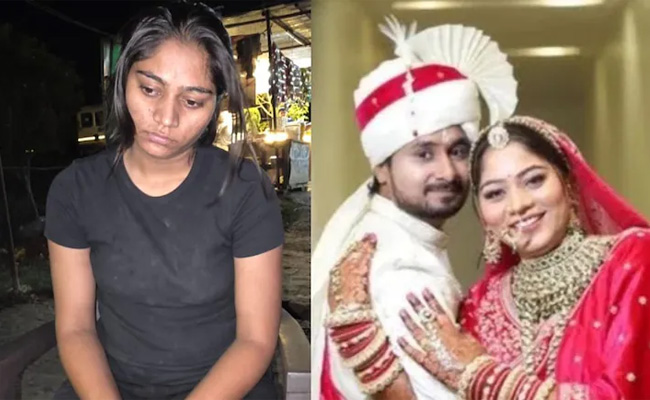
Shillong (PTI): A court in Meghalaya on Tuesday granted bail to Indore resident Sonam Raghuvanshi, who allegedly got her husband killed during their honeymoon in the northeastern state in 2025.
Sonam’s husband, Raja Raghuvanshi, went missing on May 23 last year during the couple’s honeymoon, and his mutilated body was found on June 2 from a deep gorge near a waterfall in Sohra area of East Khasi Hills district. Sonam and several others, including her alleged boyfriend, were arrested in the case.
"The accused has been granted bail by the court. However, necessary legal procedures are being followed and the police will continue to pursue the matter as per law," SP Vivek Syiem told PTI.
According to police, Indore-based transport businessman Raja Raghuvanshi married Sonam on May 11, 2025, in Indore, and the couple left for their honeymoon in Meghalaya on May 20.
The autopsy report of Raja Raghuvanshi indicated that he was hit twice with a sharp object on his head.
Sonam surrendered on June 8 before the police in Uttar Pradesh's Ghazipur district.
In September last year, the Meghalaya Police submitted a 790-page charge sheet, naming eight people, including his wife Sonam and her alleged boyfriend, as the accused.