All-party meet on SIR aimed at 'safeguarding democracy', all parties should join: Stalin
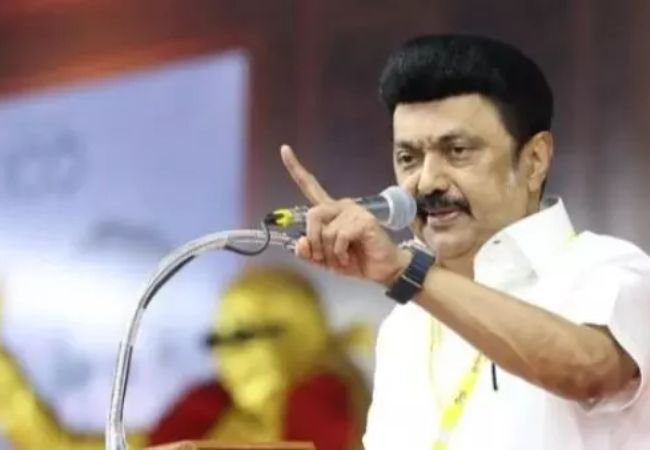
Tenkasi (PTI): The all-party meet over the Special Intensive Revision (SIR) of electoral rolls is an attempt to "safeguard democracy" and all parties should attend it, setting aside political differences, Chief Minister M K Stalin said on Wednesday.
The ruling DMK and its allies have been opposed to SIR and the government has convened the all-party meet to decide on the next course of action after the EC recently announced the revision from next month in the poll-bound Tamil Nadu and other states.
The Chief Minister charged the ruling BJP with trying to "snatch" the voting rights of the people of Tamil Nadu through such an exercise.
"I reiterate from this stage--voting is the basis of democracy. We will not sacrifice it at any cost. We will overcome the BJP's efforts like snatching the voting rights and vote theft and protect Tamil Nadu people's voting rights."
He further said, "Kerala has joined us," apparently referring to the opposition from that state CM Pinarayi Vijayan to SIR.
"All political parties should participate in this effort aimed at safeguarding democracy by setting aside their political differences," Stalin said about the proposed all-party meet.
Continuing his attack on the BJP, Stalin said, "We all know what happened in Bihar. If defeat is evident, then the BJP decides to remove the voting population in that State. They are trying to implement the same formula here (through SIR)."
"We have been opposing this conspiracy (of the BJP) from the beginning. I once again reiterate from this stage that the foundation for democracy is voting rights. We will never give it up under any circumstances," he said.
Referring to the heavy rains following the onset of North East Monsoon, he said the government is taking welfare measures on a 'war footing' and that the DMK regime had faced three natural disasters since coming to power.
"Nobody needs to teach us the measures required for the safety of the people. We have faced three natural disasters after coming to power."
The CM criticised the Centre for not sanctioning Rs 37,000 crore towards welfare measures.
"Did the BJP government sanction Rs 37,000 crore for the welfare measures? No. So far, it has not released the funds. Why have they not released the funds? Because, if they had sanctioned, Tamil Nadu would grow. But they do not want that to happen," he alleged.
The DMK Chief stressed that protecting the people was the government's duty, with or without central funds.
"Whatever trouble they give, nobody can stop the development of the State," he said.
Taking potshots at AIADMK General Secretary Edappadi K Palaniswami on paddy procurement, he accused Palaniswami of making false claims that the government did not procure paddy from the farmers.
"I have issued orders to ensure that paddy does not go waste amid widespread rainfall in the State. Based on this, in the last 4 years, procurement of paddy from the farmers has gone up as compared to the previous regime", he said.
Citing statistics, he said in the last four years 1.70 crore metric tonne of paddy has been procured from the farmers, averaging 42.61 lakh metric tonne annually. "But, in the previous regime, it stood at 22.70 lakh metric tonne a year," he said.
On the occasion, Stalin inaugurated 17 projects completed at a cost of Rs 1,020 crore.
He also took part in the ground-breaking ceremony for 83 new projects in the district. Later, he disbursed welfare assistance to 2.44 lakh beneficiaries costing Rs 587.39 crore to the exchequer, an official release said.
Let the Truth be known. If you read VB and like VB, please be a VB Supporter and Help us deliver the Truth to one and all.
Madhu Kishwar booked over alleged misleading content on social media
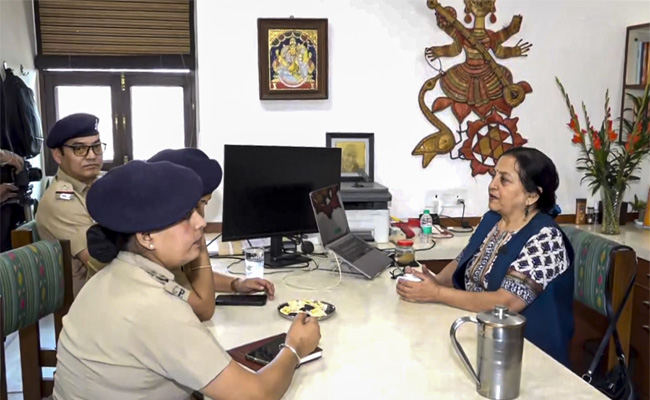
Chandigarh (PTI): Academician Madhu Kishwar has been booked on charges of criminal defamation, promoting enmity and other offences by Chandigarh police following a complaint by a resident alleging circulation of forged and misleading content on social media.
A Chandigarh police team on Tuesday served notice to Kishwar in Delhi, asking her to join the investigation in the case.
Sarita Roy, the Station House Officer of Sector-19 police station in Chandigarh, where the FIR was filed, told reporters in the national capital that the notice was issued under Section 35(3) of the BNSS and that Kishwar has been asked to appear and present her side.
Kishwar and some other social media users have been booked under various sections of Bharatiya Nyaya Sanhita, including 196 (criminalises acts that promote enmity, hatred, or ill-will between groups based on religion, race, language), 336 (1) (forgery) and 356 (criminal defamation), and the IT Act, according to the FIR.
ALSO READ: 21 hours raid fetch nothing for ED, claims Karnataka Cong MLA’s son
They have also been charged under Section 353 (penalises making, publishing, or circulating false information that cause public mischief...) and those related to cheating and forgery under the BNS.
According to a statement by the Chandigarh police, a city-based complainant on April 19 alleged that some forged and misleading social media posts and video clips with obscene text and content were being circulated by various social media users, misidentifying the person in the video.
The complainant alleged that it is a deliberate act of creating a false electronic record using obscene words and phrases, having knowledge and sufficient reason to believe that the posts are misleading and false, with the intent to cause damage or injury.
The video, which circulated with the intent to cause harm to the reputation of a constitutional authority and to disturb public peace and tranquillity, should be investigated, and appropriate action should be taken, the complainant said.
The complainant said the person seen in the video is a travel vlogger whose wife regularly posts updates about their activities on social media. The original video was shared from her social media account.
"As per the statement of the woman, she disclosed that the person in the video shared from her account is her husband. Statements of her husband and another lady in the video have also been recorded during preliminary investigation," said the police statement, adding that further probe is underway.
Meanwhile, Kishwar, in a social media post, said that a Chandigarh police team had visited her late Monday night to serve her notice regarding the FIR registered against her.
"Since the law forbids the police to visit or arrest women after dark and before sunrise, I spoke on phone to the leader of the delegation. She told me that their team has come to serve notice regarding an FIR registered against me in Chandigarh. I insisted that they go by the law and come in the morning," she wrote on X.