Allahabad HC loses patience over Rahul Gandhi citizenship case, adjourns after prolonged arguments
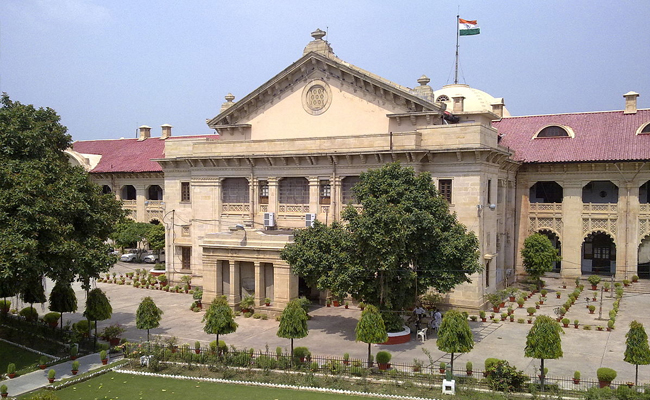
Prayagraj: The Allahabad High Court had to adjourn proceedings in a PIL concerning Congress leader Rahul Gandhi's citizenship due to persistent arguments from the Petitioner's Advocate, Ashok Pandey. The hearing, which lasted over 90 minutes, tested the patience of Justices Rajan Roy and Om Prakash Shukla.
Advocate Pandey continued his arguments despite repeated requests from the bench to conclude, leading to the judges expressing their frustration and eventually rising. The court had given ample time to both the petitioner, Karnataka BJP worker S. Vignesh Shishir, and his advocate to present their case, which alleged that Gandhi is a British citizen and thus ineligible to contest Lok Sabha elections.
During the proceedings, the bench emphasized that only substantial matters warrant extended hearings, a point made clear when Pandey insisted on further arguments. The court stated, "Enough! You have tested our patience. You can't take the Court for granted. We have given you enough chances. Now, we are rising. Looks like you don't want us to hear other matters.”
The petitioner’s advocate argued that Gandhi, having acquired British citizenship, ceased to be an Indian citizen. He referenced a notice issued by the Union Home Ministry in 2019 seeking clarification from Gandhi on his citizenship, which purportedly remains unanswered.
The Election Commission of India’s counsel countered that such issues should be addressed through an election petition and noted that similar pleas had been dismissed by the Supreme Court. When questioned about the source of his documents, Pandey admitted they were downloaded from the "Internet" but could not specify the website.
Following the heated exchange, the petitioner requested to withdraw the PIL with liberty to file afresh, which the court warned would result in costs for wasting court time. Ultimately, the bench decided to reserve its order.
Let the Truth be known. If you read VB and like VB, please be a VB Supporter and Help us deliver the Truth to one and all.
Man arrested for duping Delhi resident of Rs 2 lakh in online car sale fraud

New Delhi (PTI): Police have arrested a 32-year-old man for allegedly duping a Delhi resident of Rs 2 lakh on the pretext of selling a second-hand car online, an official said on Saturday.
The accused, identified as Aman Sethi, a resident of Shiv Puri Extension in east Delhi, allegedly impersonated an employee of a reputed online car sale platform to gain the victim's trust, the police said.
The case came to light after a complaint was lodged by Harish, a resident of Trilokpuri, following which an FIR was registered on April 16 under relevant sections of the Bharatiya Nyaya Sanhita (BNS). Sethi was arrested on Friday.
According to the complainant, the accused contacted the victim and offered to sell a second-hand car. He allegedly convinced him to transfer Rs 2 lakh as booking and processing charges.
After receiving the money, the accused neither delivered the vehicle nor refunded the amount and stopped responding to calls.
A police team conducted a detailed financial and technical investigation and traced the money trail to a bank account in the accused's name.
"Analysis of KYC details, account activity and digital footprints helped identify the suspect," a senior police officer said.
The police said the accused had vacated his known address and was evading arrest, but was eventually tracked down through technical surveillance and local intelligence after multiple raids in Delhi-NCR.
During interrogation, Sethi allegedly tried to mislead investigators but was confronted with evidence and subsequently arrested. Further probe revealed his involvement in a similar cheating case registered at the Krishna Nagar police station, indicating a pattern of such offences.
The police said the accused targeted people searching for second-hand cars online by posing as an employee of vehicle sale platforms, sharing photographs and details of vehicles, and demanding advance payments in personal bank accounts.
Two debit cards, two mobile phones and SIM cards allegedly used in the offence have been recovered from his possession, the police added.