Allahabad HC quashes detention under NSA for cow slaughter
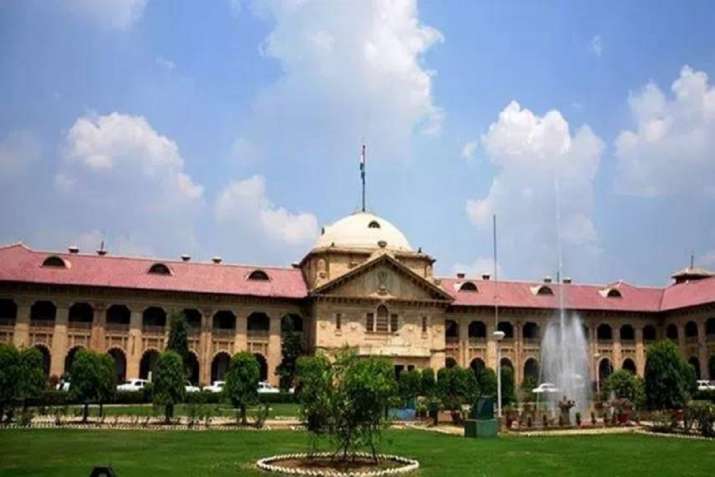
Lucknow, Aug 13: The Allahabad High Court has quashed the detention of three men under the stringent National Security Act for cow slaughter, saying the issue may be a matter of law and order but not public order.
Hearing habeas corpus petitions, the Lucknow Bench of the HC said the accused were detained for a solitary case with no evidence to show that they will commit the crime again on being released.
The petitions were moved against the detention of Pervez, Irfan and Rahmatullah, who were arrested last year on the charge of cow slaughter.
Later, the authorities slapped against them the stringent National Security Act (NSA), which allows preventive detention for up to 12 months without a charge if the authorities are satisfied that the person is a threat to national security or law and order.
Quashing their detention, the court said the act of slaughtering a cow in the secrecy of one's own house in the wee hours probably because of poverty or lack of employment or hunger would "perhaps only involve a law and order issue".
It "could not be said to stand on the same footing as a situation where a number of cattle have been slaughtered outside in public view", the Bench of Justices Ramesh Sinha and Saroj Yadav observed during the hearing on August 5.
"The act of the petitioners can at best be described as a matter affecting law and order and not public order. Moreover, there was no material for reaching the conclusion for detaining authorities that the petitioners would repeat the activity in future," the HC said.
The Sitapur police had booked the three under the UP Cow Slaughter Act on July 12 last year after they raided the house of Rahmatullah and found five people cutting the lump of beef in small pieces.
Irfan and Pervez were arrested on spot. The two revealed the name of Rahmatullah and two other co-accused.
Later, the NSA and Gangster Act were slapped against them.
Challenging their detention under the NSA, it was contended that the Act was slapped on the basis of a solitary incident where there was no material to infer that repetition was likely.
The state counsel, however, pleaded that the NSA could be imposed even on the basis of a single case and it is subjective satisfaction of the authorities to pass the order of detention.
He also stressed that the detention order was upheld by the advisory board and it was sustainable. Considering that the accused were nabbed inside a house, the HC Bench quashed the detention order.
Let the Truth be known. If you read VB and like VB, please be a VB Supporter and Help us deliver the Truth to one and all.
West Bengal board declares class 10 exam results, 86.83 pc students pass

Kolkata (PTI): The West Bengal board's class 10 results were declared on Friday, with 86.83 per cent of the total 9.71 lakh candidates passing the examination, an official said.
In last year's Madhyamik Pariksha, 86.56 per cent of the 9.84 lakh students were declared successful, West Bengal Board of Secondary Education president Ramanuj Ganguly said.
This year's examination was held from February 2 to February 12 at over 2,600 centres across the state, he said.
Abhirup Bhadra of Sarada Vidyamandir in Uttar Dinajpur district bagged the first rank, securing 698 of 700 marks. Priyotosh Mukhopadhyay of Sarojinidevi Saraswati Sishu Mandir in Birbhum was declared second with 696 marks. The third rank was shared by three students.
A total of 131 students secured the top 10 ranks, of whom 28 were girls.
Kalimpong recorded the highest percentage at 95.01, followed by Purba Medinipur at 94.02 and Kolkata at 92.31.