Supreme Court seeks Centre’s response on ED’s power to seize property without judicial oversight
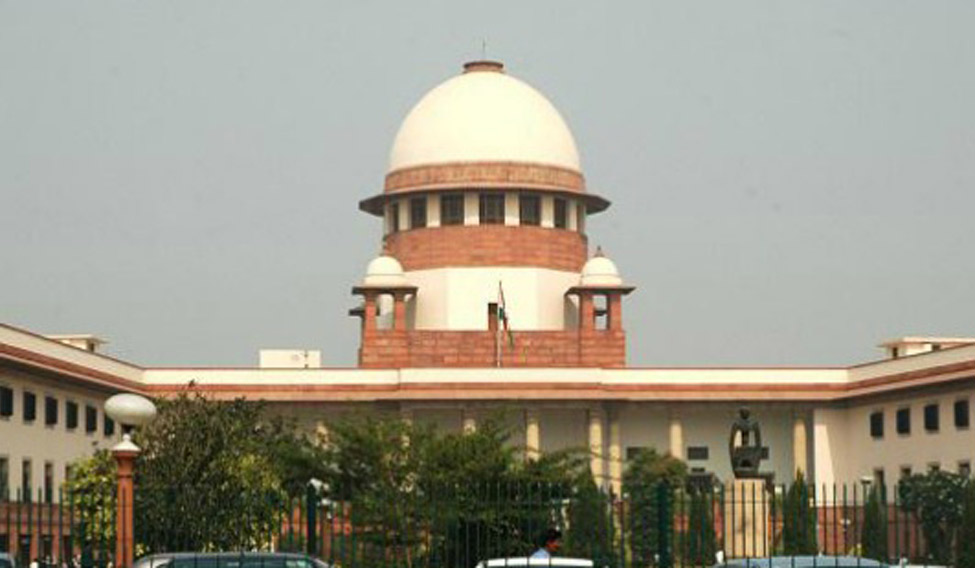
New Delhi: The Supreme Court on December 12 sought the Union government’s response to a petition filed by K. C. Veerendra Puppy, a sitting Karnataka MLA, challenging the Enforcement Directorate’s (ED) power under the Prevention of Money Laundering Act (PMLA) to seize and retain property for up to 180 days without judicial oversight.
Veerendra Puppy is a member of the Karnataka Legislative Assembly from the Chitradurga Assembly constituency in Chitradurga district and was elected in the 2023 Karnataka Legislative Assembly elections on an Indian National Congress ticket.
A Bench comprising Justices P. S. Narasimha and A. S. Chandurkar issued notice on the plea and tagged it with other pending petitions questioning the constitutional validity of the PMLA’s adjudication framework.
The petitioner has specifically challenged Sections 20 and 21 of the PMLA, which empower the ED to seize, freeze, and retain property for up to 180 days without furnishing reasons or granting the affected person an opportunity to contest the action during that period. She has also questioned the composition of the PMLA Adjudicating Authority, contending that it lacks members with judicial training.
ALSO READ: 9 die in Sydney shooting; police killed 1 gunman, another arrested
During the hearing, Justice Narasimha flagged a possible infirmity in the law, observing that complex issues relating to property rights and constitutional safeguards are being decided by authorities without a judicial background.
Appearing for the MLA, Senior Advocates Mukul Rohatgi and Ranjit Kumar argued that the current statutory framework allows the ED to operate without effective accountability, leading to arbitrary exercise of power. The petitioner claimed that all her assets, including bank accounts, fixed deposits, jewellery, and vehicles, were seized or frozen without justification and without an opportunity to be heard.
Rohatgi submitted that the challenge rests on two principal grounds: first, the ED’s power to retain property and documents for 180 days without disclosing “reasons to believe”; and second, the constitution of the Adjudicating Authority, which currently comprises a single member who is not legally trained.
He further pointed out that, as per data available on the ED’s official website, nearly 99 percent of attachment and retention orders are upheld by the Adjudicating Authority, suggesting that it functions as a mere approving body rather than an independent adjudicatory forum.
The petition argues that these provisions violate Articles 14 and 21 of the Constitution, depriving individuals of equality before law and personal liberty. It contends that adjudication occurs only after the expiry of the 180-day period, when the ED seeks confirmation of retention, leaving affected persons without any remedy in the interim.
Describing the situation as a legal “vacuum” that enables arbitrary and excessive seizures, the plea urges the Court to mandate disclosure of reasons and provide for early judicial review. It also seeks directions requiring that every bench of the PMLA Adjudicating Authority include at least one judicial member.
ALSO READ: Fight for Indian democracy: Priyanka Gandhi Vadra tells gathering at mega rally against ‘vote theft’
The MLA has relied on a 2023 Sikkim High Court judgment in Eastern Institute for Integrated Learning in Management University v. Joint Director, Enforcement Directorate, which directed that PMLA benches must include judicial members. That ruling is presently under challenge before the Supreme Court and has been linked with the present case.
The petition also cites the Supreme Court’s 2025 ruling in Arvind Kejriwal v. Directorate of Enforcement, which held that when executive action affects personal liberty, the “reasons to believe” must be recorded and communicated to the affected person. The petitioner argues that this safeguard should extend to property seizures, which can severely impact livelihood and reputation.
The matter will now be heard along with other pending challenges to the PMLA, including those questioning the validity of Section 6 of the Act.
Let the Truth be known. If you read VB and like VB, please be a VB Supporter and Help us deliver the Truth to one and all.
Will of people supreme, says Mahua Moitra after BJP's landslide victory in Bengal

Kolkata (PTI): A day after the Trinamool Congress faced a drubbing by the BJP in the West Bengal assembly elections, TMC MP Mohua Moitra on Tuesday said her party respects the mandate as the will of the people is supreme.
She also said that the party will continue the fight for a “secular country”.
In a post on X, Moitra said, “The will of the people is supreme. If Bengal wanted BJP, then Bengal has got BJP. We respect that.”
The BJP on Monday scripted history by winning 206 seats to secure more than a two-thirds majority in the West Bengal assembly polls, ending the TMC’s 15-year rule.
"We fought the good fight against unimaginable odds on an uneven pitch and for that I am proud of my leader & my party," Moitra said.
She said the TMC will continue to stand and fight for a secular country where the constitution, and "not brute majoritarianism, is the last word”.