Amanmani Tripathi to remain out on bail in wife's murder case

New Delhi, April 18: Uttar Pradesh MLA Amanmani Tripathi, accused of killing his wife Sara Singh, will remain out on bail as the Supreme Court on Wednesday dismissed pleas by the CBI and victim's mother against an Allahabad High Court order granting him relief.
A bench headed by Justice A.K. Sikri rejected the plea filed by the probe agency and Seema Singh, the mother of Sara Singh, against the release of the 35-year-old sitting MLA from Nautanwa.
On March 9, 2017, the Allahabad High Court had granted bail to Tripathi.
Seema Singh had claimed that Tripathi has been threatening her after being released on bail.
On May 2, 2017, two unidentified persons stopped her and threatened her with dire consequences if she continued to fight the case, Singh said.
The Central Bureau of Investigation (CBI) on February 18, 2017 had charge-sheeted Tripathi for the murder of his wife.
Sara was killed in July 2015 in what was initially believed to be a road accident. Her parents, however, alleged that she was murdered by her husband of two years.
The matter was then handed over to the CBI, which arrested him and was sent to jail on November 25, 2016.
Tripathi, was expelled from the Samajwadi Party on February 23, 2016 for anti-party activities and later contested from Nautanwa Assembly segment as an Independent candidate.
His father Amarmani Tripathi, a politician and his mother Madhumani were also convicted by a CBI court in 2007, for the murder of poet Madhumati Shukla and were awarded life sentences.
Let the Truth be known. If you read VB and like VB, please be a VB Supporter and Help us deliver the Truth to one and all.
Bengaluru narcotics crackdown: 15 held, drugs worth Rs 10.59 cr seized
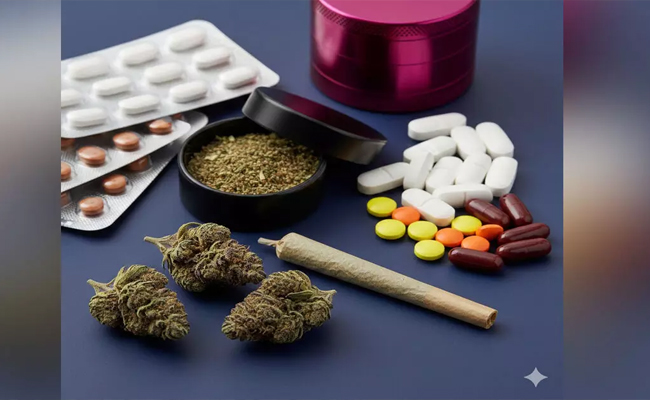
Bengaluru (PTI): Fifteen people, including three foreign nationals, have been arrested for allegedly peddling banned narcotic substances across Bengaluru, police said on Tuesday.
The arrests were made in joint operations carried out in different police station limits following specific inputs about drug trafficking activities.
“The CCB Narcotics Control Wing and police stations under various limits of Bengaluru City have arrested a total of 15 persons, including three foreign nationals and 12 persons from other states, for selling banned narcotic substances such as hydroponic ganja, MDMA, cocaine, LSD pills, LSD strips, hashish oil and ganja,” the press release issued by the Office of the Commissioner of Police, Bengaluru City, stated.
Cases were registered under the NDPS Act based on credible information received on different dates that banned narcotic substances were being sold within the limits of the CCB Narcotics Control Wing and the police stations of Amruthahalli, Hebbagodi, JB Nagar, Sheshadripuram, Mahalakshmi Layout and Govindapura.
“Acting on the information, raids were conducted at the identified locations and a total of 15 people, including three foreign nationals and 12 persons from other states, were apprehended on different dates,” the release said.
According to police, during interrogation, the accused admitted that they were involved in drug peddling for quick money.
“During interrogation, the accused confessed that with the intention of making quick money, they procured banned narcotic substances such as hydroponic ganja, ganja, MDMA, cocaine, LSD pills, LSD strips and hashish oil from unidentified foreign and out-of-state persons and were selling them to the public, college students and IT/BT employees,” it said.
Police said a large quantity of drugs and other materials were seized from the accused.
“The seized items include 9 kg 460 grams of hydroponic ganja, 5 kg 677 grams of MDMA, 34 kg of ganja, 131 grams of cocaine, 462 ml of hashish oil, 29 LSD pills, 27 grams of LSD strips, one car, one two-wheeler and four mobile phones. The total value of the seized property is Rs 10.59 crore (market value Rs 21.50 crore),” the release stated.
In addition, Rs 24,500 in cash was also seized from the accused.
Efforts are underway to trace the foreign and other suppliers who provided the banned narcotic substances to the arrested persons, they said.
Investigation in the case is in progress.