Ambani couple, Premji among Time's 100 most influential people in philanthropy
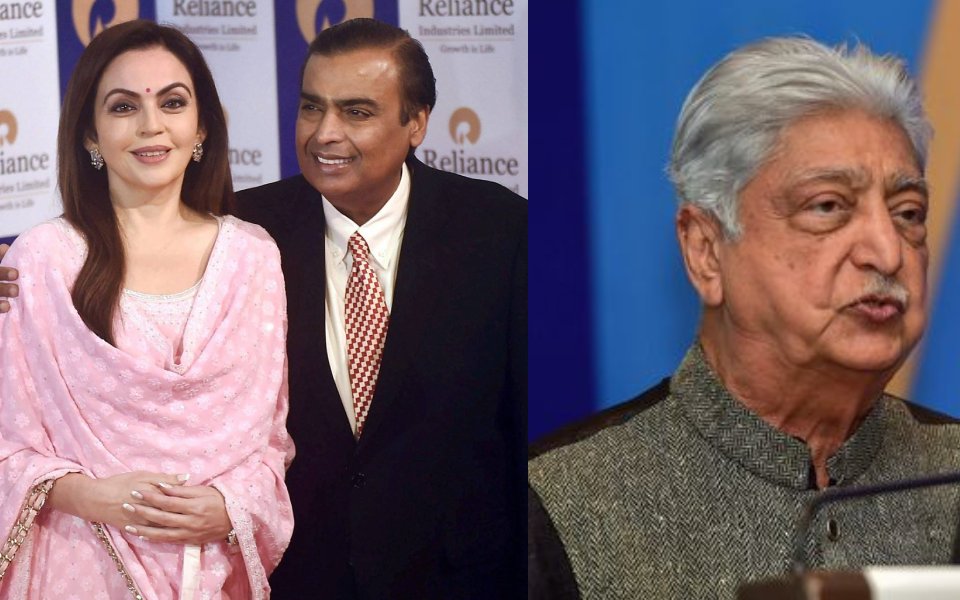
New York, May 20 (PTI): Billionaire industrialist Mukesh Ambani and Nita Ambani, former Wipro chairman Azim Premji and Zerodha co-founder Nikhil Kamath have been named Tuesday by Time magazine in its inaugural list of the 100 most influential people in philanthropy.
The TIME100 Most Influential People in Philanthropy 2025 list “tells the stories of how generous donors and leaders of foundations and non-profits are directing funding into the communities that need it most,” according to the publication.
The list includes Mukesh and Nita Ambani who, Time said, gifted Rs 407 crore (about USD 48 million) in 2024, “placing them among the country’s biggest donors.”
Noting that Mukesh and Nita Ambani are “empowering millions”, the Time profile said the billionaire philanthropist couple’s “charitable initiatives are as varied and wide-ranging as the business empire that earned them an estimated USD 110 billion fortune.”
It listed the initiatives taken by Mukesh and Nita Ambani and added that Nita Ambani, founder and chair of the Reliance Foundation and a businesswoman in her own right, leads a number of the foundation’s programmes.
On tech magnate Premji, Time said that today, he is better known as one of India’s most generous philanthropists, directing his wealth to systematically improving India’s public education system.
Premji was the first Indian to sign the Giving Pledge and in 2013 endowed the foundation he launched nearly 25 years ago with over USD 29 billion in shares from his company, Wipro.
In addition to disbursing traditional grants—USD 109 million went to 940 organisations focused on education, health, and other areas in 2023-2024—the foundation works directly with teachers and rural child care workers via 59 field offices and 263 teacher learning centres throughout India, on educational programmes that have so far helped over 8 million children, Time said.
In August, the foundation also committed around USD 175 million to expand school meal coverage for more than 5 million children—all collectively reflecting Premji’s philosophy, influenced by Mahatma Gandhi, to regard “holding one's wealth in trusteeship, to be used for the betterment of society.”
The list also includes co-founder of Zerodha Nikhil Kamath, who in 2023 at age 36 became the youngest Indian to sign the Giving Pledge. “By then, he had already donated millions to environmental and educational projects—and started his own offshoot initiative, the Young India Philanthropic Pledge (YIPP), which asks Indians under age 45 with fortunes over USD 100 million to commit to giving away at least 25 per cent of their wealth,” Time said.
“It’s a remarkable development for a high school dropout who started working for a Bangalore call centre as a teenager, and using his free time to trade stocks. In 2010, Kamath and his older brother Nithin founded Zerodha, now one of India’s most successful discount brokerages, and within 13 years both had become billionaires,” it added.
“Kamath still likes to invest but he’s increasingly focused on giving his money away. He and Nithin together have committed more than USD 100 million to their Rainmatter Foundation, which focuses on solutions to climate change.”
YIPP has raised USD 8 million to fund projects such as upgrading 300 schools with better computers, career counseling, and other services. Kamath says he wants to improve conventional schools because education “is the only democratising element that can close the inequality gap.”
The list also includes legendary footballer David Beckham, billionaire philanthropist Warren Buffet, American philanthropist Melinda French Gates and Prince William and Catherine, Princess of Wales.
Let the Truth be known. If you read VB and like VB, please be a VB Supporter and Help us deliver the Truth to one and all.
Mamata asks TMC nominees not to leave counting centres as EC data shows BJP leading
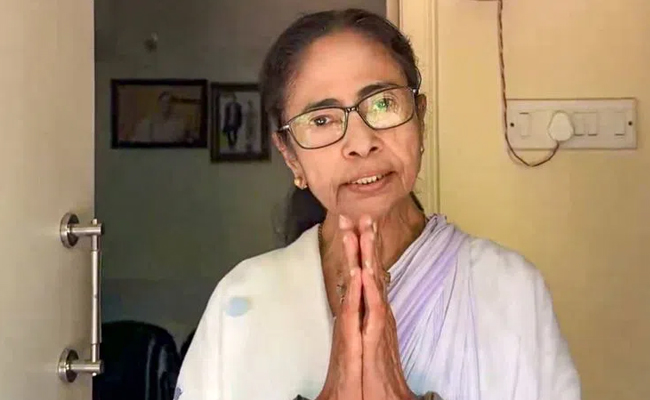
Kolkata (PTI): West Bengal Chief Minister Mamata Banerjee on Monday urged TMC candidates and agents to remain vigilant and not to leave counting centres, alleging that there was a "game plan" by the BJP and the Election Commission to show the saffron party taking a lead in the early trends of counting.
In a video message issued during the counting of votes, the TMC supremo appealed to party workers to stay put and not to lose morale.
"I appeal to everyone that neither TMC candidates nor counting agents should abandon counting centres," she said.
As trends on the Election Commission website indicated the BJP leading in 188 seats against the TMC's 94, Banerjee maintained that her party was still ahead in a significant number of constituencies.
"We are still ahead in 170 seats, but I request everyone not to lose hope," she said, adding that there were "around 70 to 100 seats where we are leading, but they are not sharing the data of those seats".
"A false narrative is being spread," she alleged.
The chief minister accused the Election Commission of "not declaring results or leads" in areas where the TMC was ahead.
"This is a game plan by the EC and the BJP as it (poll panel) is not declaring results or leads in areas where we are leading," she said.
Banerjee also alleged irregularities in the counting process at some locations.
"In several places, counting has been stopped after the first two to three rounds. In Kalyani, we have caught seven machines with severe anomalies," she claimed.
She further alleged that TMC workers were being "harassed with the help of central forces" and that party offices were being "vandalised and forcefully captured".
"With the help of central forces, they are harassing and torturing AITC workers. Our offices have been vandalised," she said, also alleging that voter list revision exercises were "purposefully done to target seats where we were strong".
Seeking to reassure party workers, Banerjee said more rounds of counting were yet to take place and urged them to stay firm.
"Fourteen to eighteen rounds of counting will happen. You will surely emerge victorious. Don't be afraid; fight like tigers," she said.
Her remarks came as counting trends suggested that the BJP was leading in 188 seats and had crossed the halfway mark of 148 in the 294-member assembly, pointing to a potential shift in the state's political landscape.
Counting for 293 constituencies was underway with postal ballots, followed by EVM votes.
Officials cautioned that trends could change as more rounds are counted, and final results would be known later in the day.
জরুরি বার্তা pic.twitter.com/Uc82oihwEL
— Mamata Banerjee (@MamataOfficial) May 4, 2026