Amnesty International strips Aung San Suu Kyi of highest honour
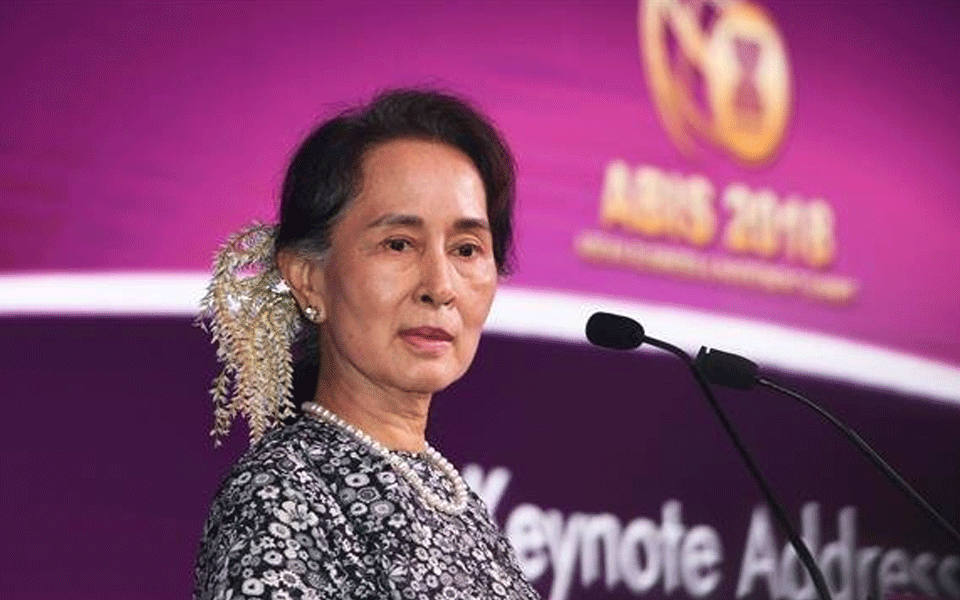
London, Nov 12: Amnesty International on Monday stripped Aung San Suu Kyi of its highest honour over the de facto Myanmar leader's "indifference" to the atrocities committed by the country's military against Rohingya Muslims.
The London-based global human rights organisation said it was revoking the Ambassador of Conscience Award it gave Suu Kyi in 2009 while she was still under house arrest.
"Today, we are profoundly dismayed that you no longer represent a symbol of hope, courage, and the undying defence of human rights," Amnesty International chief Kumi Naidoo said in a letter to Suu Kyi released by the group.
"Amnesty International cannot justify your continued status as a recipient of the Ambassador of Conscience award and so with great sadness we are hereby withdrawing it from you." The group said it informed Suu Kyi of the decision on Sunday. She has so far issued no public response.
Suu Kyi and her National League for Democracy (NLD) party swept to power in 2015 in a landslide victory ending decades of military rule in the southeast Asian country of around 50 million.
But her tenure has been marred by a failure to speak up for Rohingya Muslims who were driven out of the country by the army in what the United Nations has called an ethnic cleansing campaign.
The 73-year-old was stripped of her honorary Canadian citizenship over her failure to speak up for the Rohingyas last month.
She has also lost numerous smaller awards from individual universities and local and regional governments.
More than 720,000 Rohingya Muslims fled the Buddhist majority's western Rakhine state in a military crackdown from August last year.
Many are believed to have been either murdered or tortured and raped.
Suu Kyi was globally hailed as a freedom fighter who stood up to her country's feared military dictatorship while spending 15 years under house arrest.
She was awarded the Nobel Peace Prize in 1991.
Let the Truth be known. If you read VB and like VB, please be a VB Supporter and Help us deliver the Truth to one and all.
Vijay''s TVK wins an impressive 108 seats in TN polls

Chennai (PTI): Vijay-led TVK secured an impressive 108 seats trouncing the incumbent DMK led by M K Stalin which finished with only 59 seats in the Tamil Nadu Assembly elections held on April 23, as per the final tally of the ECI on Tuesday.
The opposition AIADMK won 47 seats while its allies the PMK obtained 4 and the BJP and AMMK clinched one seat each respectively in the election, according to the data available on the Election commission of India's website.
The DMK's allies - the Congress managed to win 5 seats, the IUML, CPI, CPI (M), and VCK: 2 each and DMDK secured one seat, among a total of 234 Assembly constituencies in the state.
The votes were taken up for counting on May 4 and the final tally was announced on Tuesday.
Actor-politician Vijay's Tamilaga Vettri Kazhagam on Monday created a record of sorts in the electoral history of Tamil Nadu and emerged as the single largest party by delivering a shock defeat to DMK and its president Stalin in his Kolathur constituency, while the AIADMK was pushed to a distant third spot.
Vijay won from both Perambur and Tiruchirappalli East constituencies.
The TVK has clocked nearly 35 per cent (34.92) vote share in its debut polls.
This will be the first time in Tamil Nadu that a party will assume power a little over two years after its founding in February 2024.