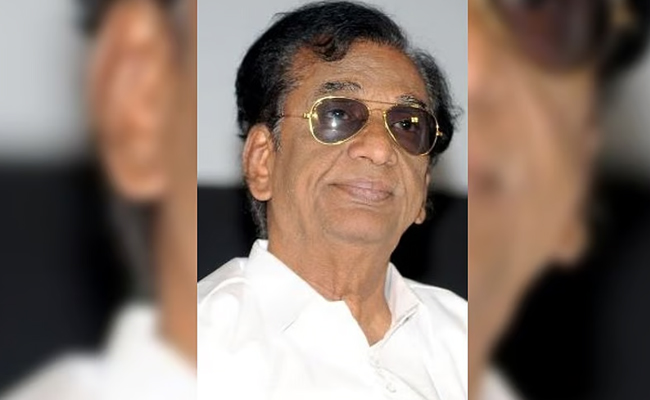
Army colonel accused of raping friend's wife arrested

Kanpur (UP), Dec 15: An Army colonel accused of raping his civilian friend's wife of Russian origin after intoxicating her husband at the Officers' Mess in Cantonment area was arrested on Tuesday.
"Col Neeraj Gahlot was arrested while trying to flee to an unknown place to evade his arrest," said Superintendent of Police (East) Raj Kumar Agarwal.
Police had launched a manhunt for Col Neeraj Gahlot whose mobile location was traced in the vicinity of officers' mess on Monday evening but he had been evading his arrest, said Cantonment Circle' Additional Superintendent of Police Nikhil Pathak.
A team headed by Chakeri police station's SHO Ravi Srivastava was dispatched to nab the absconding officer, but his room was found locked from outside, the ASP said.
The colonel posted here was booked on Sunday for allegedly raping his friend's wife at the Officers' Mess, police said.
The victim's husband, a civilian, lodged an FIR against the Army officer at the Cantonment police station, SP Agarwal had said earlier.
According to the complainant, his wife is of Russian descent and has been living in India for 10 years.
The accused allegedly had invited his civilian friend to the Officer's Mess and gave him an intoxicating drink which made him him unconscious, said police adding the Army officer subsequently raped his friend's wife.
The accused also allegedly assaulted the woman when she put up a resistance.
After raping the woman, the colonel took leave from his bosses and went underground to evade arrest, said an official.
The rape survivor was subsequently produced before a judicial magistrate who recorded her statement under section 164 of the CrPC, said Pathak, adding the statement, however, is yet to be shown to the police.
Let the Truth be known. If you read VB and like VB, please be a VB Supporter and Help us deliver the Truth to one and all.
Ordinance issued to increase number of Supreme Court judges from 34 to 38
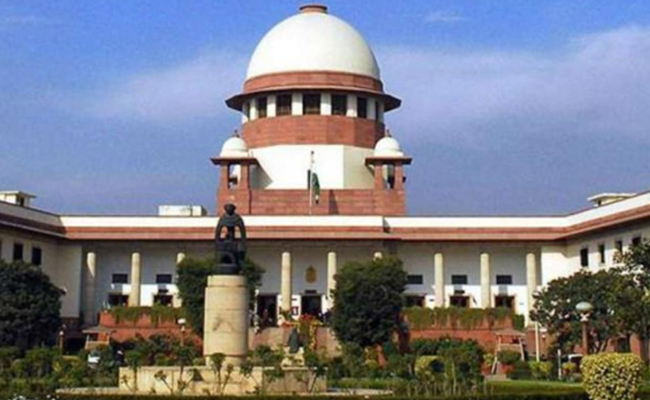
New Delhi (PTI): The government has promulgated an ordinance to increase the strength of the Supreme Court from the present 34 judges to 38, including the Chief Justice of India.
The law ministry notified the ordinance on Saturday, which amended the Supreme Court (Number of Judges) Act, 1956, to increase the sanctioned strength of the top court.
So far, the sanctioned strength of the top court was 34, including the Chief Justice of India (CJI). Now, the number of judges has been increased by four, taking the sanctioned strength to 38.
The top court will now have 37 judges, other than the CJI.
With the apex court having two vacancies at present, and the ordinance coming into force immediately, the Supreme Court Collegium will now have to recommend six names for appointment as judges in the top court.
A bill will be brought in the Monsoon Session of Parliament to convert the ordinance – an executive order – into a law passed by Parliament.
The Union Cabinet had cleared a draft bill on May 5 to increase the number of apex court judges.
The strength of the Supreme Court was last increased from 30 to 33 (excluding the CJI) in 2019.
The Supreme Court (Number of Judges) Act, as originally enacted in 1956, put the maximum number of judges (excluding the CJI) at 10.
This number was increased to 13 by the Supreme Court (Number of Judges), Amendment Act, 1960, and to 17 by another amendment to the law.
The Supreme Court (Number of Judges) Amendment Act, 1986, augmented the strength of judges from 17 to 25, excluding the CJI.
A fresh amendment in 2009 further increased the strength from 25 to 30.
Article 124(3) of the Constitution lists the qualifications required to become a Supreme Court judge.
An Indian citizen who has either served as a high court judge for at least five years, or as an advocate for 10 years, or is a distinguished jurist, can be appointed to the top court.
The strength of the Supreme Court is increased based on the recommendations of the CJI, who writes to the Union law minister. After consulting the finance ministry, the Department of Justice under the law ministry moves the Cabinet with a draft bill.