Article 370: Voices of dissent within Congress
New Delhi: A number of Congress leaders across the country have gone against the party's stand in Parliament on abrogation of the provisions of Article 370 of the Constitution in Jammu and Kashmir by supporting the Centre's move and a bill to bifurcate the state.
The Congress has strongly opposed the move and the bill to bifurcate the state of Jammu and Kashmir into two Union territories.
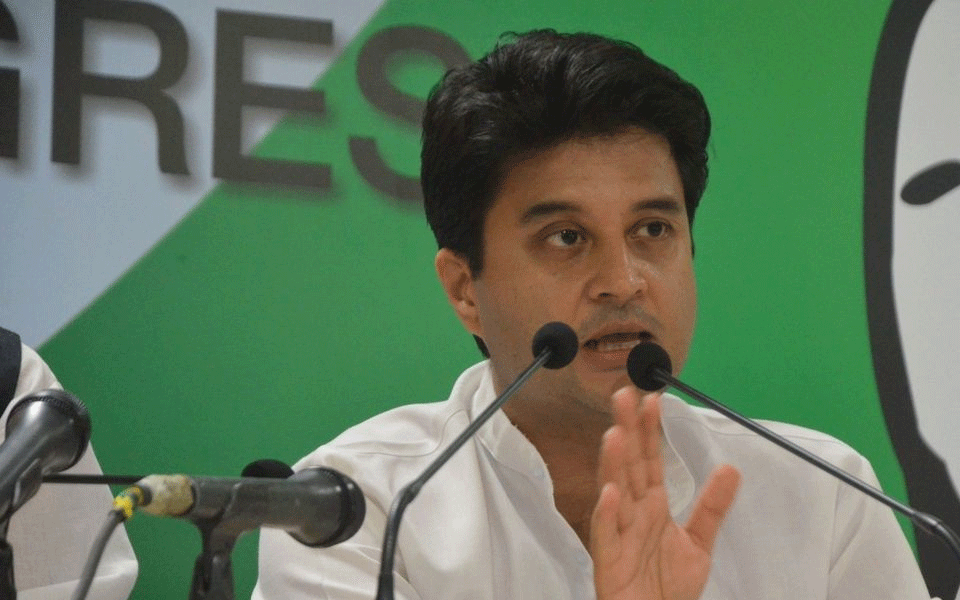
Going against the party's stand, senior Congress leaders Janardan Dwivedi, Jyotiraditya Scindia and Deepender Hooda have voiced support to the move.
In an embarrassment to the Congress, another leader Anil Shastri said the grand old party should sense the mood of the people before taking a stand, noting that they were with the government on this.
Dwivedi welcomed the abrogation of the provisions of Article 370 in Jammu and Kashmir, saying even though it came late, a historical mistake had been corrected.
Scindia said he supported the move on Jammu and Kashmir and Ladakh and the state's full integration into the Union of India, adding that it was in the interest of the country.
"I support the move on #JammuAndKashmir & #Ladakh and its full integration into union of India.
"Would have been better if constitutional process had been followed. No questions could have been raised then. Nevertheless, this is in our country's interest and I support this," he said on Twitter.
Shastri also said on Twitter, "Congress must sense the mood of the people and then take a stand. The people are totally with the government on this issue. We opposed Mandal and lost UP and Bihar and should not risk now of losing India."
Hooda contended that the abrogation of the provisions of Article 370 in Jammu and Kashmir "is in the interest of national integrity". Mumbai Congress chief Milind Deora said it was "very unfortunate" that Article 370 was being converted into a "liberal vs conservative debate".
"Parties should put aside ideological fixations & debate what's best for India's sovereignty and federalism, peace in J&K, jobs for Kashmiri youth and justice for Kashmiri Pandits," he said in a tweet.
"Abolishing Article 370 of the Indian Constitution could well be dubbed Modi Sarkar 2.0's demonetisation moment.
"For the sake of peace and development in Jammu & Kashmir, I hope this decision plays out more favourably than demonetisation did," Deora noted.
Dwivedi said it was a matter of national satisfaction that a "mistake" made at the time of Independence was corrected.
He added that after Independence, many freedom fighters did not want Article 370 to remain in place and cited the example of Ram Manohar Lohia, under whom he had his political training and who was against Article 370.
"This is a matter of satisfaction for the nation. This historical mistake that happened at the time of Independence has been rectified today, even though late, and is welcomed," Dwivedi told PTI, while clarifying that his opinion was personal and he was not putting forward his party's view.
Congress's chief whip in the Rajya Sabha Bhubaneshwar Kalita quit his membership in the Upper House of Parliament over the issue after the party asked him to issue a whip to all members for opposing the bill.
Hooda said, "I have always maintained that Article 370 should be scrapped. It has no place in the 21st century. Abrogation of this Article is in the interest of national integrity and the people of Jammu and Kashmir, which is an integral part of India. However, the onus of peaceful implementation of this transition in a trustworthy environment lies on the incumbent government."
Congress MLA from Rae Bareli Aditi Singh also said on Twitter, "United we stand! Jai Hind. #Article370." When someone reminded her that she was a Congress leader, Singh replied back, saying, "Main ek Hindustani hoon (I am an Indian)."
She termed it a historic decision and urged people not to politicise it. Singh's Assembly segment -- Rae Bareli Sadar -- is a part of UPA chairperson and former Congress chief Sonia Gandhi's Lok Sabha constituency.
Meanwhile, sources said the top Congress leadership was learnt to be peeved at the comments of the party's leader in the Lok Sabha, Adhir Ranjan Chowdhury, questioning whether Jammu and Kashmir was an internal matter as it was being monitored by the United Nations.
Let the Truth be known. If you read VB and like VB, please be a VB Supporter and Help us deliver the Truth to one and all.
SC asks states to treat rising child trafficking cases as grave; seeks coordinated action
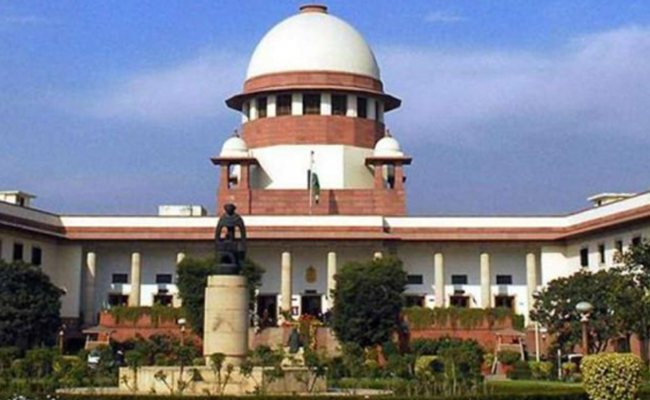
New Delhi (PTI): The Supreme Court has voiced grave concern over rising cases of child trafficking, saying gangs are operating across the country and if States and Union territories do not take immediate action, thing will go beyond control.
The court said only the state government and its home department can act vigilantly in this regard.
“As a court we can monitor, but ultimately the action has to be on the part of the state government, the police, and other agencies. Therefore, this is our humble request”, a bench comprising Justices JB Pardiwala and K V Viswanathan said during the hearing of a plea on Wednesday.
The bench was irked over the "lackadaisical" approach of several states and UTs in implementing a 2025 judgment aimed at dismantling organised trafficking networks.
Justice Viswanathan said the retrieval of children in some cases proves the problem can be tackled, but it requires a level of political and administrative will which is lacking at present.
The verdict, delivered on April 15, 2025, had mandated several institutional reforms, including completion of trials in trafficking cases within six months on a day-to-day basis.
It had also directed strengthening of Anti-Human Trafficking Units (AHTUs) and improving investigation standards.
Besides asking for setting up of state-level committees to monitor vulnerable trafficking hotspots, it had asked the authorities to treat missing children cases as trafficking unless proven otherwise.
Earlier, the bench had termed the compliance reports filed by a few states as "nothing but an eye wash."
On Wednesday, the bench noted that Madhya Pradesh, Goa, Haryana, Lakshadweep, Mizoram, Odisha, and Punjab had still failed to file reports in the prescribed format.
When the home secretary of Madhya Pradesh offered an apology for the lapse, the bench granted a "final opportunity" but warned that continued failure would lead to states being officially branded as "defaulting".
The bench noted that at least 15 states are yet to constitute review committees mandated to identify and monitor trafficking-prone areas.
The matter will now be heard on April 29.