Assam govt has written to Centre for more emergency landing facilities: Himanta
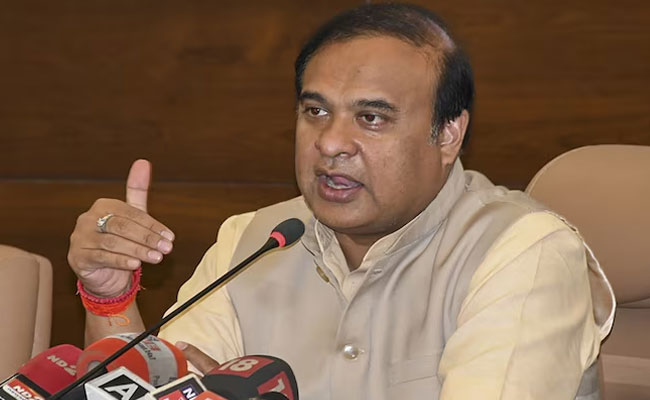
Guwahati (PTI): Assam Chief Minister Himanta Biswa Sarma on Sunday said he has written to the Centre seeking more emergency landing facilities in the state, a day after Prime Minister Narendra Modi inaugurated the Northeast's first ELF in Moran.
He also announced that the Assam government will ink a pact with the Civil Aviation Ministry next month to carry out a feasibility study to construct four more airports at Majuli, Diphu, Umrangso and Manas.
Addressing a press conference here, Sarma said more strategic assets are being planned, including a twin tube road-cum-rail tunnel under the Brahmaputra river and an underground highway underneath the Chicken's Neck corridor.
"The Moran ELF has extreme strategic importance for Assam and the Northeast. The PM inaugurating it in the presence of the Air Chief Marshal yesterday has sent a very strong message that India is ready for everything on this front," he said.
A lot of highway and other strategic projects are being constructed in Arunachal Pradesh, considering its border with China, but "Assam is being developed as a backup state in case of a war", Sarma said.
"We have written to the Centre seeking more ELFs in the state. We need more such facilities for use during disasters such as floods. During a deluge, transport carriers such as C130 would be able to land at ELFs with relief materials," he added.
The CM said one more ELF has already been conceived in Assam apart from the Moran facility, and there is a possibility that four-five more such facilities would be constructed in the state.
Modi on Saturday made a historic landing at the Northeast's first ELF aboard the C-130J aircraft at Moran in Dibrugarh district.
Sarma also said the state government will sign an agreement with the Centre next month for carrying out a study to construct four more airports.
"The agreement with the Civil Aviation Ministry will check if it is viable to construct civilian airports at Majuli, Diphu, Umrangso and Manas. If we get a favourable response, we may see four new airports in Assam in the next five years," he added.
The Cabinet Committee on Economic Affairs, chaired by the PM, on Friday approved the construction of India's first 34-km-long twin-tube underwater road-cum-rail tunnel in the Brahmaputra river between Gohpur and Numaligarh in Assam at a total capital cost of Rs 18,662 crore.
"The Union Cabinet has also approved a two-line rail network underneath the Chicken's Neck. The ELF, twin-tube tunnel, and underground rail network will position Assam on the strategic level. We will defeat the enemy from the soil of Assam," Sarma said.
He termed the road-rail tunnel a game-changing project for the entire Northeast, considering its strategic importance, and said that land acquisition for it will begin within the next two-three days.
"In case of war, if the enemy bombs other bridges on the Brahmaputra at Bogibeel, Kaliabhomora and other locations, all connectivity will be lost. This tunnel will play a vital role then," Sarma said.
The CM stressed that the Indian Army has fully backed this tunnel as one of the main stakeholders. The other three stakeholders are the Assam government, National Highways & Infrastructure Development Corporation Ltd (NHIDCL) and Indian Railways.
"Initially, there was a plan to construct a bridge to connect the two banks of the Brahmaputra in central Assam to bypass the Kaziranga National Park. I had met the then CDS Bipin Rawat and NSA Ajit Doval several times for this project. Later, a tunnel was proposed and the Ministry of Defence also got involved," he added.
Talking about the strategic importance of the Chicken's Neck corridor, a 22-km wide stretch connecting the Northeast with the rest of the country, Sarma said a section of people, during the anti-CAA movement, had threatened to cut off the corridor.
"When I became the CM, I took the matter to the highest level. Although the sloganeering originated from JNU and Sharjeel Imam was arrested, this threat was taken very seriously. Our next effort is to construct a highway underneath the Chicken's Neck so that no bomb can hit it," he added.
Considering Assam's strategic position, many important infrastructures such as a military camp in Dhubri are being built to secure the northeastern region, which is surrounded by China, Myanmar, Bangladesh and Bhutan, Sarma said.
"In 1962, the then PM had said 'my heart goes with the people of Assam', and the state was left on its own. PM Modi is in no mood to say goodbye to Assam and he is giving all due importance to the region. All these projects will fortify the state," he added.
When asked about Assam Congress president Gaurav Gogoi's comment that the government should also focus on "exorbitant price of tea" at airports along with having ELFs, Sarma, without naming him, said those "hand-in-glove" with enemies cannot understand the depth of national security.
"India's internal and external enemies are comparing ELF with tea and snacks, because they are hand-in-glove with the enemy nation. They cannot understand the seriousness and depth of national security and its vulnerability. It's the Indian government that understands the role of the Northeast. All these strategic projects should have been implemented long ago," he added.
Let the Truth be known. If you read VB and like VB, please be a VB Supporter and Help us deliver the Truth to one and all.
Lebanon PM accuses Israel of ‘war crime’ after rescue workers killed in strikes
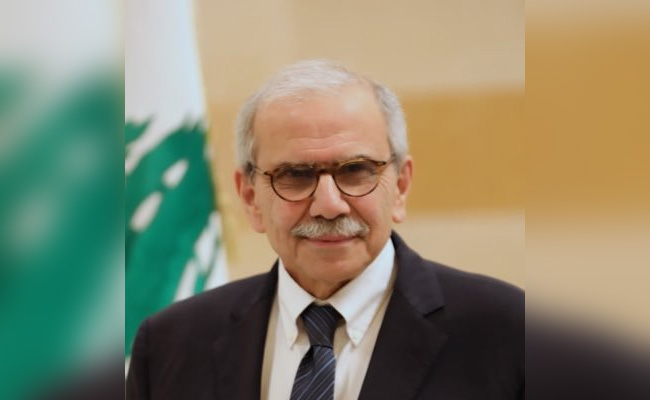
Beirut: Lebanon’s Prime Minister Nawaf Salam on Tuesday accused Israel of committing a “war crime” after five people, including three civil defence personnel, were killed in twin air strikes in southern Lebanon.
According to Lebanon’s Ministry of Health, the strikes targeted a building in the town of Majdal Zoun, where rescue workers had arrived following an initial attack. A second strike hit the same location, killing those involved in relief operations.
Salam said targeting emergency responders carrying out humanitarian duties amounted to a serious violation of international humanitarian law. He added that the government would raise the matter at international forums and seek action to halt such incidents.
A spokesperson for the Lebanese Civil Defence was quoted by AL Jazeera that the rescuers were trapped under debris after the second strike and later confirmed dead.
The Lebanese army said two of its personnel were also injured in the attack, which reportedly struck a military patrol escorting the rescue team along with civilian equipment.
Lebanon’s President Joseph Aoun also condemned the incident, stating that it was part of a pattern of attacks affecting relief workers and civilians.
Despite a US-mediated ceasefire between Israel and Lebanon, cross-border hostilities have continued, with frequent air strikes reported in southern and eastern parts of the country.
Lebanese authorities said at least eight people were killed in separate incidents on Tuesday, while the overall toll from Israeli strikes since early March has crossed 2,500, with thousands injured.