Be fair to Chinese telecom companies, China tells India
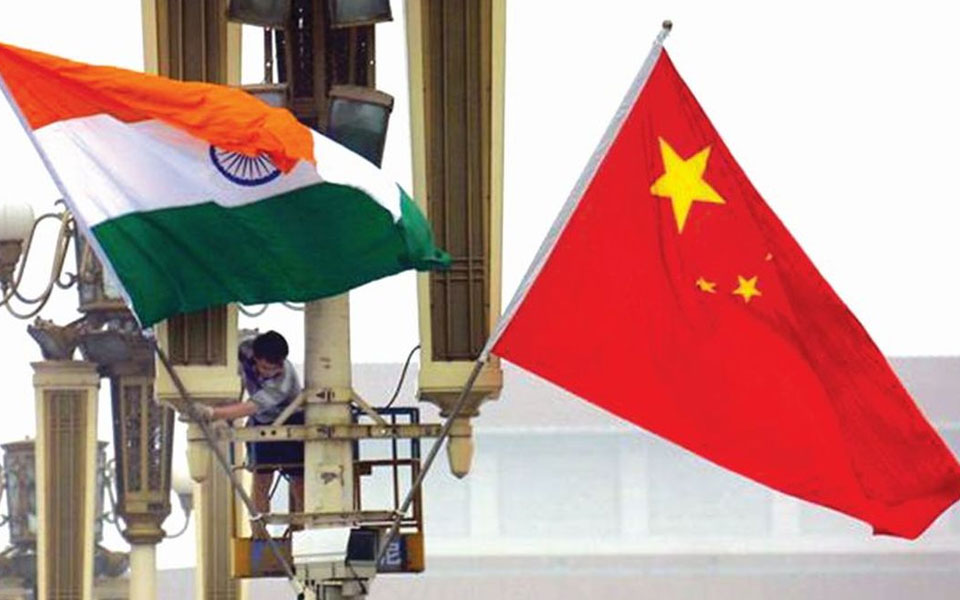
Beijing, Sep 19 : China on Wednesday urged India to provide a "level playing field" to Chinese telecom companies Huawei and ZTE that have been barred from testing 5G network in the country
The Indian government has reportedly excluded ZTE and Huawei from the list of telecom companies for developing 5G network in the country.
The move comes at a time when Australia has banned these two telecom majors from providing 5G tech equipment to local mobile carriers due to security concerns.
"The Chinese government always encourages its enterprises to abide by international rules and local laws when pursuing economic cooperation overseas. We also hope that relevant country could offer a level playing field, transparent and fair environment to Chinese enterprises," Chinese Foreign Ministry spokesperson Geng Shuang said when asked about New Delhi's move.
ZTE and Huawei have been accused by the US, Australia, the UK and other countries of snooping for the Chinese government. These companies, as well as Beijing, deny these charges.
After banning ZTE, US President Donald Trump in July allowed the company to buy US components. However, a group of US senators proposed a legislation to reimpose a ban on the company as it violated the terms of the deal it struck with the Trump administration.
The UK has already blacklisted ZTE. In reaction to India's reported move, the Chinese media has said this has been done to "please the US".
"India's alleged exclusion of Chinese telecom equipment companies from 5G trials will eventually hurt its own telecoms industry and it's a move that follows the US in terms of politicizing business deals," China's Global Times quoted an expert as saying.
"India usually blocks Chinese investment, especially in sensitive sectors, by using the excuse of safeguarding national security in line with the intention to please the US by adopting a tough stance against China," Tian Guangqiang, assistant research fellow with the National Institute of International Strategy at the Chinese Academy of Social Sciences, told the daily.
Let the Truth be known. If you read VB and like VB, please be a VB Supporter and Help us deliver the Truth to one and all.
Bhojshala case: Disputed structure built from remains of pre-existing temples, claims ASI
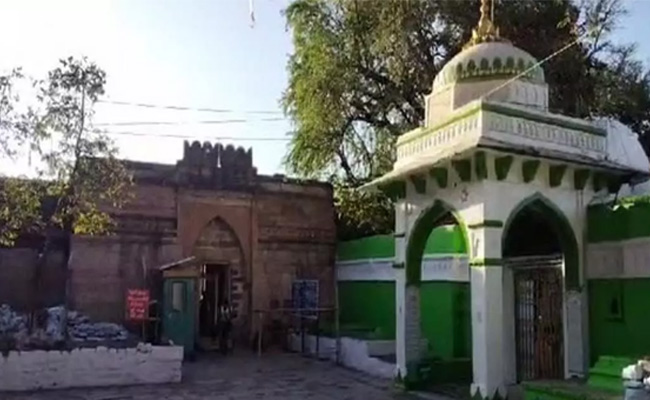
Indore (PTI): The ASI has told the Madhya Pradesh High Court that a massive structure dating back to the Paramara kings' rule existed at the disputed Bhojshala temple-Kamal Maula mosque complex, and the current structure was built from the remains of temples.
The Archaeological Survey of India (ASI) made the claim on Tuesday based on its 98-day scientific survey and over 2,000-page report.
The Hindu community considers Bhojshala a temple dedicated to Vagdevi (Goddess Saraswati), while the Muslim side claims the monument as the Kamal Maula Mosque. The disputed complex is protected by the ASI.
During the hearing before Justices Vijay Kumar Shukla and Alok Awasthi of the HC's Indore bench, Additional Solicitor General Sunil Kumar Jain, representing the ASI, presented a detailed account of the scientific survey conducted two years ago at the complex.
Referring to the ASI's survey report, he said, "Retrieved architectural remains, sculptural fragments, large slabs of inscriptions with literary texts, Nagakarnika inscriptions on pillars, etc, suggest that a large structure associated with literary and educational activities existed at the site. Based on scientific investigations and archaeological remains recovered during the investigations, this pre-existing structure can be dated to the Paramara period."
It can be said that the existing structure was made from the parts of earlier temples, based on scientific investigations, survey and archaeological excavations conducted, study and analysis of retrieved finds, study of architectural remains, sculptures, and inscriptions, art and sculptures, Jain said quoting the report.
Summarising the report, he also drew the court's attention to the fact that the archaeological study identifies that many architectural components, such as pillars and beams, were originally part of temple structures before being repurposed for a mosque.
"The evidence of this transition includes Sanskrit and Prakrit inscriptions that were damaged or hidden, alongside sculptures of deities and animals that were often mutilated or defaced," Jain contended.
The report also states that "all Sanskrit and Prakrit inscriptions are older than the Arabic and Persian inscriptions, indicating that users or engravers of the Sanskrit and Prakrit inscriptions occupied the place earlier".
In light of the Muslim side's earlier objections, the bench wanted to know why there were some discrepancies in the ASI's responses regarding the status of the disputed complex in the cases filed over the years.
The Additional Solicitor General argued that earlier studies of the complex involved only officials, while the current survey involved scientists and the use of advanced technologies such as Ground Penetrating Radar (GPR).
The hearing in the Bhojshala case will continue on Wednesday.
The high court has been regularly hearing four petitions and one writ appeal regarding the religious nature of the Bhojshala temple-Kamal Maula mosque complex since April 6.