BJP dares Rahul Gandhi for debate on what Congress & Modi govt have done for farmers
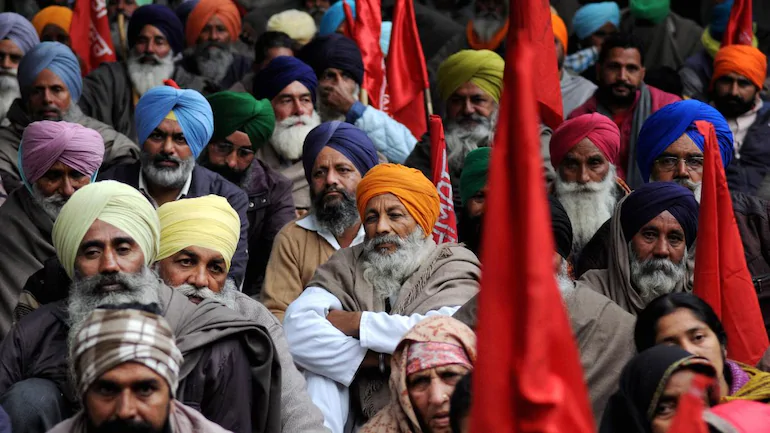
New Delhi, Dec 24: The BJP on Thursday challenged Rahul Gandhi for an open debate on what the Congress did for farmers' welfare when in power and what the Modi government has done for them, as it rejected his allegations against the Centre as "baseless and illogical".
Union minister Prakash Javadekar accused the Congress of ignoring farmers' interests and keeping them poor to ensure cheap grain prices, and asserted that the Modi government empowered them by implementing the Swaminathan commission report to give them remunerative price through MSP.
The BJP leader noted that Prime Minister Narendra Modi will transfer Rs 18,000 crore to nine crore farmers on Friday, taking to a total of Rs 1.20 lakh crore the amount of money it has directly credited to their bank accounts so far.
"This is merely the beginning. It will continue for 10 years and the total scheme is of Rs seven lakh crore," he said, noting that the all the Congress did when it was in power was to waive their loans amounting to Rs 53,000 crore.
This money was not given to farmers but to banks against their loans, he noted.
"I challenge the Congress and Rahul Gandhi for an open debate. I will prove how the Congress always ignored farmers' interests and how Modi empowered them. Farmers always demanded remunerative price for their produce but the Congress never did so," he added.
The opposition party has been "unmasked" as it has become clear and it and its allies have been using farmers' shoulders to fire at the government and have been "instigating" them, he alleged.
Gandhi had alleged earlier in the day that there is "no democracy in India" and it exists "only in imagination". A Congress delegation met President Ram Nath Kovind and demanded a joint session of Parliament to repeal the Centre's three agri laws.
"The farmers (camping at Delhi borders) would not return till these laws are repealed. The government should convene a joint session of Parliament and repeal these laws," he told reporters after meeting the president.
Javadekar made light of Gandhi's demand for a session, saying when Parliament is in session, Congress members obstruct and do not take part in a debate.
He said the government's doors are always open for dialogue with agitating farmers, and it is confident that a solution will emerge.
At a briefing at the BJP headquarters, party spokesperson Sudhanshu Trivedi took a swipe at Gandhi by calling him "perpetually young, disenchanted, frustrated and agitated" and said his "baseless and illogical" broadside against the government was in line with his nature.
In a counterattack on the Congress leader over his charge that the government invariably dubs its critics as "anti-national", Trivedi said the opposition party had levelled a case of "treason" against former prime minister Charan Singh, a noted leader of farmers, and jailed him as well. BJP stalwart and former prime minister Atal Bihari Vajpayee had also been levelled with a similar charge by the party, he said.
He asked why Gandhi is not agitating for farmers in Kerala as the state from where he is an MP does not have the Agriculture Produce Marketing Committee Act.
"This cannot be accepted what is good in Kerala is bad in Delhi," he said, noting that food processing giants such as Nestle and Pepsico have been present in Punjab for many years.
Farmers in other states should also benefit from similar private interventions in the farm market, he said.
Let the Truth be known. If you read VB and like VB, please be a VB Supporter and Help us deliver the Truth to one and all.
Ordinance issued to increase number of Supreme Court judges from 34 to 38
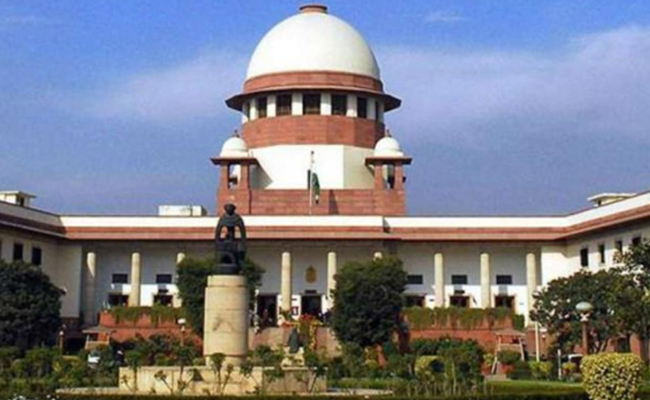
New Delhi (PTI): The government has promulgated an ordinance to increase the strength of the Supreme Court from the present 34 judges to 38, including the Chief Justice of India.
The law ministry notified the ordinance on Saturday, which amended the Supreme Court (Number of Judges) Act, 1956, to increase the sanctioned strength of the top court.
So far, the sanctioned strength of the top court was 34, including the Chief Justice of India (CJI). Now, the number of judges has been increased by four, taking the sanctioned strength to 38.
The top court will now have 37 judges, other than the CJI.
With the apex court having two vacancies at present, and the ordinance coming into force immediately, the Supreme Court Collegium will now have to recommend six names for appointment as judges in the top court.
A bill will be brought in the Monsoon Session of Parliament to convert the ordinance – an executive order – into a law passed by Parliament.
The Union Cabinet had cleared a draft bill on May 5 to increase the number of apex court judges.
The strength of the Supreme Court was last increased from 30 to 33 (excluding the CJI) in 2019.
The Supreme Court (Number of Judges) Act, as originally enacted in 1956, put the maximum number of judges (excluding the CJI) at 10.
This number was increased to 13 by the Supreme Court (Number of Judges), Amendment Act, 1960, and to 17 by another amendment to the law.
The Supreme Court (Number of Judges) Amendment Act, 1986, augmented the strength of judges from 17 to 25, excluding the CJI.
A fresh amendment in 2009 further increased the strength from 25 to 30.
Article 124(3) of the Constitution lists the qualifications required to become a Supreme Court judge.
An Indian citizen who has either served as a high court judge for at least five years, or as an advocate for 10 years, or is a distinguished jurist, can be appointed to the top court.
The strength of the Supreme Court is increased based on the recommendations of the CJI, who writes to the Union law minister. After consulting the finance ministry, the Department of Justice under the law ministry moves the Cabinet with a draft bill.