BJP MP Varun Gandhi raises concerns over India's cheetah import plan
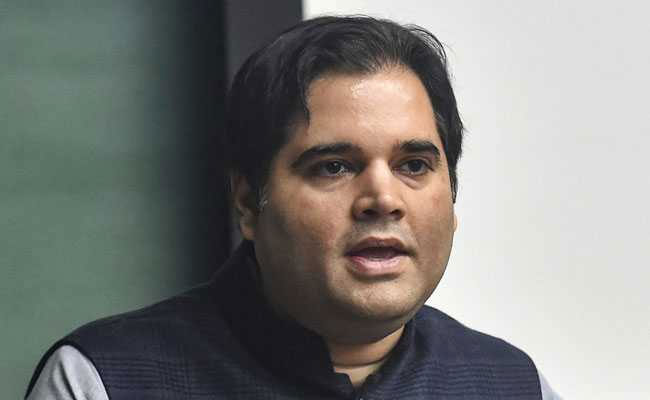
New Delhi (PTI): With the central government revealing plans to import more cheetahs from South Africa, BJP MP Varun Gandhi on Saturday said India should focus on conserving its own endangered species and habitats.
"Importing cheetahs from Africa and allowing nine of them to die in a foreign land is not just cruelty; it's an appalling display of negligence," he wrote on X.
In an interview with PTI, Project Cheetah head SP Yadav said the next batch of cheetahs would be imported from South Africa and introduced into Madhya Pradesh's Gandhi Sagar Wildlife Sanctuary, which is expected to be ready to welcome the spotted felines by the end of the year.
Gandhi said, "We should focus on conserving our own endangered species and habitats rather than contributing to the suffering of these magnificent creatures. This reckless pursuit of exotic animals must end immediately, and we should prioritise the welfare of our native wildlife instead."
Congress leader Abhishek Singhvi ridiculed the announcement, saying, "After the wildly successful project of Cheetas from Namibia (9 dead already)lo & behold Cheetas from South Africa (sic)."
Cartoonist Satish Acharya urged the government to "spare the cheetahs", a sentiment echoed by many X users.
Many, however, backed the move.
"I fully support this. People should stop emotionally venting. India is attempting something very difficult i.e. reintroducing cheetahs to the wild and must take all efforts necessary," wrote one user on X.
Project Cheetah, India's ambitious initiative to reintroduce cheetahs after their extinction in the country, marks its first anniversary on Sunday.
The initiative began on September 17 last year when Prime Minister Narendra Modi released a group of cheetahs brought from Namibia into an enclosure at Madhya Pradesh's Kuno National Park. Since then, the project has been closely watched by conservationists and experts worldwide.
Twenty cheetahs were imported from Namibia and South Africa to Kuno in two batches - one in September last year and the second in February.
Since March, six of these adult cheetahs have died due to various reasons. In May, three of the four cubs born to a female Namibian cheetah succumbed to extreme heat. The remaining cub is being raised under human care for future wilding.
Importing cheetahs from Africa and allowing nine of them to die in a foreign land is not just cruelty, it's an appalling display of negligence.
— Varun Gandhi (@varungandhi80) September 16, 2023
We should focus on conserving our own endangered species and habitats rather than contributing to the suffering of these magnificent… https://t.co/atB0hFE8wC
Let the Truth be known. If you read VB and like VB, please be a VB Supporter and Help us deliver the Truth to one and all.
AIITA welcomes Karnataka’s ban on obscene songs in school events
Bhatkal: The Karnataka unit of the All India Ideal Teachers Association (AIITA) has welcomed the Karnataka government’s decision to strictly ban school children from dancing to obscene songs during educational and cultural programmes in government, aided, and private schools across the state.
AIITA Karnataka State President M. R. Manvi congratulated the government for taking what he termed an important step to preserve the sanctity of education.
“Such decisions to safeguard the dignity of school children and uphold the values of education are the need of the hour. This rule should not be limited to government schools alone but must be strictly implemented in all private educational institutions as well,” he said.
He further urged the government to address other concerns within school programmes.
“The government should not only prohibit obscene dances in the name of school anniversaries, but also ensure that plays and dialogues that incite religious hatred are avoided. Schools should be centres of harmony, not platforms for spreading hatred,” he added.
According to a recent circular issued by the Department of School Education and Literacy, obscene dances are adversely affecting the mental health and moral values of students.
In this regard, schools have been advised to use songs that promote nationalism, positive thinking, the greatness of Kannada culture, and value-based traditions instead of inappropriate content during programmes.
The circular also emphasises that students should be dressed in decent attire.
AIITA also backed the department’s warning that disciplinary action would be taken against head teachers if such guidelines are violated. The association has further demanded that district Deputy Directors of Public Instruction strictly monitor the implementation of these rules.