BJP questions Rahul Gandhi's 'silence' over farmers' agitation in Karnataka
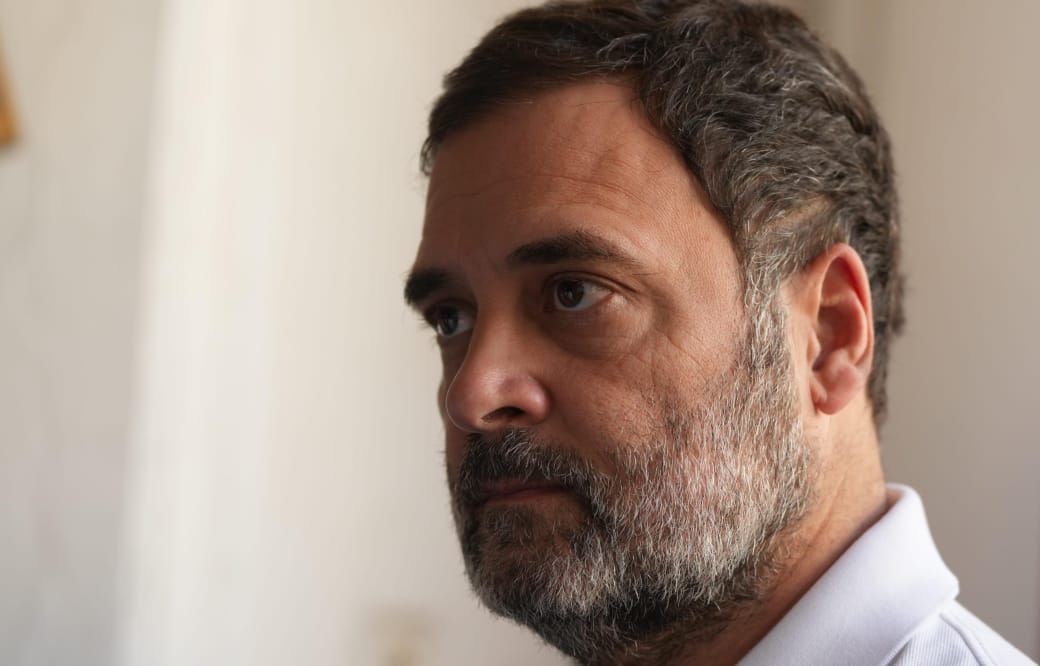
Bengaluru (PTI): Opposition BJP in Karnataka on Wednesday questioned Congress leader Rahul Gandhi's silence over sugarcane farmers' agitation in Karnataka, and demanded the government fix the price of their produce at Rs 3,500 a tonne.
Senior BJP leader and Leader of Opposition R Ashoka, asked Rahul Gandhi, "Where is Kisan Nyay (farmer justice) for the farmers of Karnataka?" and he accused the Congress government in the state of being "anti-farmer".
Various farmers' organisations, the opposition BJP, students and others supported the farmers' protest that spread across many districts of north Karnataka, like Belagavi, Bagalkote, Haveri.
State BJP President B Y Vijayendra, who joined the protesting farmers in Belagavi on Tuesday, took part in the overnight agitation. Farmer leaders greeted Vijayendra, whose birthday is on Wednesday.
"If Rahul Gandhi's heart really beats for farmers, why is he silent when Karnataka's sugarcane growers have been forced to block highways for 6 straight days?" Ashoka asked.
"As many as 26 sugar factories were shut. Roads and highways were blocked. Markets, schools and businesses closed. Farmers are begging the government to talk. But the Congress High Command is busy campaigning in Bihar," he said in a post on 'X'.
Alleging that CM Siddaramaiah and Deputy CM D K Shivakumar are busy saving and clinching chairs, Ashoka said, confused Ministers and MLAs don't know which faction to please, and have become blind and deaf to farmers' suffering.
"So is Rahul Gandhi's so-called Kisan Nyay limited to Election manifestoes? Political rallies in other states? TV sound bites when cameras are rolling?" he questioned.
Asking Rahul Gandhi to at least show the courtesy to speak to the farmers of the state, where his own party is ruling, the opposition leader said, the truth is bitter. Congress Kisan Nyay (farmer justice) has become Kisan Vanchana (deception).
"Shame on this Kisan-Virodhi Congress government," he added.
Let the Truth be known. If you read VB and like VB, please be a VB Supporter and Help us deliver the Truth to one and all.
VP, PM greet civil servants on Civil Services Day
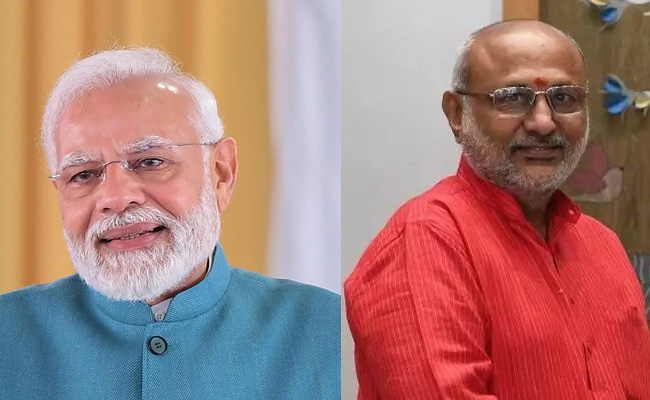
New Delhi (PTI): Vice President C P Radhakrishnan and Prime Minister Narendra Modi on Tuesday greeted civil servants on the occasion of Civil Services Day and said it is time to further strengthen the resolve to work towards good governance and nation building.
The Vice President said as the enduring pillar of India's administrative framework, the efforts of the civil servants in strengthening governance and delivering public services are of immense significance.
The prime minister said from the grassroots to policy-making, the efforts of civil servants touch countless lives and contribute to India's progress
"On the occasion of Civil Services Day, I extend my warm greetings to all civil servants and convey my sincere appreciation for your dedication and exemplary service to the nation," Radhakrishnan said in a post on X.
ALSO READ: 5.2-magnitude quake jolts Manipur
He said the theme for this year, "Viksit Bharat: Citizen-Centric Governance and Development at the Last Mile", aligns with the vision of Viksit Bharat 2047 and underscores the Government's commitment to transparent, accountable, and citizen-centric governance, with a strong emphasis on last-mile delivery and inclusive development.
"Let us all celebrate the day and continue to work collectively towards building an inclusive and developed India," he said.
The Vice President will deliver the keynote address at the Civil Services Day celebrations at Vigyan Bhawan here on Tuesday.
In his message, Modi greeted all civil servants on Civil Services Day and said this is an occasion to further strengthen the resolve to work towards good governance and nation building.
"May our civil servants continue to serve with excellence, compassion and innovation, upholding the highest standards of duty," he said.
The prime minister said service to the nation is the foundation of a 'Developed India'.
"On the glorious occasion of Civil Services Day, let us reaffirm our resolve to build a strong, prosperous, and sensitive India by bringing the person standing at the last line into the mainstream of development," he said.
The central government celebrates April 21 every year as 'Civil Services day' as an occasion for civil servants to rededicate themselves to the cause of citizen and renew their commitments to public service and excellence in work.
This date is chosen to commemorate the day when the first Home Minister of Independent India, Sardar Vallabhbhai Patel, addressed the probationers of Administrative Services Officers in 1947 in Delhi, and referred to civil servants as the 'steel frame of India'.