BMC turning blind eye to air pollution issue, says HC; questions nod for over 125 projects in city
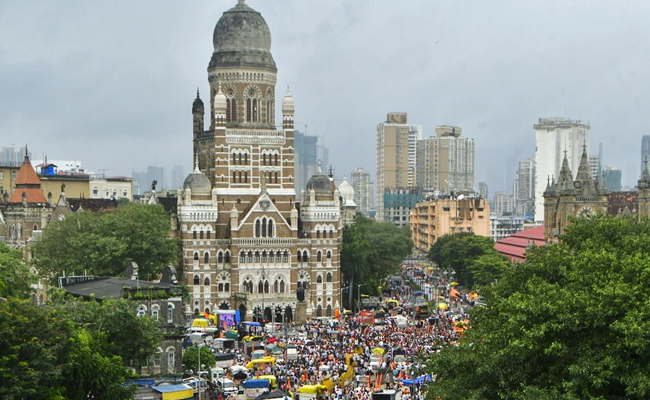
Mumbai (PTI): The Bombay High Court on Wednesday castigated the Brihanmumbai Municipal Corporation (BMC) for turning a "blind eye" towards the issue of air pollution in the city and for "not doing anything" to mitigate the problem.
A bench of Chief Justice Shree Chandrashekhar and Justice Gautam Ankhad also questioned as to how the BMC has granted sanction to over 125 construction projects over Rs 1,000 crore in a small city like Mumbai, stating that the situation has now gone beyond the civic body's control.
The court had warned the BMC that it would pass orders restraining it from granting any further permissions for construction if the air pollution situation persists in the city.
ALSO READ: Virat Kohli returns to Vijay Hazare Trophy: King’s tryst with silence and chaos
"How can 125 projects worth more than Rs 1,000 crore be sanctioned in such a small city? That is a lot. Now the situation has gone beyond your (BMC) control. Now you are not able to manage things," HC said.
The court urged the BMC to strengthen its mechanism in such a way that the measures are preventive in nature and not remedial.
The court was hearing a bunch of petitions raising concerns over the deteriorating air quality index in the city.
"The BMC is not doing anything. Even the minimal requirement is not being done. You (BMC) don't have anything in place. There is no implementation plan," the court said.
The civic body has not applied its mind at all, it added.
"The BMC is not working at all. There is no monitoring. The BMC has turned a blind eye to the issue," the HC said, adding the measures taken have to be preventive and not remedial.
The court noted that despite having wide powers, the BMC was not doing anything.
The high court was also irked with the 91 squads of the BMC not conducting inspections at construction sites.
Senior counsel S U Kamdar, appearing for BMC, said on Tuesday 39 sites were visited. The officers of the other squads are busy with election duty, he said.
The bench then said election duty cannot be an excuse.
"You (BMC) can always make an application to the election commission seeking exemption," it said.
Kamdar told the bench that AQI on Wednesday was at 88 which is considered satisfactory. The situation last year was worse, he said.
The bench, however, said simply saying pollution has decreased does not mean the BMC was working.
When the court questioned what the corporation proposed to do in the next two weeks, BMC commissioner Bhushan Gagrani, who was present in the court, said the squads would inspect a minimum of two construction sites per day and take necessary action.
The bench said the squads should be provided with button cameras and GPS devices.
The bench posted the matter for further hearing on January 20.
Let the Truth be known. If you read VB and like VB, please be a VB Supporter and Help us deliver the Truth to one and all.
Kerala polls: ‘People rejected 10 years of misrule’, says AICC gen secy
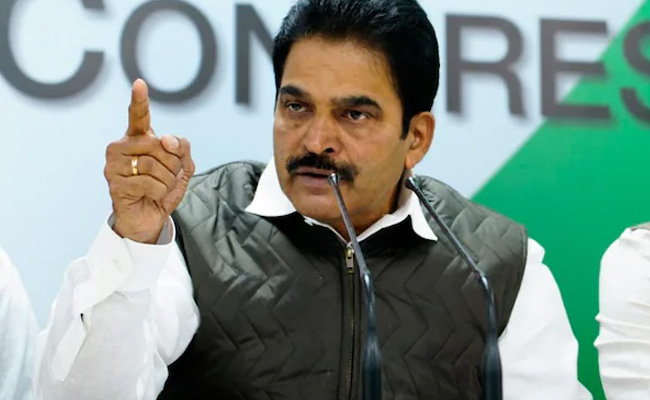
Thiruvananthapuram (PTI): AICC General Secretary K C Venugopal on Monday said the Congress-led UDF’s sweeping victory in the Kerala Assembly polls was a clear verdict against the “arrogance”, corruption, and nepotism of the CPI(M)-led LDF government headed by CM Pinarayi Vijayan.
Addressing a press conference as counting of votes for all 140 Assembly constituencies neared completion, Venugopal said the outcome reflected public anger against what he termed “10 years of misrule” by the Left government.
He claimed that Vijayan’s victory in his home constituency, Dharmadam, was “only technical”, alleging that the CM trailed the UDF candidate in the initial rounds of counting and failed to secure a majority in his own village.
“He just escaped. He suffered a setback even in his home turf. He was the only person who did not realise the people’s mood in this election,” Venugopal said.
Alleging that the CPI(M) and the LDF had resorted to “communal and opportunistic politics”, he further claimed that the ruling front had entered into a “secret understanding” with the BJP in a bid to retain power for a third consecutive term.
He said that when a government driven by power and arrogance attempts to align with anyone to stay in office, even its own cadre turns against it.
Referring to the results, Venugopal said that while the UDF expected rebel CPI(M) leaders, including K Kunhikrishnan in Payyannur, to impact the vote share, their victories came as a surprise.
Describing the UDF’s performance as a “historic victory”, he attributed it to coordinated teamwork, grassroots mobilisation, and the dedication of party workers, adding that the alliance accepted the mandate “with humility”.
Venugopal also credited Rahul Gandhi’s campaign guarantees, calling them a “trump card” that helped voters focus on real issues and reject what he described as the LDF’s “false narratives”.
He claimed that the Congress witnessed one of its lowest levels of rebellion in this election, which contributed to the alliance’s strong performance.
The senior Congress leader further alleged that the BJP managed to win two seats with the help of the CPI(M), and asserted that forces attempting to divide society on communal lines should “learn a lesson” from Kerala’s verdict.
“This is the real Kerala story,” he said.
On the question of the next Chief Minister, Venugopal said the party leadership would decide at the earliest after due consultations.
The counting of votes began on Monday morning for all 140 Assembly constituencies in Kerala, where the Congress-led UDF secured a decisive majority, defeating the CPI(M)-led LDF, which was seeking an unprecedented third consecutive term in office.
Congress MP Rahul Gandhi (@RahulGandhi) posts, "Thank you to my brothers and sisters in Keralam for a truly decisive mandate. Congratulations to every UDF leader and worker for a hard-fought, well-run campaign. As I said before, Keralam has the talent, Keralam has the potential… pic.twitter.com/6T4IZbEmp4
— Press Trust of India (@PTI_News) May 4, 2026