Bombay HC declines to stay framing of charges against Purohit in Malegaon blast case
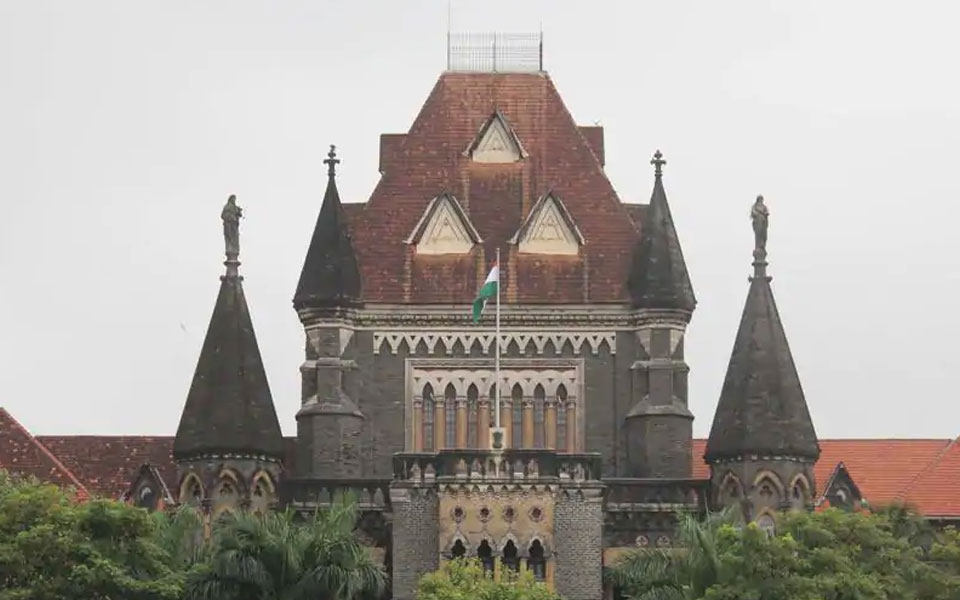
Mumbai, Oct 29 : The Bombay High Court Monday refused to stay framing of charges by the trial court against Lt Col Prasad Shrikant Purohit and other accused persons in the 2008 Malegaon bomb blast case.
A bench of Justices S S Shinde and AS Gadkari, however, agreed to hear next month, a petition filed by Purohit, one of the seven accused in the case, challenging his prosecution under the Unlawful Activities (Prevention) Act (UAPA).
It directed the National Investigation Agency (NIA) counsel Sandesh Patil to file a reply to Purohit's plea by November 21, the next date of hearing.
The bench refused Purohit's request for staying the proceedings in the trial court, noting that in the past, both the Supreme Court and the Bombay HC had passed orders directing the trial court to expedite the hearing in the case.
Framing of charges is a process after which the trial in a criminal case starts.
The trial court, the special NIA court in the present case, is scheduled to begin framing of charges against Purohit and other accused Tuesday.
Six persons were killed and over a 100 injured when an explosive device strapped on a motorcycle went off near a mosque in Malegaon, a power loom town located about 200 km from here in North Maharashtra, on September 29, 2008.
Besides Purohit, the other accused case are Pragya Singh Thakur, Major (retd) Ramesh Upadhyay, Sameer Kulkarni, Ajay Rahirkar, Sudhakar Dwivedi and Sudhakar Chaturvedi.
All of them will face trial under the UAPA since earlier this month, the special NIA court had rejected their pleas on the applicability of the anti-terror law against them.
On December 27 last year, the special NIA court had dismissed the pleas filed by Purohit, Thakur and the others seeking that they be discharged from the case.
Discharge is a pre-trial process in a criminal case.
At the time, the special court had dropped stringent charges under the Maharashtra Control of Organised Crime Act (MCOCA) against the accused, but had said they will face charges under the UAPA and other sections of the Indian Penal Code (IPC), including murder and criminal conspiracy.
Purohit, however, has argued through his counsel Shrikant Shivade that he cannot be prosecuted in the case since the sanction granted by the government to prosecute him was "wrong in law".
A prior government sanction for Purohit's prosecution was required since he was a serving army officer at the time of his arrest.
On January 17, 2009, such a sanction was issued by the Additional Chief Secretary of the Maharashtra home department.
Shivade, however, has maintained that under the UAPA, the state law and judiciary department, which is the sanctioning authority, has to constitute an appropriate authority and seek its report first.
In his case, the sanction was given in January 2009, but the authority was appointed only in October 2010, he has argued. The sanction in Purohit's case thus, was not valid under the UAPA, Shivade has maintained.
Let the Truth be known. If you read VB and like VB, please be a VB Supporter and Help us deliver the Truth to one and all.
Bhojshala case: Disputed structure built from remains of pre-existing temples, claims ASI
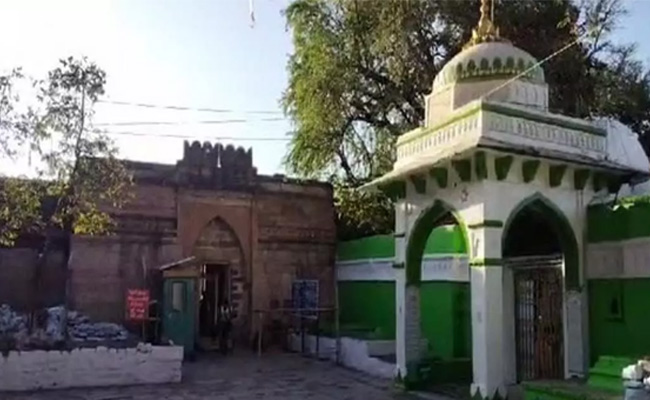
Indore (PTI): The ASI has told the Madhya Pradesh High Court that a massive structure dating back to the Paramara kings' rule existed at the disputed Bhojshala temple-Kamal Maula mosque complex, and the current structure was built from the remains of temples.
The Archaeological Survey of India (ASI) made the claim on Tuesday based on its 98-day scientific survey and over 2,000-page report.
The Hindu community considers Bhojshala a temple dedicated to Vagdevi (Goddess Saraswati), while the Muslim side claims the monument as the Kamal Maula Mosque. The disputed complex is protected by the ASI.
During the hearing before Justices Vijay Kumar Shukla and Alok Awasthi of the HC's Indore bench, Additional Solicitor General Sunil Kumar Jain, representing the ASI, presented a detailed account of the scientific survey conducted two years ago at the complex.
Referring to the ASI's survey report, he said, "Retrieved architectural remains, sculptural fragments, large slabs of inscriptions with literary texts, Nagakarnika inscriptions on pillars, etc, suggest that a large structure associated with literary and educational activities existed at the site. Based on scientific investigations and archaeological remains recovered during the investigations, this pre-existing structure can be dated to the Paramara period."
It can be said that the existing structure was made from the parts of earlier temples, based on scientific investigations, survey and archaeological excavations conducted, study and analysis of retrieved finds, study of architectural remains, sculptures, and inscriptions, art and sculptures, Jain said quoting the report.
Summarising the report, he also drew the court's attention to the fact that the archaeological study identifies that many architectural components, such as pillars and beams, were originally part of temple structures before being repurposed for a mosque.
"The evidence of this transition includes Sanskrit and Prakrit inscriptions that were damaged or hidden, alongside sculptures of deities and animals that were often mutilated or defaced," Jain contended.
The report also states that "all Sanskrit and Prakrit inscriptions are older than the Arabic and Persian inscriptions, indicating that users or engravers of the Sanskrit and Prakrit inscriptions occupied the place earlier".
In light of the Muslim side's earlier objections, the bench wanted to know why there were some discrepancies in the ASI's responses regarding the status of the disputed complex in the cases filed over the years.
The Additional Solicitor General argued that earlier studies of the complex involved only officials, while the current survey involved scientists and the use of advanced technologies such as Ground Penetrating Radar (GPR).
The hearing in the Bhojshala case will continue on Wednesday.
The high court has been regularly hearing four petitions and one writ appeal regarding the religious nature of the Bhojshala temple-Kamal Maula mosque complex since April 6.