'Brand Bharat' is statement of authenticity; of being Vishwa Bandhu, says EAM
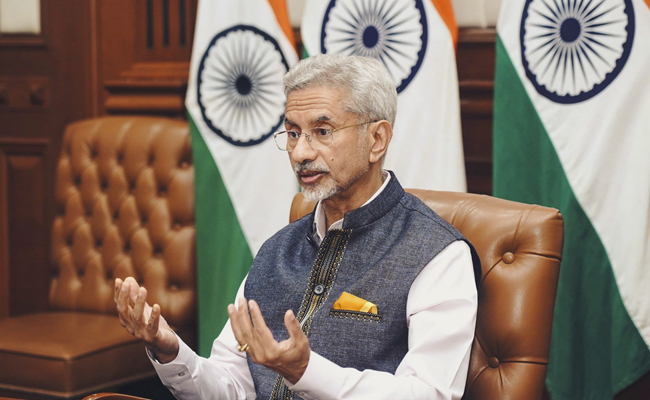
New Delhi (PTI): External Affairs Minister S Jaishankar on Saturday extolled the idea of 'Brand Bharat' and said it is "statement of authenticity" in representation, articulation or beliefs, and equally a message that "we are now more comfortable in our own skin".
In a virtual address at India Ideas Conclave, he also underlined that it is also the "brand of Vishwa Bandhu" as on the big stage, a "multi-vector approach" engages the Quad and BRICS, Russia and Ukraine, Israel and Iran and the Global North and Global South.
Nations, like people, enterprises or services, have a reputation. When deeply entrenched into consciousness and easily recognisable, that becomes a brand. Obviously, it is related to the merits of the product and its track record, he said.
"When it comes to a country, the national brand is obviously a fusion and aggregation of different facets of its life. On the global stage, it is much more an integrated positioning of a multiple endeavors. We, in the world of diplomacy, have that responsibility. My thoughts today are about how we discharge that for an India that is more Bharat," Jaishankar said.
In his address, the external affairs minister encapsulated the journey of India from freedom struggle to gaining independence and the course the country took in the succeeding decades.
"Our initial decades after independence saw us struggling with the brand challenge. Given the ground situation, this was not unsurprising. A society recovering from two centuries of colonialism obviously had to painstakingly build itself up, creating new capabilities, institutions and practices," he said.
But at the end of the day, India entered the next century "intact as a polity, energetic as an economy and optimistic as a society".
"None of that could have been taken for granted and some, in fact, failed to make it," he underlined.
The Union minister, who virtually addressed the conclave hosted by India Foundation, lamented that earlier the country, at the global level, was "seen as sizeable player about whom there was limited expectation", and said, however, the last decade has seen a "big shift" in that regard.
"Economically, we are now perceived as much easier to do business. The transformation underway in infrastructure is also increasingly appreciated.
Whether it is the airports, metros, highways or railways, the achievements of the last decade stand out even by global standards. Perhaps, nothing has been more impactful than our embrace of digital technologies," he added.
Jaishankar then went on to expound what is 'Brand Bharat'.
"Bharat is a statement of authenticity, be it in representation, articulation or beliefs. Even our economic energies required a connotation of Atmanirbharta in that background," he asserted.
"It is equally a message that we are now more comfortable in our own skin, drawing on our own past, fashioning our own lexicon and advancing our own ideas," the Union minister added.
He said while recognising these developments, let us also realise that "we are not just one more country".
"Our history, tradition, culture and heritage makes us stand out. We are one of the rare ancient civilisations that have made a successful transition to a nation state. In the past, when our overall standing was less, perhaps this did not count for that much. But when juxtaposed with our achievements in so many fields, it now assumes very different connotation," Jaishankar added.
It is in this context that "we should reflect on Brand Bharat. The very term captures the civilisational aspect, while underlining how much more rooted we have become", he said.
"In a world asserting its independence from a globalised elite, it is an effort to engage the world more on our terms. The formulation of standing on the two legs of technology and tradition is one effective way of expressing Brand Bharat," Jaishankar said.
Coming from the domain of diplomacy, India naturally seek to advance that brand in more specific terms. That means defining how Bharat approaches the world, he said.
"There are a range of answers. The Global South sees a powerful advocate and the driver of Vaccine Maitri. Neighbours recognise a generous and non-reciprocal partner who stood by them during Covid, financial meltdowns or natural disasters. Democracies appreciate a confident partner whose choice has helped universalise their shared attributes," the minister asserted.
"The immediate region and beyond value an emerging 'first responder' and contributor to global goods. And on the big stage, a multi-vector approach engages the Quad and BRICS, Russia and Ukraine, Israel and Iran and the Global North and South. This is the brand of Vishwa Bandhu," he said.
Let the Truth be known. If you read VB and like VB, please be a VB Supporter and Help us deliver the Truth to one and all.
Karnataka to approach SC seeking permission to continue MGNREGA
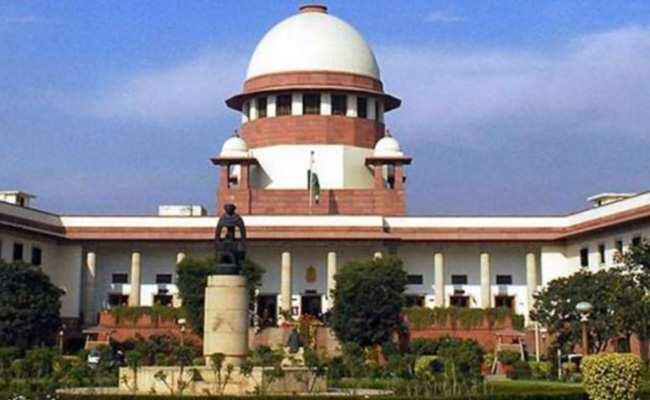
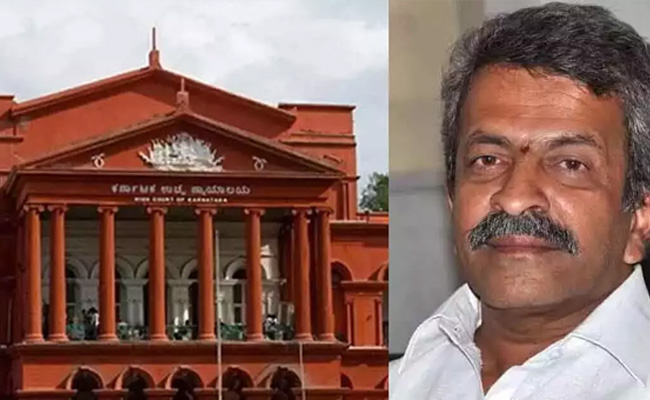
Bengaluru (PTI): The Karnataka Cabinet on Thursday decided to approach the Supreme Court seeking permission to continue implementation of MGNREGA in the state, contending that the Centre had repealed the rural employment guarantee law without consultation and failed to put in place any alternative mechanism under the VB-G RAM G Act.
Briefing reporters after the Cabinet meeting, Karnataka Law and Parliamentary Affairs Minister H K Patil said the state would immediately move the apex court seeking permission to prepare and implement the annual action plan for rural employment works, while also challenging what it described as an infringement on the constitutional rights of states.
The parliament passed VB-G RAM G in December that replaces MGNREGA.
Patil explained that the Cabinet decided to approach the court seeking permission for the State Government to prepare an action plan in this regard. Since the Centre’s stand interferes with the constitutional rights of state governments, the Cabinet has also decided to challenge this issue before the appropriate court
“There are two points here. One is that they have come in the way of our constitutional right of providing the right to work. That has been halted, and, therefore, the State Government has decided to approach the Supreme Court. The second point is that the Government of India has not provided any alternative,” the Minister said.
The Central Government has not yet issued a notification to implement the VB-G RAM G Act, nor has it made any alternative arrangements and hence continuing Mahatma Gandhi National Rural Employment Guarantee Act (MGNREGA) is unavoidable in the public interest, the Minister said.
“Therefore, in the interest of the public, farmers and agricultural labourers, we must continue MGNREGA. For that purpose, the Cabinet has decided to approach the court seeking permission for the State Government to prepare the action plan for this year,” he added.
The Minister also said the Centre had only permitted continuation of pending and spillover MGNREGA works without releasing grants or announcing a fresh action plan.
“The Centre itself has said that pending, spillover and half-done MGNREGA works can continue. That means MGNREGA is actually still functioning in practice. But there is no new action plan,” he said.
Patil said the state had already passed a resolution on the issue, while Chief Minister Siddaramaiah had written to the Prime Minister and the Rural Development Minister had held discussions with Union Ministers.
Replying to questions, the minister said the state would move court “as immediately as possible.”
He clarified that the state was seeking permission to formulate and implement this year’s action plan under the existing framework.
“What we are asking the Supreme Court is to allow us to have the action plan for this year and implement it,” he said.
The Cabinet also held detailed discussions on the final report submitted by the State Education Policy Commission headed by former UGC chairman Professor Sukhadeo Thorat.
Patil said a Cabinet sub-committee would be constituted to examine the report and recommend measures for implementation.
“No decision has been taken yet. The Cabinet sub-committee will recommend what should be accepted and what should be modified,” he said.
He said the report comprised around eight volumes and covered issues relating to financial implications, human resources, curriculum reforms, deemed universities, unitary universities and newly established universities. The Chief Minister has been authorised to constitute the sub-committee.
The Cabinet also approved the Karnataka Motor Transport and Other Related Workers’ Social Security and Welfare Amendment Bill, 2026, transferring welfare administration of transport-related workers from the Labour Department to the Transport Department.
The Cabinet further approved establishment of three new industrial estates in Kalaburagi, Yadgir and Surpur under the Karnataka State Small Industries Development Corporation and Kalyana Karnataka Region Development Board schemes at an estimated cost of Rs 200 crore.
The Cabinet also approved amendments to Karnataka Civil Services (General Recruitment) Rules, 2026, providing two per cent reservation in state civil services appointments for sportspersons.